Rebecca Liew · · 5 min read
Using clean energy to power change in the data center industry

What do Facebook, WhatsApp, Netflix, and Zoom have in common? These platforms feed our insatiable appetites for entertainment, information, and instant connectivity. But every action we take on these services releases several grams of carbon dioxide into the atmosphere.
That’s because these tools require energy, a demand that is quietly being powered by data centers – 8.4 million of them, to be specific.
A data center is essentially a physical, centralized space from which businesses power their large-scale online services, whether for data storage, management, backup, or recovery. And each of these centers requires ample physical space to store its servers, computers, cooling systems, networking equipment such as routers, and other security and storage components.
Here’s the catch: There’s only so much data that these centers can hold.
A data-heavy world
In 2006, the average data center capacity was between 1 and 3 megawatts (MW). That number has risen to between 20 MW and 50 MW today, according to Michael Goh, general manager and senior director of Iron Mountain Data Centers (IMDC), a global provider of data center and colocation services.

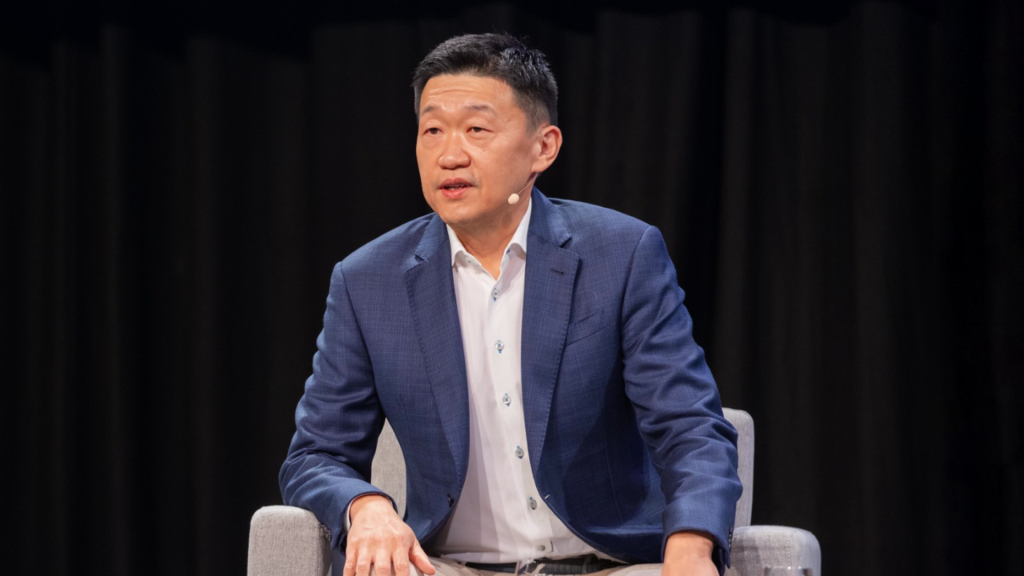
Michael Goh, general manager and senior director at Iron Mountain Data Centers. / Photo credit: Iron Mountain
“Everything we do generates data, whether you’re making an Amazon transaction, playing an online Xbox game, or sending a WhatsApp message,” Goh adds. All of this information, he says, is stored in data centers, so if even one of these sites encounters an issue, all the platforms that rely on it will be affected.
Last December, internet users stirred when Google’s global outage caused failures across Gmail and YouTube. The incident didn’t just highlight the world’s reliance on instant connectivity, but also how disruptions in the process can affect everyday activities on a large scale.
With internet penetration rates at an all-time high, the demand for connectivity has had a trickle-down impact on the environment. Data centers add 2% of greenhouse gas emissions to the earth’s atmosphere annually, a figure that could grow 7x by 2040.
Sustainable solutions
A deeper problem lies in the fact that the demand for data centers will only grow in double-digit figures annually, according to Goh.
Regardless, there has been some headway in challenging these practices. Despite the fact that internet users have doubled since 2010 – and online traffic has grown twelvefold in the same period – data center energy usage has remained near flat, driven by improvements in energy efficiency.
In 2018, IMDC launched the Green Power Pass, a renewable energy solution to help clients achieve their sustainability goals, such as lowering their carbon footprint, and add to their corporate social responsibility (CSR) efforts.
“For customers, it has always been a question of, ‘I can offset my carbon credits, but what else is in it for me?’” says Goh. “The challenge was showing our customers why reducing their carbon footprint can go a long way in achieving carbon neutrality and how their end-users can benefit as well.”
For one, a business’ CSR efforts are linked to satisfaction levels among customers, which can lead to a firm’s perceived value increasing.
“Customers are driving this change for sustainability,” adds Goh. “When they demand for power that is driven by renewables, this drives the way organizations and businesses operate.”
For IMDC, its efforts to make a data center’s operations sustainable is reflected in its entire supply chain. Apart from using renewable resources such as natural gases, the company minimizes the consumption of electrical energy when designing its data centers and works with customers on the hardware they place in these sites.
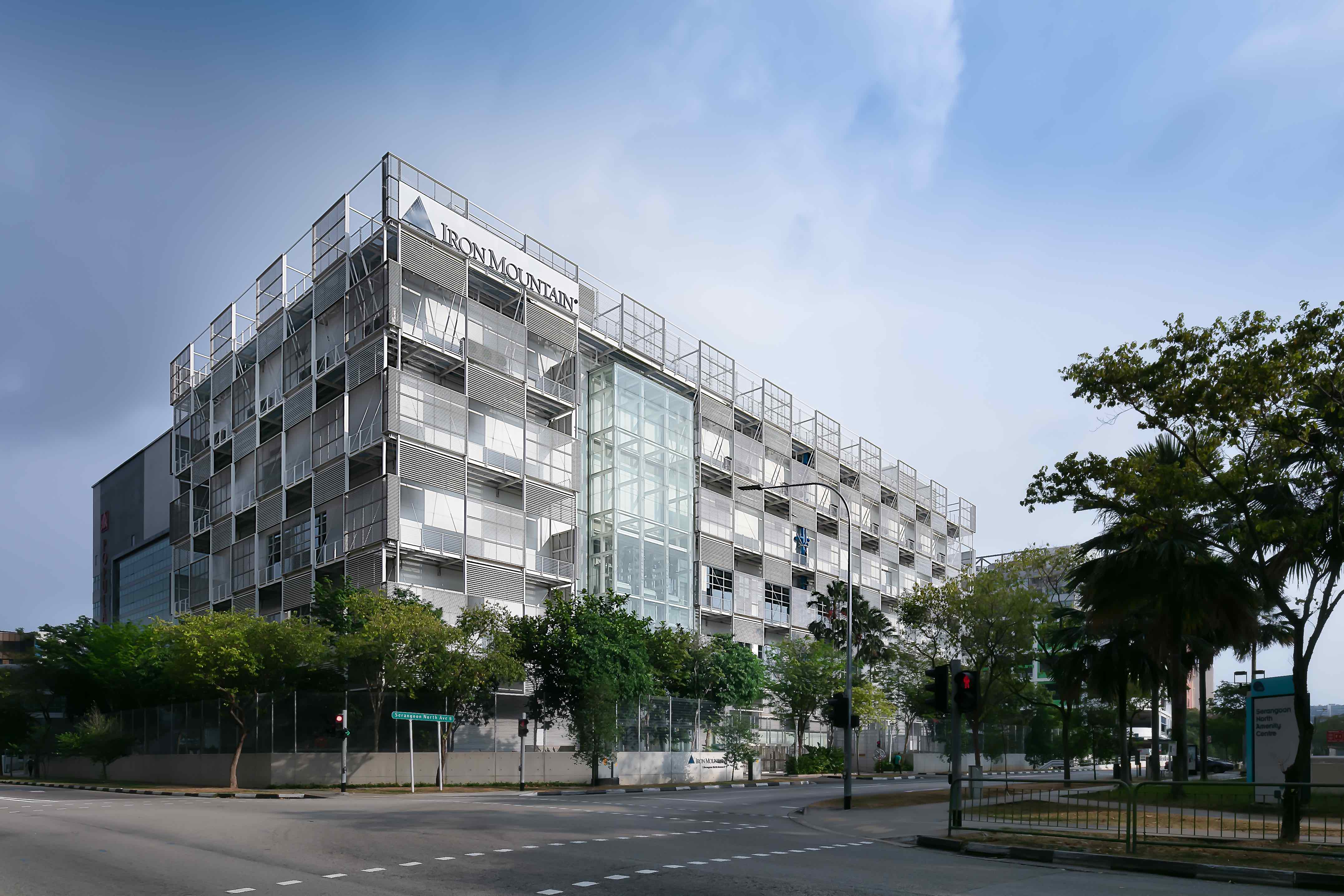
Iron Mountain’s data center in Singapore is one of the firm’s 15 data centers globally. / Photo credit: Iron Mountain
Unlike most global cloud providers that own and operate their own data centers, mid- to large-sized organizations must overcome hurdles like the high costs and time constraints that come with sourcing for renewable energy on their own. That’s where IMDC aims to fill the gaps. With the Green Power Pass, customers that are housed in its data centers are able to feed off of its renewables, which ultimately reduces the carbon footprint of its clients.
Today, all of IMDC’s data centers are powered entirely by renewable energy that is sourced through solar power plants and wind farms, making the company a pioneer for sustainability in its industry.
“We want to contribute positively to climate change and only buy renewables to increase our data capacity,” Goh shares. “This helps us to power our data centers worldwide sustainably and remain a key provider of green power. ”
Powering change
A common misconception is that renewables cost more than traditional fossil fuels. In fact, the cost of sustainable power alternatives depends on the location, says Goh.
“Renewable energy is actually cheaper in countries like the US and India. In Singapore, however, we lack the infrastructure and land mass to generate greater supply to meet the demand for green power,” he explains. “That’s where governments come in as key drivers for change.”
Last year, Singapore imposed a moratorium on the construction of data centers amid sustainability and land mass concerns. The average data center typically occupies up to 50,000 sq ft of land space, with a power capacity that’s enough to supply energy to over 12,500 five-room flats in Singapore. The country also has plans to deploy a floating solar farm in 2021 to reduce carbon emissions and its dependence on fossil fuels.
Singapore’s moratorium was modeled after Amsterdam’s temporary measures in 2019, which was imposed to pressure businesses into finding better and more sustainable alternatives to power their growth.
“It’s just the start, and this goes back to educating our customers as well,” acknowledges Goh. “But that’s the advantage of IMDC being the first mover for sustainability in the industry. We’ve set the bar, and will continue to do everything we can to remain at the forefront of energy-efficient practices.”
Iron Mountain Data Centers (IMDC) is a global data center platform that currently serves 15 data centers in three continents. Find out more about how its sustainable practices are changing the data industry by visiting the IMDC website.
This content was produced by Tech in Asia Studios, which connects brands with Asia’s tech community. Learn more about partnering with Tech in Asia Studios.
Stay updated on the go with our mobile app.
Get latest insights with smoother, more personalized experience through TIA mobile app.
Recommended reads
 Indonesian AI startup goes global
 Forrest Li on scaling Sea, building smarter bots, and founder grit
 An AI assistant that joins sales calls and scores team skills
 SGX’s CEO says it doesn’t need a unicorn to win
 SMEs want AI too, but not the kind Big Tech is selling
 Oatside’s alt-milk rise hits a profitable gear
 Alibaba’s financial health in 12 charts
 Asia’s telcos bundle AI into mobile plans. Will it pay off?
 M-Daq chases bigger clients as revenue falls, losses grow
 VC tracker: Accel raises US$3.5b, including US$550m for India





Editing by Nathaniel Fetalvero and Jaclyn Teng
(And yes, we’re serious about ethics and transparency. More information here.)