This article is a part of Startup Spotlight, a series that features young, up-and-coming startups.

Photo credit: Fluent
A family member with Parkinson’s disease found using a keyboard and mouse frustrating. Existing voice control tools and screen readers proved too cumbersome for daily tasks. This prompted the creation of Fluent to build a better alternative.
😟 Problem
People with motor impairments struggle with existing accessibility software like Dragon. Newer AI agents from Claude and Codex are slow and expensive for automating desktop workflows. These barriers restrict millions from reliably operating their computers.
💡 Solution
The startup developed a fast, affordable computer use agent harness for general consumers, with the following features:
- Users control their computers entirely through voice commands.
- The software bypasses vision-language models, which process both text and images, to reduce latency.
- This architecture operates at 20 times the speed of competitors.
- The system costs just 5% of existing AI agent alternatives.
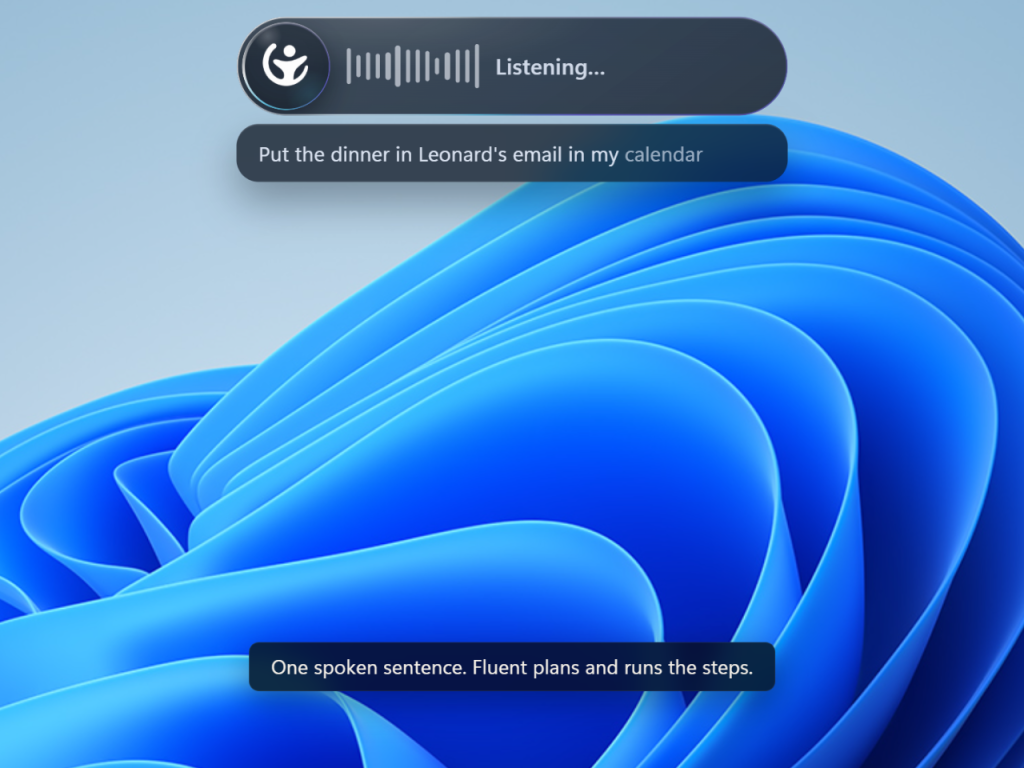
Image credit: Fluent
📊 Market size
The release of advanced models like GPT-5.6 and Opus 5 has accelerated the adoption of computer-use agents.
The startup targets an initial US beachhead of 1.05 million Windows users. This represents 10% of the 10.5 million employed disabled adults in the country. It also targets 6,100 hospitals requiring strict privacy and clinical controls.
The three-year goal is to reach US$11.3 million in annual recurring revenue across 23,000 paid seats. Reaching these targets requires capturing under 2% of the initial consumer beachhead.
🤝 Team
- Jason Matthew Suhari. Founder and CTO. He won 10 hackathons, including a Y Combinator event, and previously worked at PSA International and Algebris Investments.
- Meline Notowibowo-Lomsche. CEO. She previously worked in business development and operations at Fabrica AI.
- Cheryll Soedjono. CMO. She holds a background in data science, analytics, and AI, with experience spanning healthcare and sustainability.
🚀 Traction
- Secured over 150 paid users and 90 average daily active users.
- Onboarded more than 80 organizations as design partners.
- Featured on two prominent assistive technology podcasts and completed more than 100 product interviews and demos.
🏆 Competition
The startup competes with VoiceOS, HeyClicky, and computer-use tools from Claude and Codex. It differentiates itself by avoiding vision-language models entirely. This architectural choice makes the platform significantly faster and cheaper than existing alternatives.
💰 Financials
🚩 Risks





Stay updated on the go with our mobile app.
Get latest insights with smoother, more personalized experience through TIA mobile app.












📅 Upcoming Events
22 October 2026
Payoneer x CSPN Summit 2026