Nadine Freischlad · · 4 min read
Indonesia’s technology minister needs to step up on censorship and privacy
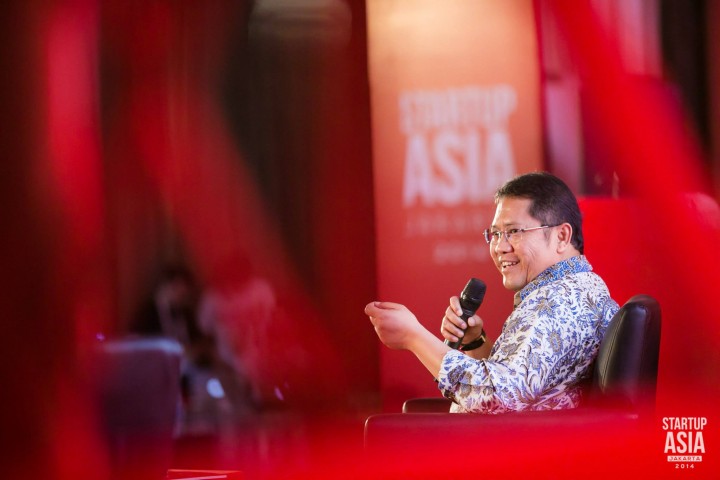
Indonesia’s information and communications technology minister Rudiantara.
Part of Indonesia’s future development hinges on how quickly and efficiently the world’s fourth most populous nation is able to embrace digitization and make it work in its favor.
The man in charge of shepherding Indonesia’s digital development is Minister of Communications and Information Technology, Mr. Rudiantara. He was inaugurated in October 2014 as part of President Joko Widodo’s new cabinet.
Yesterday, local online media outlet Merdeka published a long Interview with Minister Rudiantara. The interview reveals that while the ministry has made headway in the introduction of a regulatory framework for ecommerce – a clear priority for the ministry – other concerns have been neglected.
Rudiantara’s responses to questions regarding internet censorship and privacy issues were vague and uninformed. Can the ministry afford to ignore those concerns?
Restricting access to harmful sites
In the interview, Rudiantara again describes his ministry’s position with regards to information censorship to be “somewhere between China and the USA.”
Both ideologically and geographically, that is a long distance to cover. The government’s standpoint is that content which it deems harmful to society, such as pornography and hate speech, should be censored. While Indonesians generally support that position, the government’s censorship strategy has been unclear and error-prone, causing much collateral damage. For instance, it required all Indonesian ISPs to block access to video hosting platform Vimeo, arguing that it contained videos with content that can be classified as pornographic. The Vimeo block occurred under the previous administration. Rudiantara promised he would find a resolution to the issue, but to this day Vimeo, a relevant video resource for the creative industry, remains inaccessible to Indonesians.
In the interview, Rudiantara admits that the government needs to be smarter about its censorship strategy, and filter individual pieces of content rather than blocking entire domains.
He offered to form a panel of experts on topics like interreligious tensions, pornography, or child abuse, and says he will be signing off on a decision about his panel at the end of this month. In Rudiantara’s vision, this panel would give the ministry recommendations about which sites to block.
This does not sound like a convincing long-term strategy. Rudiantara also fails to mention the existing government as well as private sector initiatives to standardize content filtering practices, such as the Nawala and Trust+ Positif programs.
Privacy and security
Concerns about Indonesian cell phone users’ privacy arose once more when, in early March 2015, Edward Snowden leaked documents proving that Australian intelligence agencies had been harvesting private data from one of Indonesia’s major cell phone operator, Telkomsel, on a massive scale.
Rudiantara so far has been dodging the issue by saying that “investigations are underway” but results are inconclusive. The question was put to him again in the interview on Merdeka, but the minister’s answer remained vague.





Stay updated on the go with our mobile app.
Get latest insights with smoother, more personalized experience through TIA mobile app.