Shravanth Vijayakumar · · 7 min read
What Indonesia’s fuel price hike could mean for Grab and Gojek
Welcome to the Opening Bell 🔔! Delivered every Monday via email and through the Tech in Asia website, this free newsletter breaks down the biggest stories and latest trends on Asia’s publicly listed tech companies. Get it in your email inbox by registering here.
Hello reader,
For many years, I have relied on ride hailers to get from one place to the next. Whether I’m in a rush to conduct an interview or coming back home late after a night out, just a few clicks and a couple of minutes later, my cab from Ola or Uber (UBER, NYSE) would arrive.
I blame my (over)reliance on these firms for not learning how to drive sooner. I was fond of ride hailers not only for the convenience but also their relatively affordable rates, especially when the sector was finding its feet in India nearly a decade ago.
Nowadays, however, I only use these platforms as a last resort. The push to dole out incentives to users has waned as the industry matured in the peninsula. Ride hailing is no longer seen as affordable as the industry grapples with soaring fuel prices and the effort to keep drivers satisfied.
The former is something Indonesians have not had to deal with for the longest time this year, with the archipelago’s energy subsidies keeping a lid on fuel prices and, in turn, the country’s inflation rate.
But all that changed last week when the government hiked subsidized fuel prices by about 30%, sparking mass protests, with thousands lining the streets of the nation’s major cities.
While big companies like Grab (GRAB, NDAQ) and Gojek owner GoTo Group (GOTO, IDX) are not allowed to buy subsidized fuels for their operations, their driver partners do. That poses an important question for these ride hailers: How do they deal with Indonesia’s first hike to subsidized fuel prices in eight years?
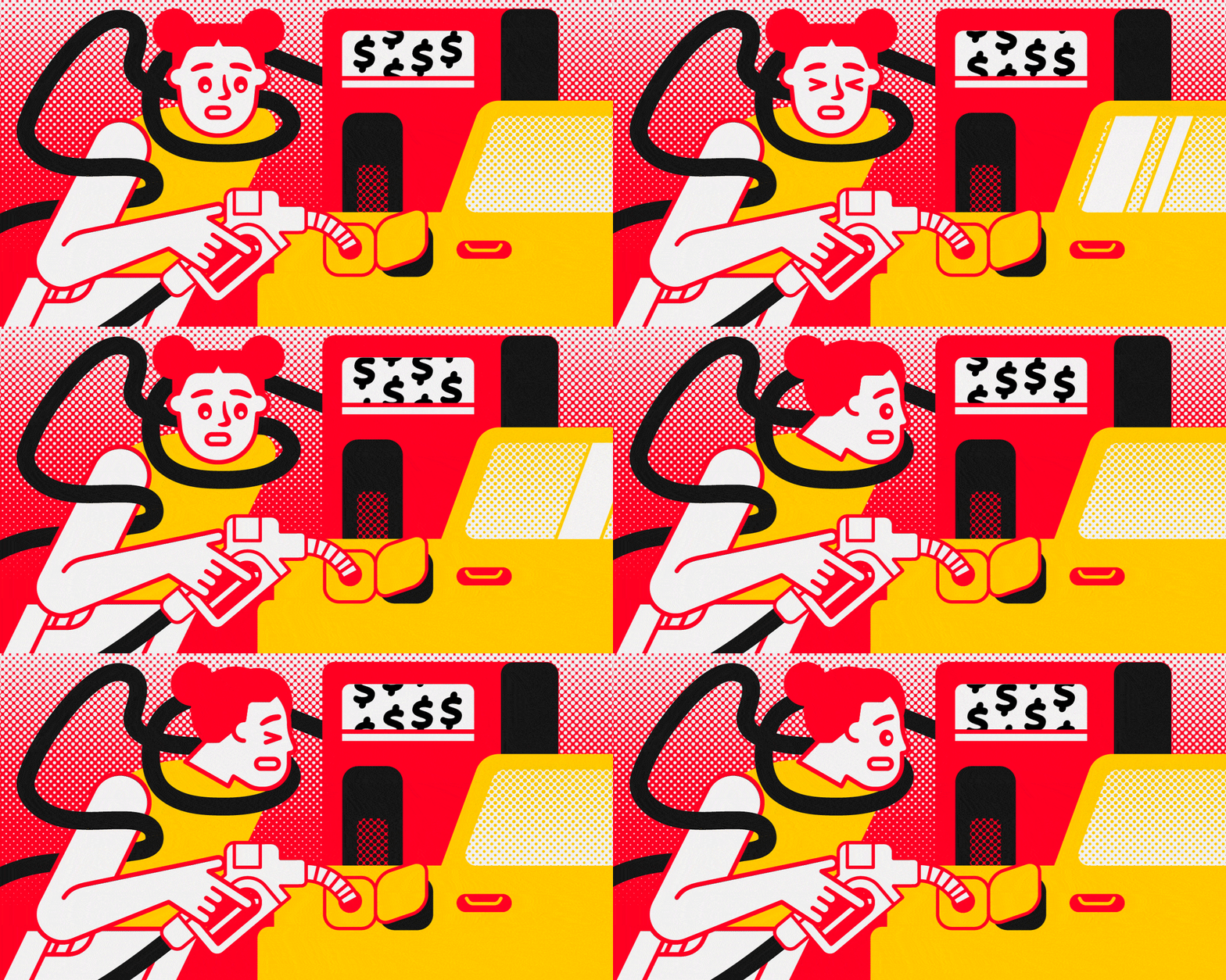
Image credit: Timmy Loen
For starters, the Indonesian Ministry of Transportation has already hiked ride-hailing rates for motorbikes – extensively used for transport – to protect drivers, who are seeking fare adjustment as costs rise. It remains to be seen how users of Grab and Gojek will react to having to absorb these increased prices.
However, fare rates for other forms of ride-hailing transport remain up in the air, leaving these lossmaking firms in a precarious position. Grab and Gojek can either bite the bullet and absorb additional costs, likely delaying their dreams of profitability, or bank on consumers’ purchasing power in Southeast Asia’s largest economy by offloading these added costs onto users.
Meanwhile, matters aren’t as grim in Vietnam, but a rising challenger threatens to break Grab’s dominance in the region. Be Group, the biggest local rival to Grab and Gojek, has received a US$60 million loan to scale up its platform, which offers on-demand car and bike ride-hailing.
A slew of other apps failed to challenge Grab in Vietnam, with none of them gaining much traction. However, Vietnam’s Be is different in that regard, having accumulated over 20 million downloads.
Lastly, on all things ride-hailing, Wanshun Car-Hailing will be hoping to have a better ride on the US stock markets than rival DiDi Global did, as the Shenzhen-based company eyes a public market debut in the world’s largest economy through a special purpose acquisition company this year.
3 Trends to keep an eye on
2 Eye-popping facts
The ones you didn’t see coming





Stay updated on the go with our mobile app.
Get latest insights with smoother, more personalized experience through TIA mobile app.