Karim Sulisto · · 2 min read
Go-Jek, Indonesia’s Uber for motorcycles, in talks with government about solving traffic woes

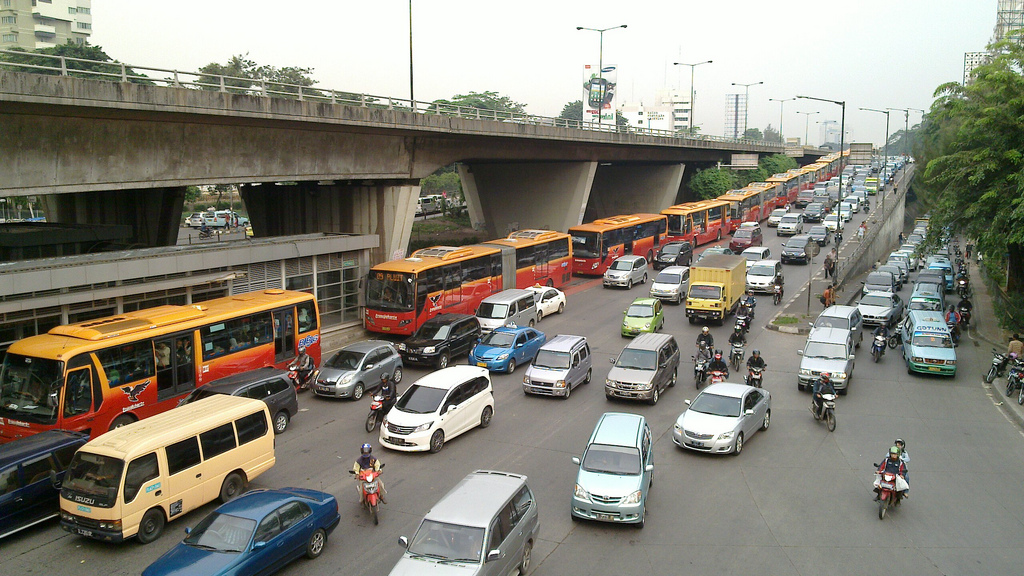
Over the past couple months, Jakarta citizens haven’t been able to leave their homes without catching at least one glimpse of a motorcycle rider sporting a bright green jacket with a Go-Jek logo. In the Indonesian capital’s debilitating stop-go traffic, the transport tech startup is its own best advertisement.
Go-Jek is like Indonesia’s Uber for motorcycles. The service has recently pumped up its marketing efforts to promote its new mobile app, which launched earlier this year.
With Go-Jek riders already camped out at bus stops, the startup has caught the public’s eye. And the government’s. Jakarta’s governor, Basuki Tjahaja Purnama, asked for a meeting with Go-Jek founder and CEO Nadiem Makarim late last month. Also in attendance was the president director of TransJakarta Busway, the inner-city’s primary form of mass public transportation.
The three parties discussed a partnership to build better transport infrastructure that would address the city’s increasingly problematic traffic problem. Currently, Go-Jek and TransJakarta are considering ways that passengers can benefit from what could be seen as complementary services. Go-Jek has a lot to offer as its riders are ubiquitous, agile, and available on demand. The idea of the partnership is that Go-Jek would provide TransJakarta bus pass holders with a feeder service to the stations.
See: Nadiem Makarim talks about Zalora Indonesia and Go-Jek
“We are very grateful that the local government has recognized our value in helping Jakarta’s transportation and improving the welfare of ojek drivers,” says Makarim. “Our true service is, in essence, saving time.” Makarim says that Jakarta residents lose a bit of their lives each day when stuck in sluggish rush hour traffic.
Go-Jek aims to expand its services in the parcel delivery space. “Our vision is to deliver not only people, but anything that a user wants within 60 minutes,” says Makarim. Currently, Go-Jek has more than 2,500 drivers. Makarim describes his startup’s user base as “fiercely loyal,” an asset he hopes can take the startup to the next level. He didn’t comment on any other of Go-Jek’s goals.
The government now appears to be reaching out to the private sector – and particularly tech startups – to address a major infrastructure bottleneck. Currently, Go-Jek competes with similar local startups such as HandyMantis and Wheel Line.
Editing by Leighton Cosseboom and Steven Millward; second image from 世書 名付.





Stay updated on the go with our mobile app.
Get latest insights with smoother, more personalized experience through TIA mobile app.