- Premium Content It takes our newsroom weeks - if not months - to investigate and produce stories for our premium content. You can’t find them anywhere else.
 Gabriel Budi Sutrisno · · 7 min read
How Indonesia’s Blibli stood up to giants via a niche strategy
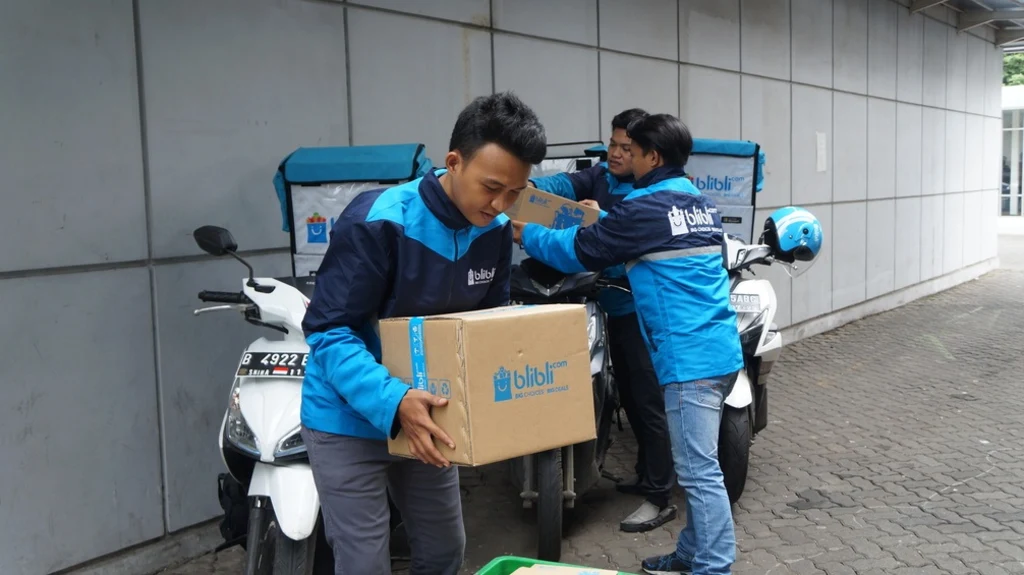
Blibli, the Indonesia-based ecommerce marketplace, has been around for some time. But compared to peers like Tokopedia or Shopee, it has been more of a low-key underdog.
One reason for this may be the company’s status as subsidiary of the conglomerate Djarum Group, a privately owned company that seldom discloses internal numbers. But a bigger factor may just be Blibli’s relatively smaller size compared to its competitors.
According to a Momentum Works report, which breaks down Indonesia’s ecommerce marketplaces into categories, Blibli occupies the third tier alongside JD.id. In 2020, this tier is estimated to have contributed US$4.4 billion in gross merchandise value (GMV) – slightly above 10% of the overall total for the year.

Blibli CEO Kusumo Martanto / Photo credit: Blibli
But these factors have not prevented Blibli from thriving within its niche. The company recently declared that it achieved unicorn status and also announced plans to go public in 2022.
Blibli’s signature strategy has been its guarantee that products sold on the platform are all original items, not fakes. And it’s highly likely that this approach – which targets a more affluent market – will continue.
“The guaranteed original product strategy is a tricky proposition,” says Aldi Hartanto, vice president of investments at MDI Ventures, the investment arm of Telkom Group. “Yet, this space has promising opportunities, with mass affluent consumers expected to make up 21% of [Indonesia’s] total population by 2030.”
Embracing a niche
The key difference between Blibli and other marketplaces is in the sellers. Tokopedia and Shopee are primarily consumer-to-consumer (C2C) platforms, while Blibli’s emphasis is on the business-to-business, business-to-consumer (B2C), and business-to-business-to-consumer markets.
Of course, the lines have blurred. Blibli also welcomes individual sellers, while many brands now operate official stores on C2C platforms. However, official stores often get valuable real estate on Blibli’s platform (such as on category landing pages).
In contrast to B2C-focused marketplace Lazada, Blibli also has an official store under its own brand, through which it sells goods (including electronics from companies like Samsung or Panasonic) directly to customers. However, it’s unclear whether Blibli holds inventory or just handles fulfillment. (The company did not respond to requests for participation in this story.)
Still, the non-C2C approach appears to contribute to Blibli’s relatively smaller size. GMV aside, the company says on its website that it has over 100,000 sellers. Tokopedia, on the other hand, said it had 9.9 million by January 2021.
Staying as a niche player may just be what Blibli needs to stay competitive.
“By focusing on not trying to eat the existing pie, but increasing the size of the pie itself, [this] potentially allows Blibli to thrive in this highly competitive space,” says Hartanto.
The Djarum factor
Stay ahead in Asia’s tech landscape
This is premium content. Subscribe to read the full story.
The Djarum Group-backed ecommerce marketplace is poised to benefit from the country’s rising affluent class.
We know this is not ideal. ⌛ Sign up in 20 seconds. Cancel anytime.
Our subscriber community includes professionals from these companies:





Stay updated on the go with our mobile app.
Get latest insights with smoother, more personalized experience through TIA mobile app.









📅 Upcoming Events
22 October 2026
Payoneer x CSPN Summit 2026