Nathaniel Fetalvero · · 4 min read
Here’s how tech has revolutionized forex trading

The practice of exchanging and trading currencies has existed for as long as people have done business in foreign lands.
As far back as 3,000 B.C., around the time when the concept of money first appeared, travelers to places like China or Egypt would exchange their own currencies for gold to trade with the local people. In 15th century Florence, the Medici banking family created a book detailing the amount of foreign and local currency it held when its agents facilitated trades outside of Italy.
Today, what was once an operation of necessity for far-reaching businesses has become an avenue for individuals to make money. Traders, as they’re often called, look out for certain indicators – from global news and market sentiments to economic data and credit ratings – to determine whether a currency pair will go up or down. If you exchange US dollars for Japanese yen, for instance, and the yen’s worth appreciates over time, then you can trade it back for US dollars and make a profit on the difference in value.
It’s a thriving market: US$6.6 trillion worth of currencies is traded on average every day. But just like other financial verticals such as banking or insurance, the forex industry has had to constantly evolve to remain relevant.
The automation revolution
Ask anyone on the street to picture a forex trader, and the first image that would likely come to mind is a person sitting in front of computer screens with graphs detailing market movements, keeping track of global economic news reports. However, Jason Noorman, chief technology officer of forex brokerage firm Pepperstone, says that a majority of the trades made on the platform are performed by automated programs called Expert Advisors.

Photo credit: jirsak / 123RF
“Less than half of our traders are people that are watching a particular chart on the screen who then decide to make a very discreet action,” he says. “We do have some traders that trade like that – and they’re very, very good at it – but what we generally see is a greater percentage of traders that use Expert Advisors.”
Developed using MetaQuotes Language 4, a programming language specifically for creating trading robots, these programs analyze market data based on several custom indicators and manage trading activities on behalf of brokers. Aside from being able to trade at all hours of the day, Expert Advisors are also capable of more precise analyses and quicker execution compared to humans.
There are a multitude of factors to take into consideration when making market predictions, and humans simply can’t handle everything at once. “It’s almost physically impossible for someone to be watching tick-based trades on a one-second basis, but machines can do that,” Noorman explains.
Behind the scenes of a trade
The use of automated trading bots isn’t the only tech that has exploded onto the forex trading scene. Brokers and trading platforms do a lot of heavy lifting behind closed doors – mostly work involving client risk assessment, says David Friedland, regional head and managing director of Interactive Broker’s Asia-Pacific operations.
“Does a trader have enough liquidity or equity to do a trade? If someone has large losses, do you liquidate? Do you close their position? When do you do a margin call?” he asks. On top of this, brokers must also make sure that account statements are accurate and that they factor in the timing of interest rates properly, says the exec.
For Interactive Brokers, Friedland claims that these back-end processes are “100% automated” – a necessity due to the complexities associated with the various moving pieces in the firm’s operations.
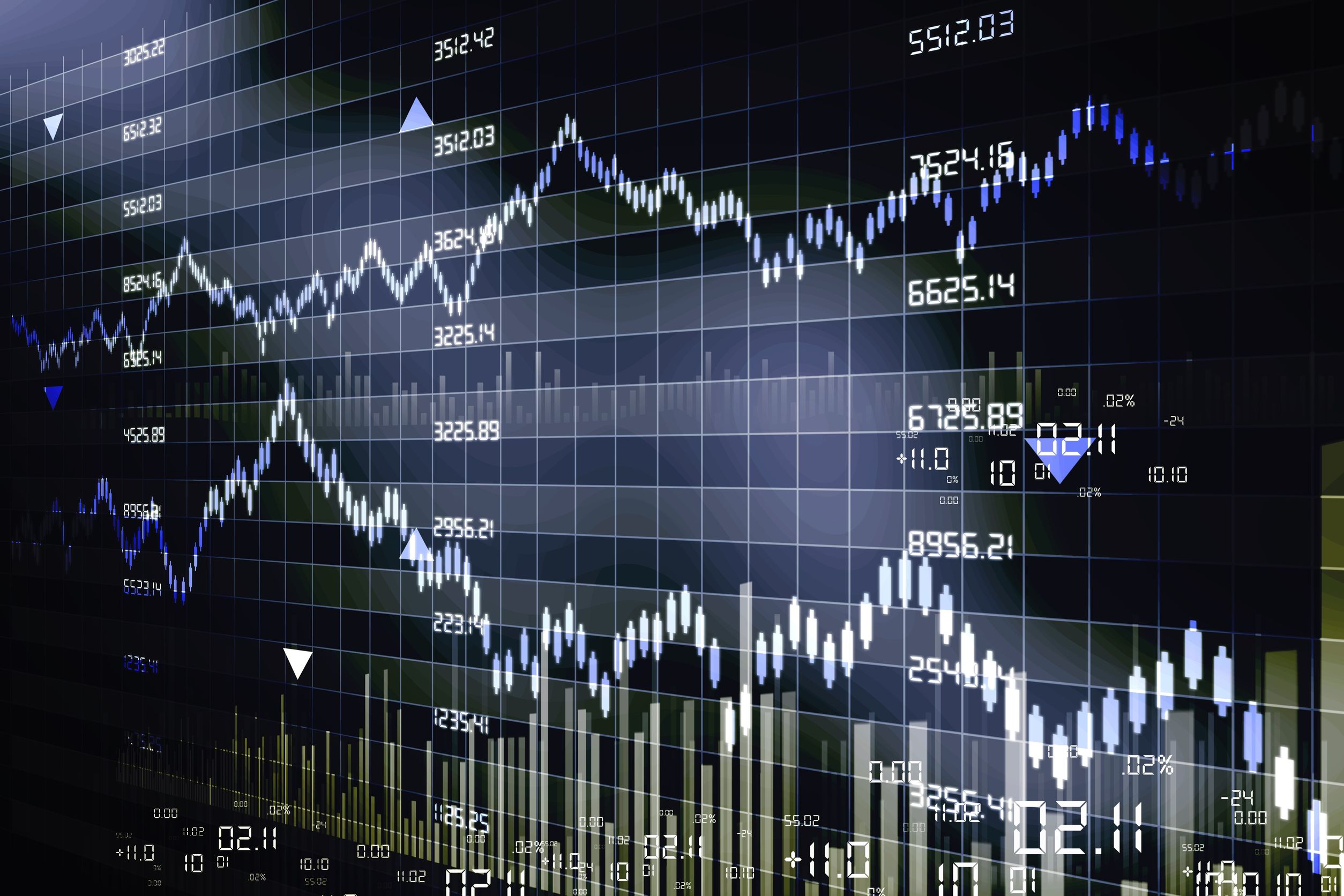
Photo credit: cooldesign / 123RF
“You’re dealing with multiple asset classes, multiple products, multiple calculations, different risk measures, different entities in different countries involved – there are many facets to it,” he shares.
The way clients access these trading platforms has also evolved. Noorman argues that these firms are effectively fintech businesses because of their online accessibility – a capability that he says has been around since the last decade.
“You don’t need to come and see us – we don’t have branches, we don’t have shopfronts,” he adds.
The future of forex
With the continued advancement of technologies such as AI and machine learning, the forex industry is poised for more growth. Since the global forex trading market is worth more than US$1.93 quadrillion – or 2.5x the size of the global GDP – that’s saying something.
But with technological progress comes regulatory enforcement. This is especially true for industries like forex trading, where large amounts of money are constantly changing hands.
“Regulation has increased in Europe and the US and is expected to increase in Australia,” notes Justin Grossbard, co-founder and CEO of broker comparison platform Compare Forex Brokers. “So I expect [the forex market] to grow, but primarily in emerging markets like Asia and Africa.”
He adds that this phenomenon has already begun, citing a recent study that ranked Singapore as the third-largest forex market globally, behind the UK and the US. Because of this, Grossbard posits that more platforms will set up offices in different regions and introduce localized features like integrating local languages to cater to emerging markets.
However, Interactive Broker’s Friedland cautions that as the industry thrives, the potential for incidents such as data breaches and fraud rises as well. Despite that, he thinks the industry will overcome these challenges.
“The forex market’s been around for a long, long time, and I don’t see it going away anytime soon. I think it’s going to continue getting much better,” he concludes.
Compare Forex Brokers is an online platform that aims to make choosing a forex broker easy, without the hassle of sifting through the large amount of information on most websites.
Visit its website to learn more.
Stay updated on the go with our mobile app.
Get latest insights with smoother, more personalized experience through TIA mobile app.
Recommended reads
 Is Dubai stealing Singapore’s thunder in crypto?
 SG minister highlights AI adoption pitfalls in SEA
 Indonesian regulator halts new crypto exchange registrations
 How blockchain seeks to change energy and commodity markets
 SG crypto exchange Zipmex extends withdrawal freeze until today
 Protocols that will gain from ‘the Merge’ on Ethereum
 The Philippines pauses digital asset licenses for 3 years
 UST, lies, and Hodlnaut: How a rising star fell back to earth
 SG exchange gets nod from MAS to offer crypto services
 Cryptocurrencies are not for kids, says Singapore for the 1,000th time




Editing by Jaclyn Teng and Eileen C. Ang
(And yes, we’re serious about ethics and transparency. More information here.)