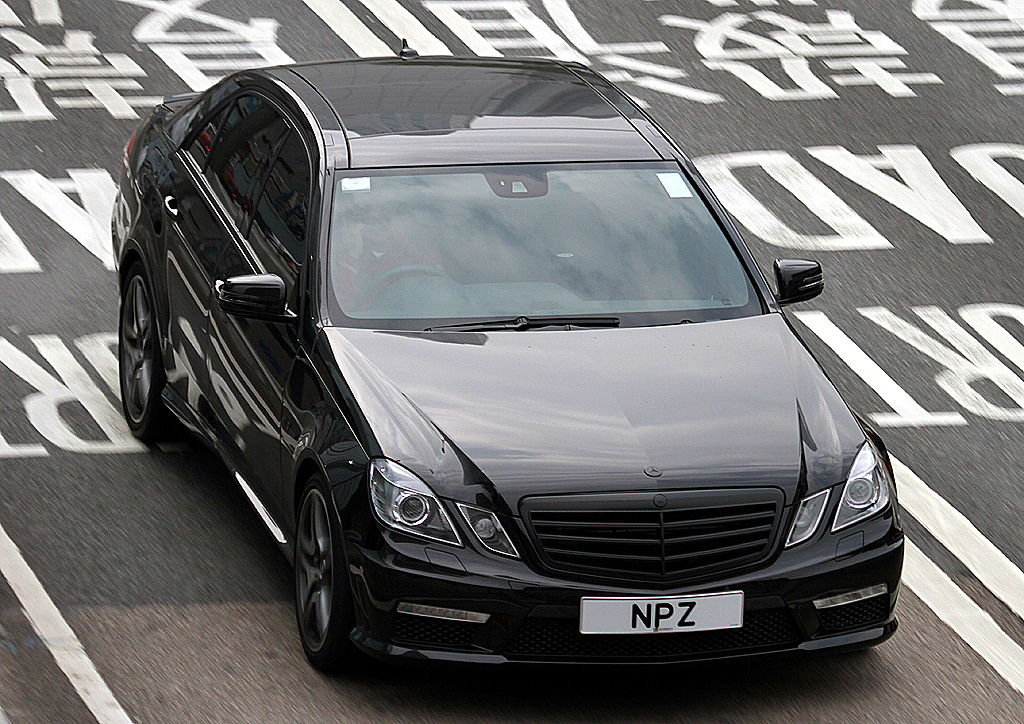
Baidu revealed today the search engine company will launch its an autonomous vehicle prototype in collaboration with BMW. Jin Wang, Baidu’s senior VP of tech and strategy, spoke at last week’s 2015 China Cloud Computing Conference held in Beijing and announced that Baidu would unveil an autonomous vehicle prototype in the second half of this year. Baidu tells Tech in Asia the prototype will be ready for road tests, but won’t be on the market yet.
Baidu first confirmed it was working on an autonomous vehicle in July last year, but gave no timeline for the project’s rollout. It partnered with BMW to develop semi-autonomous car tech, but says the vehicle won’t be fully autonomous, so, “We don’t call this a driverless car.”
Baidu intends to pool its big data-driven resources, mapping expertise, and insights gleaned from its research initiative, the Baidu Institute of Deep Learning, to improve the experience of its autonomous vehicle.
The Baidu Institute of Deep learning has been nicknamed the Baidu Brain and is Baidu’s advanced technology research unit, something akin to what Google has with Google X.
Baidu sees artificial intelligence and its coupling with big data as central to its future strategy. The Chinese web giant is developing sophisticated computer algorithms, allowing it to model abstract situations with data and combine this with the massive amount of intelligence it has accumulated through its core search services. It is this suggested implementation of intelligence in Baidu’s autonomous vehicle which will make it all the more compelling and potentially disruptive.
Provided Baidu’s mapping and search capabilities continue to be dominant in the Chinese market, there is no reason to discount the feasibility of an announcement like this. Last year, Baidu Maps surpassed 200 million monthly active users. It’s the most popular online maps app in China.
Meanwhile, the Google self-driving car project continues to be tested on the open road and at last count has clocked a cumulative 1.8 million miles. The most recent monthly report (May) summarised that since inception in 2009 the project has encountered only 12 accidents, none of them having reportedly been the fault of Google’s car tech.
Update on June 10, 2015: Baidu reached out to Tech in Asia to say the collaboration is indeed with BMW, it will be a prototype ready for road tests only, and it will not be a fully autonomous driverless car. The text of this article has been updated to reflect those changes.
(Source: TechWeb)
Editing by Paul Bischoff
(And yes, we’re serious about ethics and transparency. More information here.)





Stay updated on the go with our mobile app.
Get latest insights with smoother, more personalized experience through TIA mobile app.