Steven Millward · · 3 min read
In China, Microsoft just funded an ‘AI butler’ startup

Image montage by Tech in Asia; photo credit: olegdudko / 123RF.
Microsoft just made a rare investment into a Chinese startup. Even the entrepreneur behind it, Wang Guanchun, sounds a bit surprised by who led the series A funding for his app.
“We connect people to local commerce – that’s our goal,” says Guanchun of the mobile butler service, Laiye. The app looks a bit like a messaging app, one where people make specific requests – get me a coffee, book me a flight – which are fulfilled either by a human assistant or an automated AI.
“Laiye is about efficiency and getting things done for you – just like a real assistant,” adds Beijing-based Guanchun. It’s a similar proposition to Silicon Valley’s Magic.
With all the work being plowed in to its AI, the Chinese startup has parallels to Microsoft’s Cortana, a rival to Apple’s Siri assistant – so the Microsoft largesse makes a lot of sense when you think about it. Under Satya Nadella, the Redmond giant has been making mobile and apps a priority – and it has even set up an fund dedicated to investing in global startups working on AI.
Fewer humans
While Guanchun and Microsoft haven’t nailed down exactly how they’ll work together, he sees the two parties benefiting from each other in terms of AI. His startup could make good use of Bing’s knowledge graphs, containing valuable data about what people want, as well as be promoted to Microsoft’s many corporate clients across China.
“Microsoft is looking for local partners,” adds the founder.
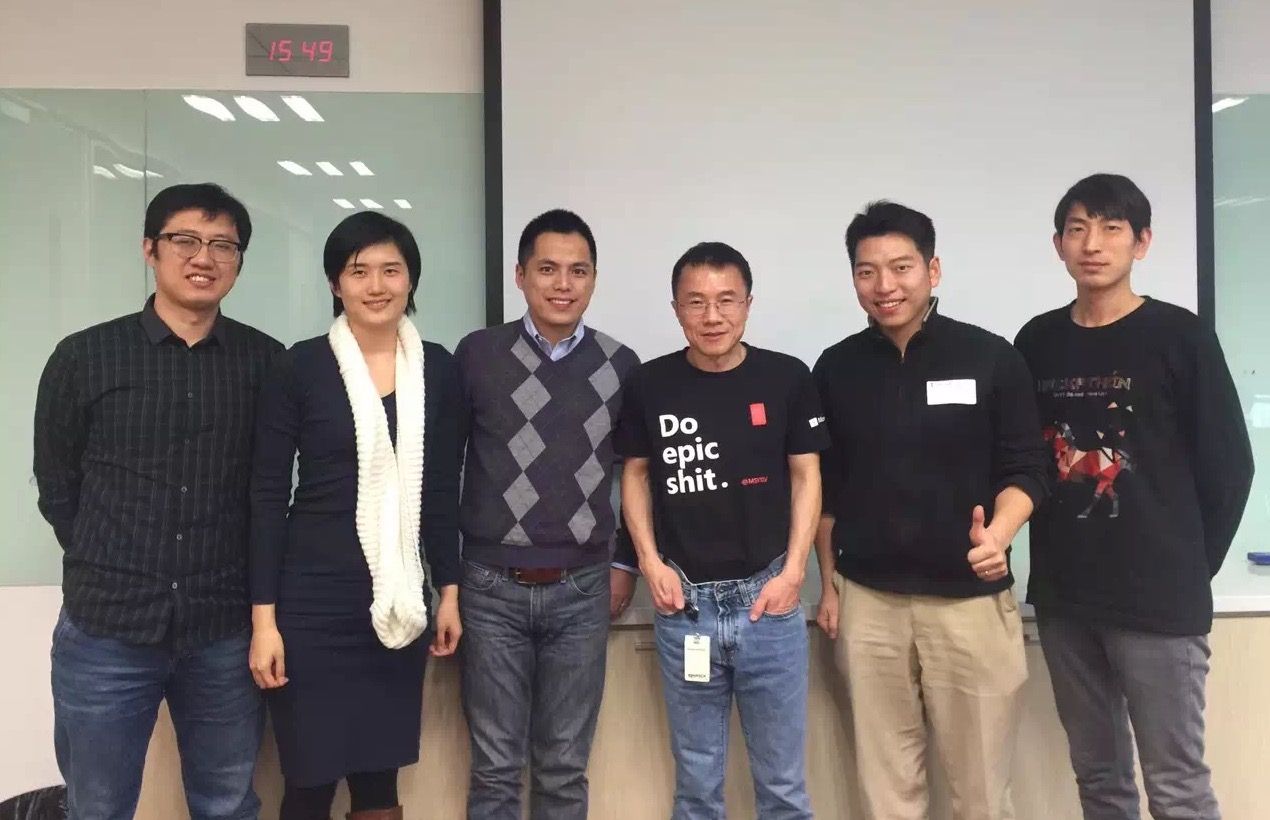
Wang Guanchun, founder and CEO of Laiye, is second from right; former Microsoft executive Lu Qi is in the “Do Epic Shit” T-shirt. Photo credit: Laiye.
Laiye now has 60 staffers, some of whom coordinate the requests that are too complex for the AI.
The startup doesn’t do any of the legwork itself. Instead, it sends service requests – like an order for a hamburger or a ride to the airport tomorrow morning – to relevant providers, like meal delivery startups or ride-hailing apps. If the task can be automated, no human intervention is needed on the startup’s side.
The AI can automagically command another startup to get a coffee from Starbucks and send it to your office, but it cannot book you a flight because the process involves a lot of back and forth and other pernickety details.
For 2017, “more AI is definitely a focus” for the team, Guanchun tells Tech in Asia.
“Surprisingly, AI handles more transactions now than humans,” he explains.
VIP





Stay updated on the go with our mobile app.
Get latest insights with smoother, more personalized experience through TIA mobile app.