 Renhao Wong · · 7 min read
Why Hong Kong is fertile ground for fintech and regtech to prosper

Contrary to what is commonly believed of established corporations, Hong Kong’s financial sector is eagerly anticipating and actively embracing changes brought about by technological innovation.
A May 2020 report by KPMG found that all of the city’s major financial services, collectively worth US$48 billion as of last year, view fintech significantly more as an opportunity than as a threat as innovations promise to “facilitate efficiency improvements and financial inclusion.”
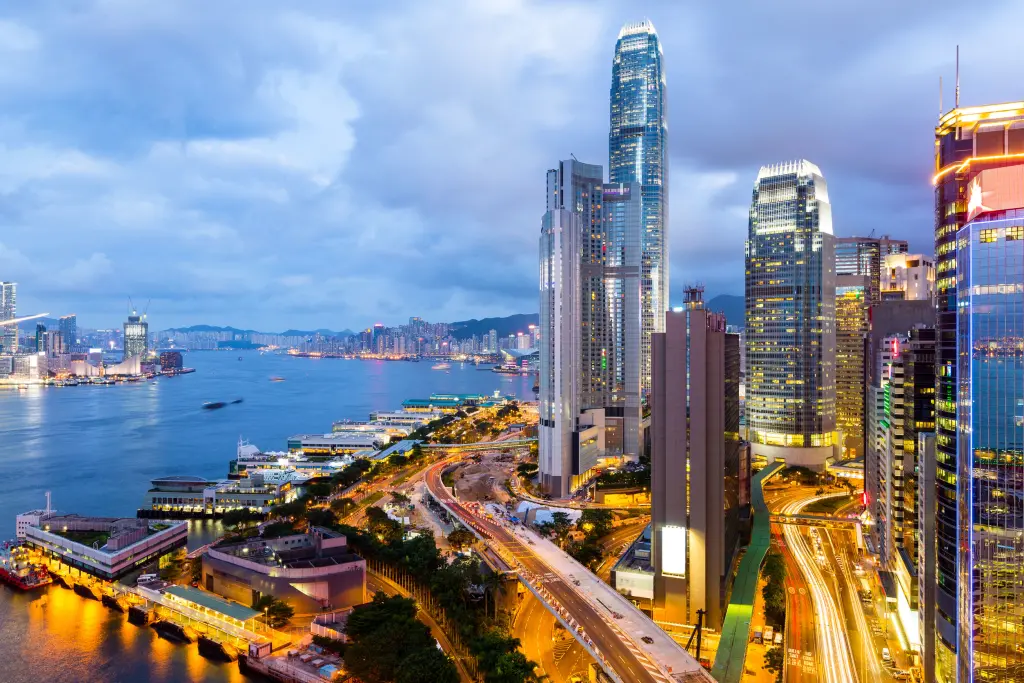
Photo credit: Leung Cho Pan / 123RF
2020 also saw the last of Hong Kong’s eight licensed virtual banks come into operation, leading the charge in bringing fintech to the city’s masses.
Serving both Greater China and Southern Asia financially, Hong Kong is well-positioned to claim its place as the ideal locale for fintech and regtech to prosper. But this goal won’t be a free kick to score since nearby rival cities Singapore and Sydney are also vying for this crown. Hong Kong is attracting pioneering talent, however, who are helping its goal toward becoming a regional fintech hub.
Two innovative startups supported by the Hong Kong Technology and Science Park (HKSTP) show why the city has the makings of a fintech hotspot.
Transformation for tomorrow
For the founders of these two startups, Hong Kong’s historical status as a finance hub presented the ideal location for their firms, which aim to transform the finance industry through their innovative solutions.
Inspiration for AI-driven document processing startup Apoidea came to co-founder Cheney Cheng during his time as investment banker, when he witnessed his colleagues sifting through thousands of spreadsheets and reams of financial reports for key data. While highly necessary to banking services, the process was anything but efficient.
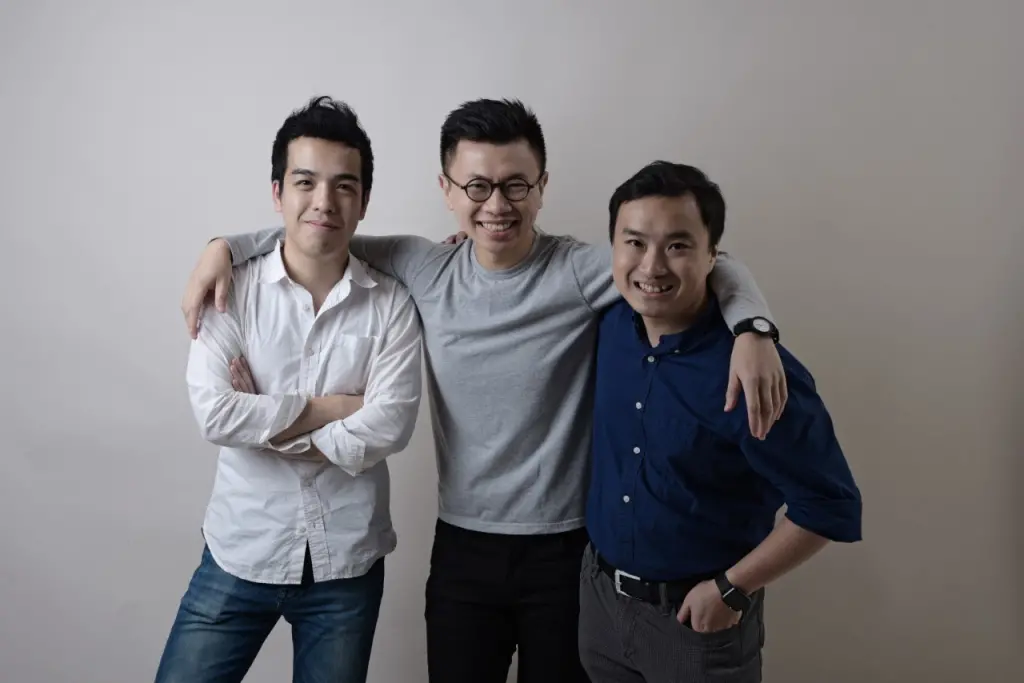
Cheney Cheng (right), with co-founders Justin Chiu (left) and Hardy Liu / Photo credit: Apoidea
“It was a shock to me to realize how many simple things could be replaced or enhanced by computers, but are not,” recalls Cheng. “That became a seed of how I wanted to do something for the industry that could save us from endless nights of working in the office and, instead, allow us to spend more quality time with our family or on more meaningful things.”
With partners Hardy Liu and Justin Chiu, he established Apoidea in 2018. Its unusual name, borrowed from the scientific classification of bees, reflects the core of what its services offer. Like nature’s quintessential hard workers, Apoidea leverages deep learning and natural language processing to turn unstructured document data into valuable structured information, reclaiming hours of precious time by automating repetitive operations in financial institutions.
As someone familiar with the Hong Kong finance industry, Cheng felt that the city’s reputation as a hub for international finance meant that it was home to many potential clients. It was a no-brainer for his team to decide to set up in the city.
The same desire to enact impactful change brought Hong Kong native Jason Tu home from Silicon Valley to launch MioTech, a database that aids green investing and sustainable finance.
“[In Silicon Valley], I saw there were a lot of advanced techniques in terms of processing and managing data, but most of the techniques or technologies at that time had not been applied to financial services,” he shares. “Especially in Asia, there was a larger gap.”
Seeing this opportunity, Tu decided to set up MioTech’s base in Hong Kong. In addition to its status as an international finance hub, Tu found that his homeland pushes for some of the most forward-looking policies in the growing movement of sustainability, providing the perfect home for his firm.
Using a combination of data and software, MioTech collates information from across a variety of far-reaching sources, from self-published company reports to satellite imagery, to present a comprehensive view on how a company is affecting the planet, for better or worse. This data, Tu says, empowers corporations, financial institutions, and governments to make better decisions in climate sustainability and social responsibility.
Talent and opportunities
According to both founders, Hong Kong is ripe with the talent needed for fintech startups to thrive. From Tu’s perspective, the city attracts plenty of business talent from overseas who then bring their expertise to local startups, and both founders are eager for more engineering talent to do the same.
“When we hire technical talents, it’s the nitty-gritty stuff, like visa support and access to affordable housing, that really matters a lot in helping us attract the talent or the talent to stay with us in Hong Kong,” says Tu.
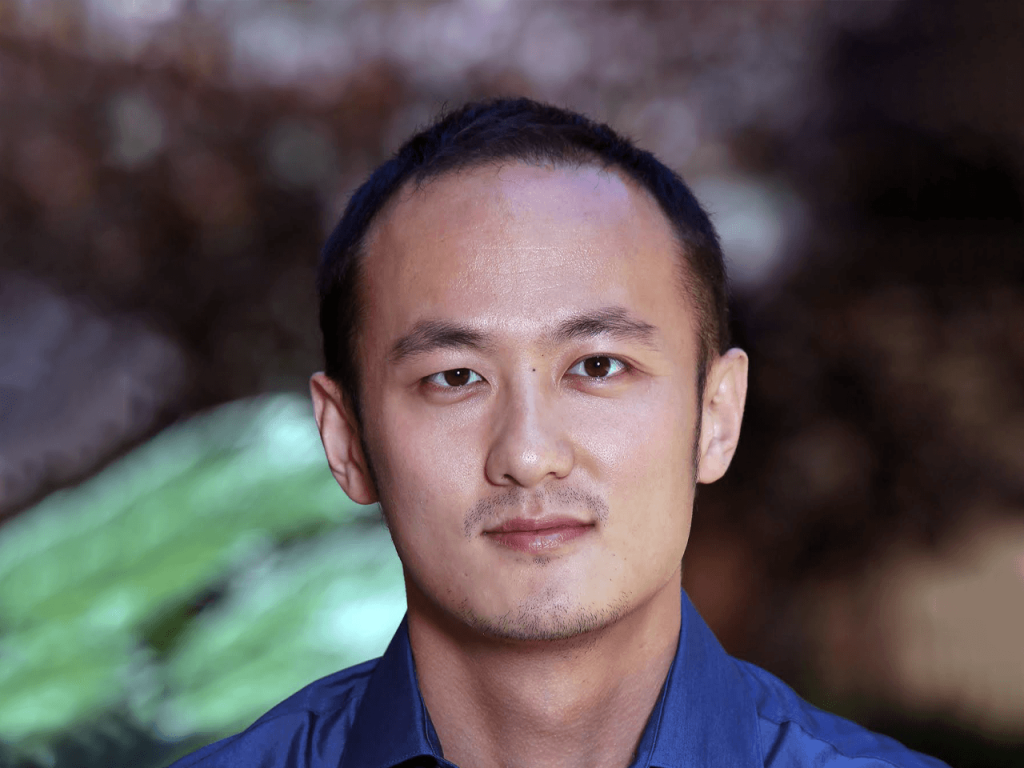
Jason Tu, co-founder and CEO of MioTech / Photo credit: MioTech
While Cheng firmly believes that Hong Kong’s best universities are producing top-notch data scientists, he notes that the city’s surge of tech startups has driven talent demand to a level far higher than the local output can fulfill.
Both founders share that HKSTP has been instrumental in placing suitable, much-needed talent in their employment ranks. By leveraging HKSTP’s ecosystem, MioTech has hired engineers and PhD students directly from Hong Kong’s universities while Apoidea has dipped into talent pools available in HKSTP’s ecosystem, co-hosting recruitment drives and getting the first pick of promising talent.
Cheng further underscores the benefit of HKSTP’s well-established reputation: According to him, being part of the HKSTP ecosystem gives prospective candidates added confidence that Apoidea is a quality startup to consider a career with.
Accelerating adoption
While Apoidea is ultimately working toward a future where 90% of middle- and back-office work in financial institutions are enhanced by AI, MioTech is gearing up to expand the reach of its database globally, beginning with Southeast Asian companies. Both startups see Hong Kong as their ideal nesting ground for several reasons.
In terms of regulations, both founders assert that Hong Kong is ahead of the curve globally.
Tu finds that the EU is the furthest ahead in sustainability policies, and he ranks Hong Kong in second place.
“Having a good relationship and communication channel for us to understand these policies or even participate in policy making is extremely important,” he says. To that end, HKSTP has helped connect MioTech with the city’s relevant authorities, giving them a firsthand source of information and interaction on the latest developments in regulation.
I think the most important quality of Hongkongers is their can-do attitude.
For Cheng, he finds that the city’s finance regulations are mature and transparent. Knowing exactly what regulators want, even though they may not be lenient, allows startups like Apoidea to innovate and explore efficiency improvements within established rules, particularly as Hong Kong catches up to regulations around fintech.
The city, which has long been a connecting point between the East and the West, is host to the regional headquarters of international banks sitting alongside local branches of Chinese banks. This, Cheng says, makes the city a location of choice for fintech startups looking to develop solutions that fit the needs of both regions, with on-shore teams who can do business development as well as support clients locally.
Tu, who made it his company’s mission from the start to provide sustainability data and technology to the whole world, saw similar results in working to build a global presence out of Hong Kong. Fifty percent of MioTech’s clientele are major global names, with the other half comprising Chinese businesses.
Playing to win
Cheng doubles down on the benefits of Hong Kong’s strategic geolocation when discussing what Hong Kong as a city and a society can offer to aspiring startups. Established in an international city that experiences and understands many different cultures, Hong Kong’s startups are usually built with the view of serving the global market – a future Cheng is confident in.
“I think the most important quality of Hongkongers is their can-do attitude,” Cheng says emphatically. He adds that Hong Kong’s people love to embrace challenges and do not easily give up, which are crucial qualities for startup entrepreneurs and employees to embrace and are the essence of the HK10X spirit.
Cheng advises anyone founding a startup in Hong Kong that it is important to be immersed in the local ecosystem and to be helpful to one another by introducing clients to each other, integrating services to present a more viable package of solutions, and speaking to prospective clients together.
Arguably, there is no better time than the present for innovative startups to take that step into developing new solutions to address the needs of tomorrow’s world.
“The future is super bright right now,” enthuses Tu. “Social values are changing. The younger generation is very environmentally conscious, and when they grow up, they will bring their set of social values into financial value.”
Currency converted from Hong Kong dollars to US dollars: US$1 = HK$7.78
The Hong Kong Science and Technology Park aims to foster the development of Hong Kong into a regional hub for innovation and growth.
Learn more about HKSTP’s pioneering entrepreneurs and how their technology is transforming industries on its website.
This content was produced by Tech in Asia Studios, which connects brands with Asia’s tech community. Learn more about partnering with Tech in Asia Studios.
Stay updated on the go with our mobile app.
Get latest insights with smoother, more personalized experience through TIA mobile app.
Recommended reads
 AI hiring heats up in Singapore
 The Nadiem effect on investors, talent, and Indonesia
 What the Russia-Ukraine crisis spells for spacetech in SEA
 How CFOs can balance their duties in driving startup growth
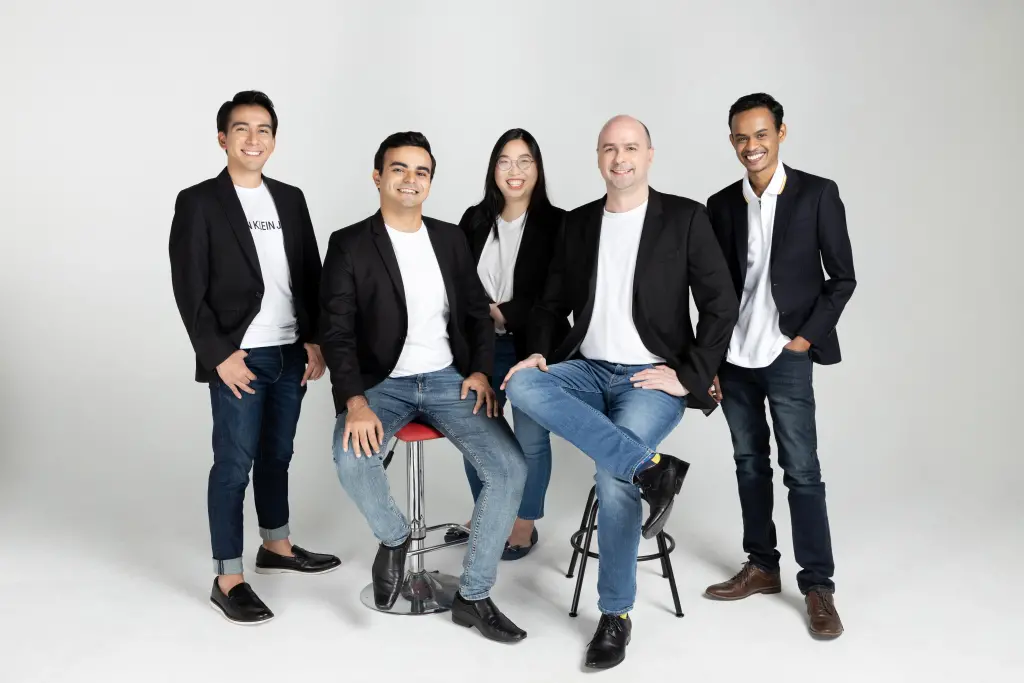 Surge backs $5.1m round of first accelerator participant from Thailand
 Crypto exchange Huobi files for trading license in HK
 SG wealthtech investment grows 7x, outpaces region: report
 Binance to form JV with Thai power firm to enter local market
 Init 6 is making an early bet on this Indonesian coding test firm
 This startup’s AI interviews aim for fairer hiring





Editing by Stefanie Yeo, Nathaniel Fetalvero, and September Grace Mahino
(And yes, we’re serious about ethics and transparency. More information here.)




📅 Upcoming Events
22 October 2026
Payoneer x CSPN Summit 2026