Samantha Cheh · · 6 min read
Here’s how Juniper Networks is transforming campus networks with AI

Just mention “university WiFi” or “campus ethernet” and many students can probably conjure up memories of struggling with unstable internet connections while working on campus.
It’s a pain point particular to the modern-day student, as WiFi connections and online platforms have become central to how they learn.
“Online learning has made campus networks mission critical,” says Yedu Siddalingappa, the APAC tech lead specialist for AI-driven enterprise at Juniper Networks, which offers networking products.

Yedu Siddalingappa, APAC tech lead specialist at Juniper Networks / Photo credit: Juniper Networks
This is especially true amid Covid-19, which has increased the uptake of hybrid learning, he adds. According to one survey, 56% of higher education institutions saw growth in their online and hybrid programs.
“Issues with network stability that were acceptable pre-pandemic now have a direct effect on students’ learning and academic progress,” he says. “It can’t be ignored any longer.”
A patchwork problem
So why is the on-campus online experience still so bad for so many people?
Part of the problem is that at many institutions today, traditional network tech stacks are a complex patchwork of legacy systems, solutions, and features that have piled up over time.
When WiFi took off in 2003, most traditional networks were built for simple use cases such as allowing guests to remain connected to the internet, Siddalingappa explains. However, the emergence of personal devices like iPhones and laptops amped up what was required.

Photo credit: Shutterstock
As institutions added more solutions to offer better network capabilities, operators and administrators found themselves painstakingly combing through layers of overlapping software and services. One study suggests that 53% of network professionals spend more than 20 hours per week just troubleshooting problems, and 24% of that time is spent figuring out root causes.
That’s where better architecture – and AI-based solutions – come in.
Moving toward microservices
When higher education institutions want to implement a more “solid” network infrastructure, Siddalingappa says that they need to consider three main aspects: microservices, AI, and APIs.
Microservices have boomed in recent years as organizations increasingly migrate away from monolithic structures.
Think of it like moving from a DVD player to Netflix. Previously, you’d have to buy a new DVD if you wanted more content or replace your player if it broke. With Netflix, however, new movies and features get implemented seamlessly and automatically, allowing users to enjoy those benefits immediately with minimal hassle. In network infrastructure terms, microservices erase the need for downtime and planned maintenance for upgrades.
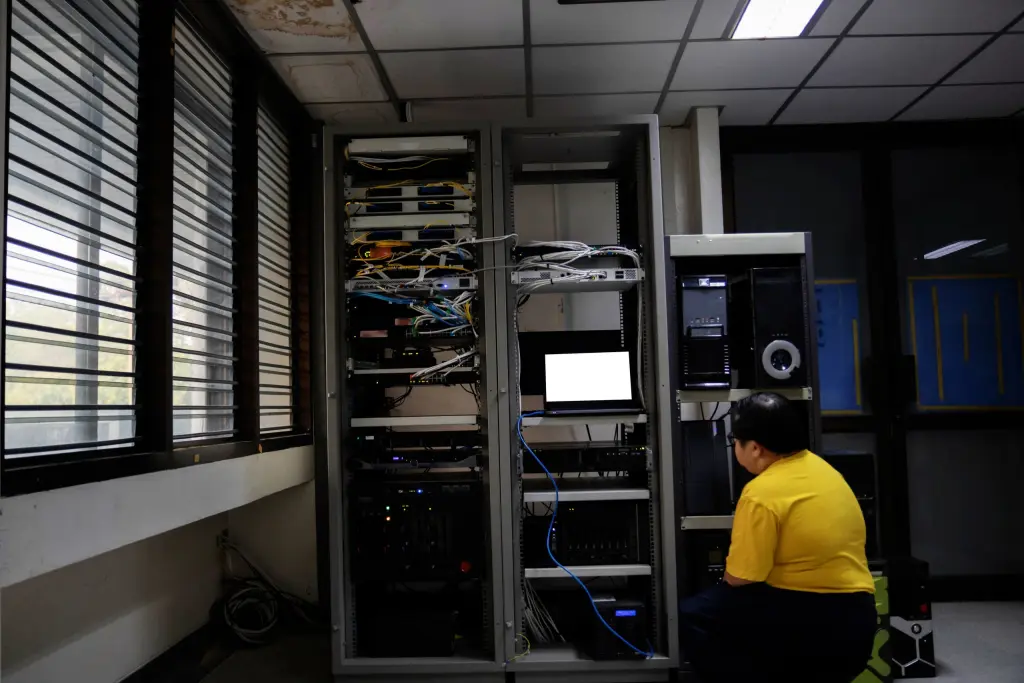
Photo credit: Shutterstock
Because each microservice essentially runs its own independent system, operators can rapidly scale resources up or down depending on demand. For instance, Juniper offers a cloud networking solution driven by AI and built upon a microservices architecture, which enables developers to ship updates for new features and bug fixes almost every week.
“Cloud-based microservice models are also more robust because failure in one component will not bring down the entire cloud,” says Siddalingappa. “It can be seamlessly fixed in the back end, so there’s an advantage in terms of reliability, agility, and seamlessness.”
The simple beauty of AI
Siddalingappa says systems should also have a stronger focus on AI.
Previously, it could take “hours or days” for teams to identify and diagnose what was causing a network issue. With AI, this task can be done in a matter of seconds or minutes.
“AI drastically simplifies many repetitive tasks like collecting and analyzing data when trying to extract patterns of anomalies,” he explains.
The technology can also increase efficiency. For instance, Juniper’s Mist AI solution has a built-in natural language filter that combines with Marvis, the company’s AI-driven virtual network assistant. Instead of having to diagnose problems themselves, network engineers can ask the AI in simple language what’s causing a particular issue.

Photo credit: Shutterstock
This was the case with one Juniper client, a large retailer whose warehouse robots periodically dropped connectivity with the main network. Once that client deployed Juniper’s Mist AI, the AI leveraged network data to figure out what was causing the problem.
Turns out, there was an issue with the robots’ WiFi drivers. Once Juniper discovered this, it informed the robots’ vendor, which deployed a patch to fix the issue.
“We’re able to monitor everything from the moment a user connects to the WiFi,” Siddalingappa says. “When there’s a problem, we can look back at the connection history and identify the problem with 100% certainty.”
He shared that many of the firm’s customers have experienced a 90% reduction in internal trouble tickets after migrating from legacy networks to Juniper Mist.
Open up the network
Finally, Siddalingappa says that it’s essential for networks today to employ an API-first architecture. The open nature of APIs makes it easier for organizations to accept new applications, platforms, and devices, all of which can interact with each other.
This ensures that data is not siloed and that applications are optimized as much as possible for functionality and usability, he says.
“API integration is a key factor to automating manual tasks and enabling smooth transitions between applications,” he continues.
Automation is an important portion because it means that administrators don’t need to set up an entirely new process every time a new application or software is added to the mix.
For instance, Juniper Mist is 100% API-driven, which allows it to work with third-party software like ServiceNow, SolarWinds, Slack, and Microsoft Teams. With its API integration service, these applications can automatically produce reports and trigger events within Juniper’s own infrastructure, governed by a set of parameters laid out by service-level agreements.
Networking beyond IT
Online learning is not going away, and the network needs of students and institutions will only become more complex.
Siddalingappa says there are increasing expectations for network teams to unlock opportunities in facility management or operations. For example, classrooms have been underutilized amid the pandemic, a fact that is pushing schools to optimize their real estate and energy management.
“The beauty of the network is that it has all this intelligence – how many people, how many devices, which location – that is trapped in the network,” he says. “Once it’s open, we can extract insights that can help non-IT teams address challenges and run other use cases.”
Siddalingappa predicts that more AI will be used to implement self-correcting networking management and stronger cybersecurity features in the future.
“At the end of the day, having a robust architectural foundation is essential,” he concludes. “Once you have that, you can leverage AI and machine learning to automate manual tasks. That frees you up to be more creative rather than focusing on the mundane.”
Juniper Networks is a leader in secure AI-driven network solutions that enable higher education institutions to provide a modern, seamless, and connected digital experience for students, faculty, staff, and guests.
To find out more about how Juniper Networks’ cutting-edge solutions can help your organization, visit its website at this link.
You can also get in touch through this form.
This content was produced by Tech in Asia Studios, which connects brands with Asia’s tech community. Learn more about partnering with Tech in Asia Studios.
Stay updated on the go with our mobile app.
Get latest insights with smoother, more personalized experience through TIA mobile app.
Recommended reads
 Life’s a game, and AI agents are Animoca’s new play
 Indonesian AI startup goes global
 Forrest Li on scaling Sea, building smarter bots, and founder grit
 An AI assistant that joins sales calls and scores team skills
 Beyond the check: Why VCs need more than capital
 SGX’s CEO says it doesn’t need a unicorn to win
 SMEs want AI too, but not the kind Big Tech is selling
 Oatside’s alt-milk rise hits a profitable gear
 Alibaba’s financial health in 12 charts
 Asia’s telcos bundle AI into mobile plans. Will it pay off?





Editing by Jonathan Chew, Winston Zhang, Stefanie Yeo, and Jaclyn Tiu
(And yes, we’re serious about ethics and transparency. More information here.)