Jonathan Chew · · 6 min read
Helpful Huawei: how the tech giant is boosting its support for startups in Southeast Asia

You might have heard of the phrase “unknown unknowns.” Known unknowns are risks that can be anticipated, but issues that come out of nowhere – the unknown unknowns – are the real concerns.
This idea is very relevant to startups. There are many things to look out for, but the relative lack of resources makes it impossible for a young company to prepare for every possibility.
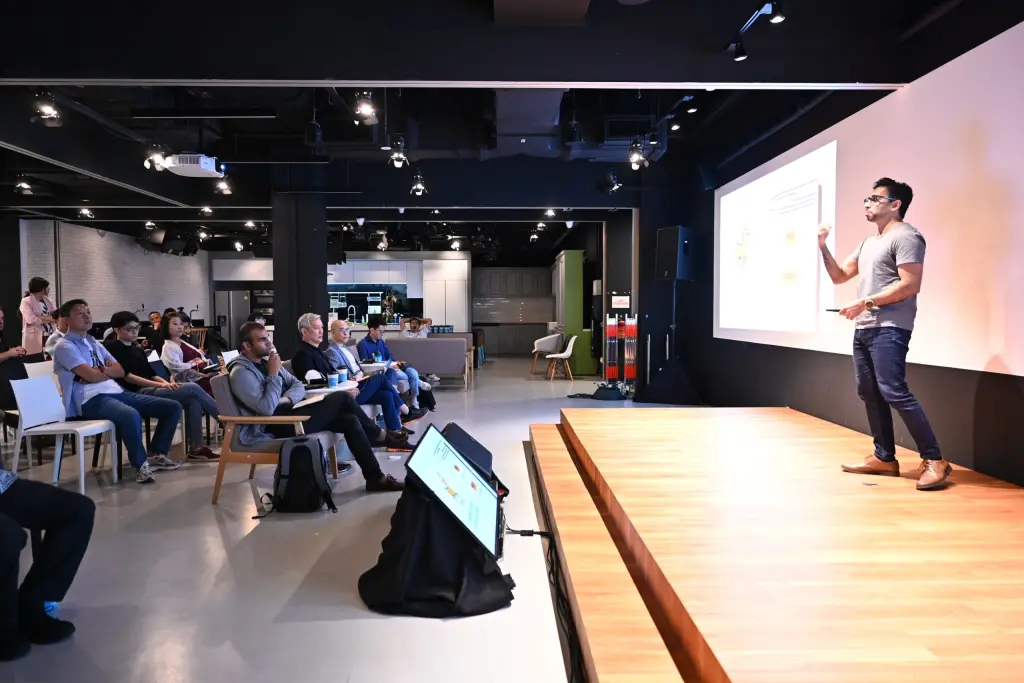
Similarly, you can’t prepare an answer for every possible question during a presentation / Photo credit: Huawei
That’s why getting support from larger organizations is so important. Whenever new and unanticipated things come up, having that kind of help can go a long way – whether it be conducting urgent research for a new product, creating prototypes, or simply getting advice from experienced mentors.
It’s the kind of support Chinese tech major Huawei offers, and the company’s looking to take its startup empowerment efforts to the next level.
Opening avenues for development
Huawei has been supporting startups in Asia Pacific since 2020, but recent developments have put a much bigger spotlight on its efforts.
In March this year, the company unveiled OpenLab3.0, a regional center for joint solution innovation. OpenLab was originally launched in Singapore in 2016, giving Huawei an avenue to collaborate with regional startups and provide various resources and facilities for R&D.
The newly upgraded facility includes support for startups working on Smart Campus and Smart Classroom solutions, among others. These technologies usually involve wireless infrastructure and IoT devices to enable better data collection and insights into the use of physical spaces.
“All of the startups we work with are in tech, so technical development and R&D are always at the forefront,” says Leo Jiang, chief digital officer at Huawei.
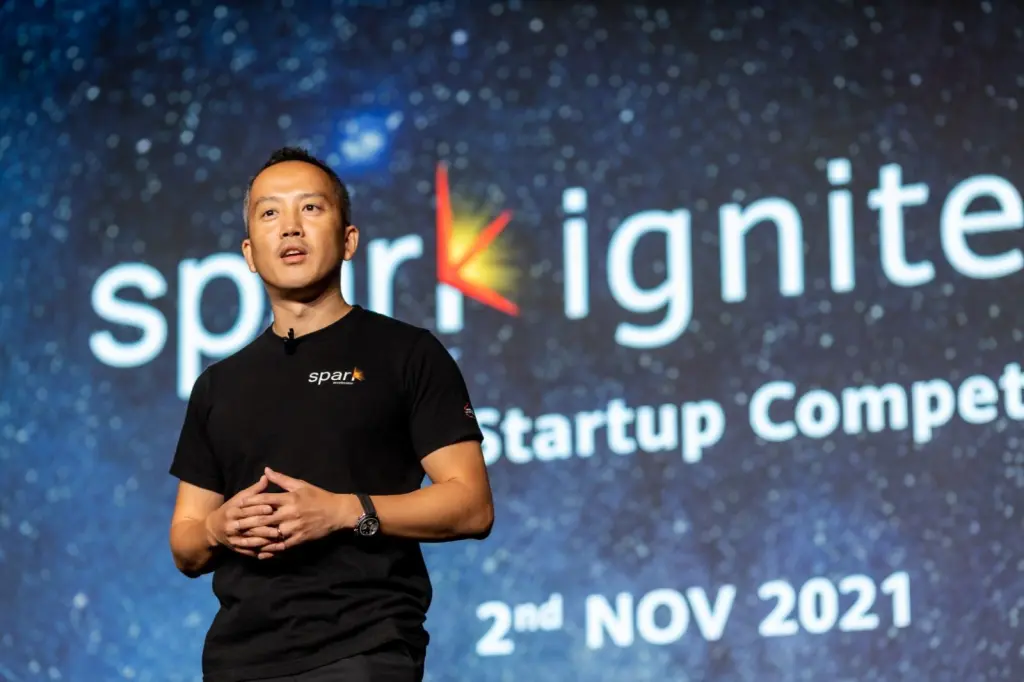
Leo Jiang, Huawei’s chief digital officer for Asia Pacific / Photo credit: Huawei
A Crunchbase analysis on 123 startups that exited via IPO showed that successful tech firms spend about 20% of revenue on R&D, which can be a hefty chunk of change. This figure could go even higher, as seen with tech majors like Meta, which spent around 33% of revenue in 2022.
By providing R&D resources, Huawei’s OpenLab3.0 helps to defray a significant chunk of important costs for startups while also providing an avenue for tech firms to collaborate with one of the biggest players in the industry.
“OpenLab3.0 gives these startups the right type of support, especially those that want to co-create with Huawei and have already come up with a credible product,” Jiang continues.
Sparking innovation
Huawei also offers the Huawei Cloud Startup Incubator program, also known as the Spark Incubator. It was first launched in October 2022 as a partnership with the Pixel Innovation Hub, an innovation space run by Singapore’s Infocomm Media Development Authority.
The five-month-long program provides a highly structured way for up to 12 seed or pre-seed startups to learn things like the legal side of business management, financing, and how to have a strong go-to-market strategy, among others.
Its first cohort has already achieved notable success, with many participants having raised funding since graduating from the program, according to Jiang. For instance, AI firm Betterdata recently raised US$1.65 million, while Nervotec received a commitment for an undisclosed amount of funding prior to the official launch of its fundraising round.
Beyond capital, the technical support and education provided through the program has helped many startups, such as Nervotec, develop their products. With the help of Huawei’s teams, the healthtech company was able to build and test an AI model for the firm’s solution, which is now ready to launch once production is complete.
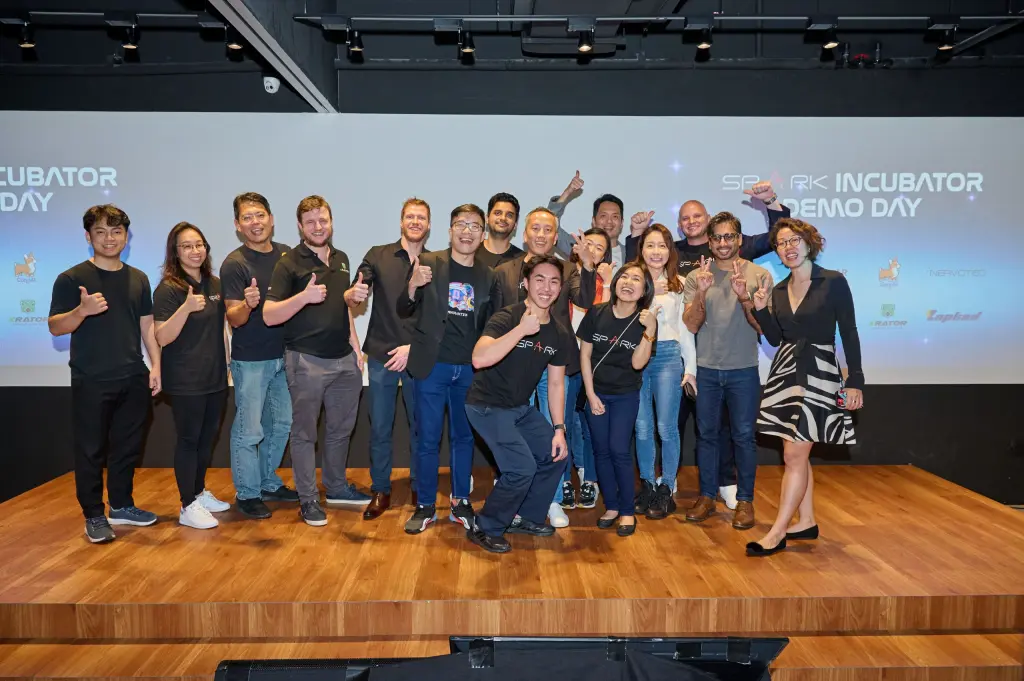
Startups from the first cohort during the program’s Demo Day / Photo credit: Huawei
For the second cohort this year, Huawei has implemented several adjustments to improve the program and keep up with the latest developments.
For instance, it’s adding generative AI as a new track – an unsurprising move considering how much attention the sector has gotten in recent months.
“There’s lots of potential in this field,” Jiang says. “Huawei has always had a very strong focus and presence in AI, so it’s a good way for us to synergize with regional startups by leveraging our existing product portfolio.”
Huawei is also looking to source more startups outside of Singapore for this cohort. In Jiang’s experience, firms based elsewhere in Southeast Asia tend to be a little more aggressive in terms of market expansion, which is something that Huawei wants to capitalize on.
“We want to see more diversity in the companies in the program,” he explains.
One great example of this aggressiveness is Singapore-based BuzzAR, which is led by co-founder and CEO Bell Beh, a Penang-born Singaporean. The firm was part of the Huawei Cloud Incubator’s first cohort and has already expanded to the Middle East.
It’s come a long way since joining the program.
Feeling the buzz
Founded in 2018, BuzzAR provides various augmented reality solutions to retail and commerce businesses. Beh admits that she quickly found herself in over her head during the firm’s early days.
“I had three core jobs: fundraising, business development, and marketing,” she shares. Fundraising, in particular, was an extremely tough task for her.
“I failed at it big time,” she adds.
That’s because Beh wasn’t familiar with how investors typically communicated and what they wanted to see. In other words, she “didn’t speak their language.”
This included things like common business acronyms, the kind of structure and formatting that investors wanted to see in pitch decks, and how to prepare scripts for presentations.
By joining the Huawei Cloud Startup Incubator, she got help from Jiang, who was her mentor.
“I still remember our very first meeting as he was rather strict on me,” she recalls lightheartedly. “But he made sure that I can pitch confidently, even on stage.”
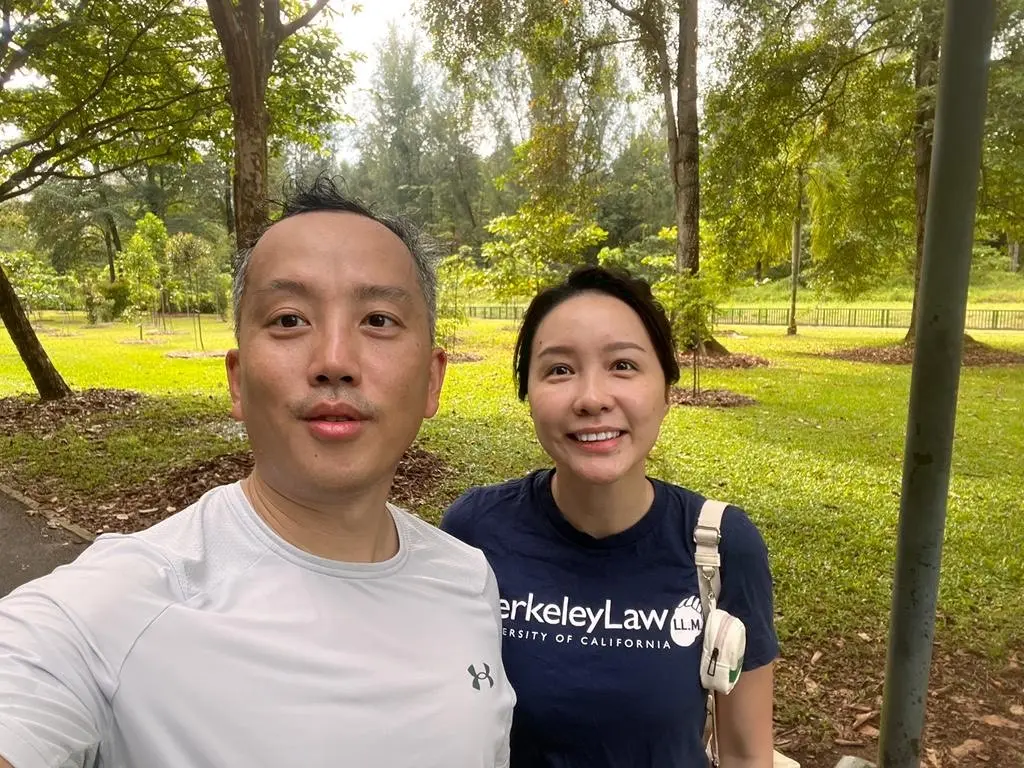
Bell Beh, CEO and co-founder of BuzzAR, along with Jiang / Photo credit: Huawei
Jiang also helped Beh out on the business development front, advising her on how to improve her sales methods – even down to the little things like how the company should name its products.
Following the completion of the program, Beh quickly put her newfound knowledge and skills to work. BuzzAR is now in late-stage talks with several Tier 1 investors to close out its series A round of fundraising.
“Before joining this program, we wouldn’t even get initial offers, let alone late-stage talks,” Beh says.
Additionally, Beh says that the efficiency of BuzzAR’s sales cycle has “improved tremendously” and revenue has tripled. Much of this is due to the mindset and business skills imparted by business leaders during the incubator program – some of whom would have cost thousands of dollars in private coaching, she points out.
“There’s a lot of tangible and intangible benefits that we’ve gotten,” she adds. “Huawei’s a very progressive company that really wants to grow with startups like us.”
What’s on the horizon?
With Huawei’s OpenLab3.0 and incubator program now established, the firm is setting its sights on other initiatives to continue supporting startups in the region.
This includes Project Horizon, a program meant to foster relationships between enterprises looking to innovate and startups that can provide the cutting-edge technology and solutions to do so.
“We want to continue plugging startups into our enterprise spaces,” says Jiang.
Another thing that Jiang is “extremely excited” about is Pangu, a large language model that will help Huawei implement generative AI capabilities for regional tech firms.
“It’s no surprise that generative AI will be leveraged by many startups,” he says. “We’re definitely well-placed to provide support, plus we’ll have the opportunity to fine-tune our own product by working with these tech firms.”
Huawei is a leading global provider of information and communications technology infrastructure and smart devices. Its Huawei Cloud Startup Incubator program has helped more than 10 early stage startups to date.
To learn from some of the best business leaders and mentors out there, sign up for its second cohort.
This content was produced by Tech in Asia Studios, which connects brands with Asia’s tech community. Learn more about partnering with Tech in Asia Studios.
Stay updated on the go with our mobile app.
Get latest insights with smoother, more personalized experience through TIA mobile app.
Recommended reads
 Indonesian AI startup goes global
 Forrest Li on scaling Sea, building smarter bots, and founder grit
 An AI assistant that joins sales calls and scores team skills
 SGX’s CEO says it doesn’t need a unicorn to win
 SMEs want AI too, but not the kind Big Tech is selling
 Oatside’s alt-milk rise hits a profitable gear
 Alibaba’s financial health in 12 charts
 Asia’s telcos bundle AI into mobile plans. Will it pay off?
 M-Daq chases bigger clients as revenue falls, losses grow
 VC tracker: Accel raises US$3.5b, including US$550m for India





Editing by Winston Zhang, Stefanie Yeo, and Dhania Putri Sarahtika
(And yes, we’re serious about ethics and transparency. More information here.)