Malavika Velayanikal · · 5 min read
Entrepreneurship on the edge: He rebuilt his startup even as earthquakes terrorized Nepal
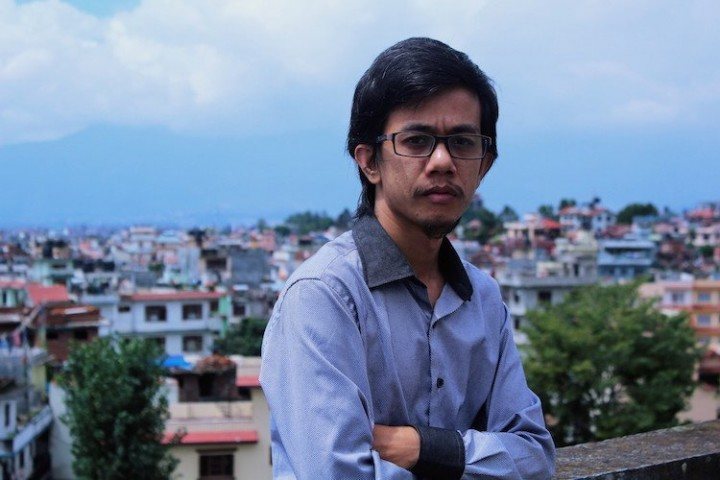
After getting a diploma in computing in Singapore five years ago, Nirajan Bom Malla got active in the emerging startup scene in his home town of Kathmandu, the picturesque capital of Nepal surrounded by the towering Himalayas. He decided to start something on his own: Surfmandu.
Apart from the Kathmandu connection, the name reflected Bom Malla’s interest in social media and community-oriented tech projects. Surfmandu began with a file hosting service called Filestrack and a discussion board platform called Enbeeone3 – all before hitting upon his current venture, Vidinterest, a video curation and sharing site.
Initially, Bom Malla, who is now 26, focused on building up the community and user-generated content on the site. When I met him in November last year at the Tech in Asia conference in Jakarta, he had just secured additional funding and was full of plans for an upgraded Vidinterest with new features in 2015. Then he got hit with an earthquake.
The 7.9-magnitude Nepal earthquake in April killed 7,000 people, injured 14,000, and threw life helter skelter. Next month, even as relief operations were under way, another quake of equal magnitude struck. “Like all other people who felt both the 7+ earthquakes, I was psychologically disturbed,” says Bom Malla in his understated way. The young entrepreneur escaped unhurt even though he was right in the middle of the two quakes, captured live in this video.
A hypervigilant state of being
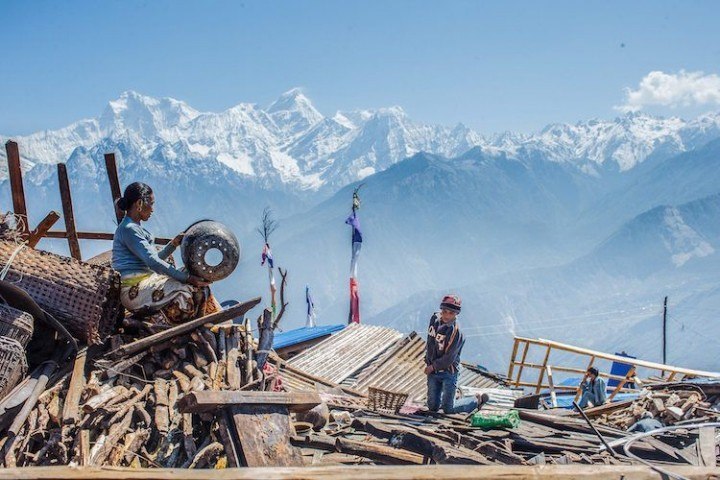
It’s hard to imagine the effects of an earthquake on one’s psyche, because it’s only the physical side of it we see on TV and the internet. For Bom Malla, the earthquakes were more than two catastrophic events that happened one after another: they were two months of living on the edge.
“We experienced hundreds of aftershocks, at least one everyday. We had to be alert all the time [to the possibility of the next big quake]. Loved ones were always the first concern every time there was an aftershock,” recalls Bom Malla.
Apart from this hypervigilant state of mind, which was physically draining as well, there was the matter of getting everyday life back on even keel amidst the chaos all around. Once the worst was behind them, however, the Vidinterest team tried to refocus on the upgrade they were working on when the earthquakes struck.
But how do you get back to work, especially online, when the internet is full of death toll and casualty stats about your neighborhood?
“As our team primarily works on social media, we gave most of our time to sharing updates and making people aware of all the hoax news about the next earthquake,” recounts Bom Malla.
Even in the middle of such an enormous human tragedy, trolls wreaked further havoc on the internet. Predictions were made about the exact timing of the next big earthquake, attributed to a scientist or some astrologer. And these warning messages would go viral when there were aftershocks, creating further panic. People spent nights on the street outside their homes, praying, to avoid being trapped by another earthquake.
But, as a Sufi seer once predicted, “this too shall pass.” And so it was with Bom Malla and Vidinterest. “As the gaps between aftershocks started getting longer, we began to focus more on our work and less on the earthquakes.”
Back to business
Making YouTube easier





Stay updated on the go with our mobile app.
Get latest insights with smoother, more personalized experience through TIA mobile app.