- Premium Content It takes our newsroom weeks - if not months - to investigate and produce stories for our premium content. You can’t find them anywhere else.
 Putra Muskita · · 6 min read
HappyFresh is safe, but expect more headwinds for Indonesia’s e-grocery
After finding itself in limbo early this month, e-grocery company HappyFresh has found the light at the end of the tunnel. The company announced yesterday it has secured funding to resume operations in Indonesia while closing down its Malaysia and Thailand ones.
Three of the Jakarta-headquartered firm’s top executives have also been reinstated, and its board has been reshuffled.
Still, this is definitely not the best of times for Indonesia’s e-grocery startups. In February, agritech startup TaniHub had to close its B2C e-grocery service to stick with B2B, but it’s grappling with internal issues as it aims to raise funds.
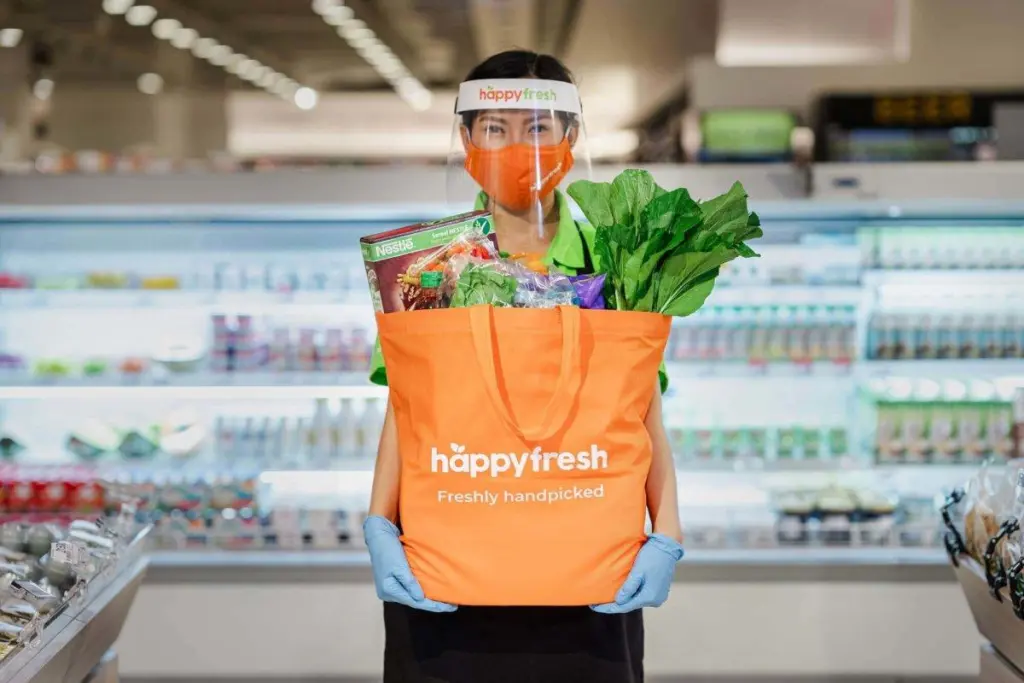
Photo credit: HappyFresh
Quick-commerce startup Dropezy (which raised US$2.5 million in a pre-series A round last year) may have closed all its dark stores as it prepares to pivot toward becoming “asset-light,” DealStreetAsia reported. Meanwhile, Traveloka said in August that it was shutting down its e-grocery service after operating for just six months.
It’s hard to imagine that over the past two years, Southeast Asia’s e-grocery startups have been investor darlings, touting shiny numbers boosted by the pandemic in exchange for hundreds of millions of dollars in funding. How did things go so wrong so quickly, at least in Indonesia?
The right basket size
Is the B2C e-grocery model the culprit?
HappyFresh’s main business operates an asset-light model, without the need to hold its own inventory. It depends on partnerships with existing supermarket chains like Tesco in Thailand and Aeon in Malaysia and Indonesia – technically making HappyFresh a logistics and delivery company.
But the need for speed and flexibility sacrifices margins. Supermarkets that sell through HappyFresh still charge prices comparable to brick-and-mortar locations. That means delivery fees are HappyFresh’s primary source of profit.
Is that enough to operate a sustainable business? HappyFresh had a gross loss of US$4.3 million for the financial year ended December 31, 2019 (the latest figures publicly available). The net loss was US$22.7 million.
Adding to that, HappyFresh also has to compete with GrabMart and GoMart. The two regional giants primarily provide logistics services through partnerships with merchants, retailers, and supermarket chains.
It’s clear that Grab and Gojek can execute this strategy more efficiently than HappyFresh, given that they already have a strong fleet of drivers. In fact, HappyFresh had also partnered with Grab in its early days in Malaysia and Indonesia, though it’s unclear why and when the partnership ended. Gojek drivers were also available as a HappyFresh delivery option at some point.
Still, there are other ways to go about B2C e-grocery. For instance, quick-commerce startups like Dropezy, Astro, and Bananas all hold their own inventory, sourcing goods from producers and distributors at wholesale prices.
B2B to the rescue?
Now what?
Stay ahead in Asia’s tech landscape
This is premium content. Subscribe to read the full story.
As the pandemic boost to e-grocery fades, cracks are emerging in both B2C and B2B models. What’s next?
We know this is not ideal. ⌛ Sign up in 20 seconds. Cancel anytime.
Our subscriber community includes professionals from these companies:





Stay updated on the go with our mobile app.
Get latest insights with smoother, more personalized experience through TIA mobile app.









📅 Upcoming Events
22 October 2026
Payoneer x CSPN Summit 2026