Jodi Xu Klein · · 4 min read
US venture capital in China tumbles as tech decoupling deepens, report says
US venture investment in China is expected to plunge to a six-year low for 2019 as a deepening technology decoupling between the two countries rips apart early-stage deals.
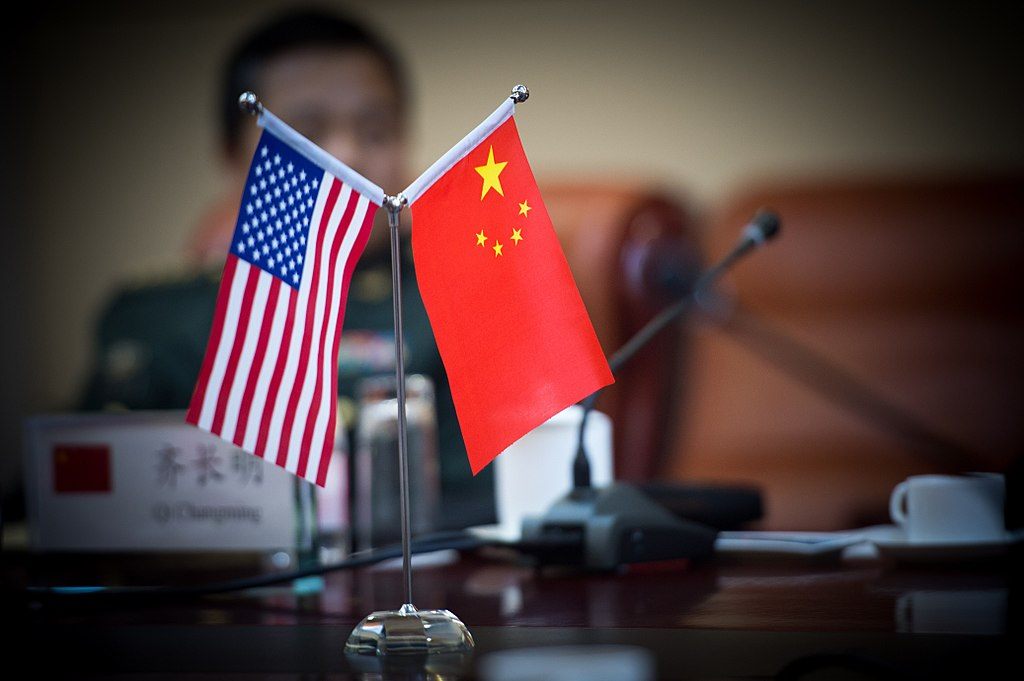
Photo credit: Mikki Sprenkle
The volume of US venture capital investment in Chinese startups is estimated to fall to less than US$4 billion in 2019 from its peak of US$17.4 billion in 2018, according to a report published by Rhodium Group and the National Committee on US-China Relations on Monday.
The retreat was attributed to a combination of a cooling Chinese technology sector, policy headwinds, and political uncertainty caused by the prolonged trade war between the world’s two leading economies.
The report, reviewing US-China venture capital trends over the two decades ended 2019, calls on US policymakers to “avoid disruption and unproductive decoupling without purpose.”
“The US must more narrowly articulate China-specific security and economic concerns,” said the report’s authors, led by Rhodium’s Adam Lysenko, a data analyst at the American research firm.
“Leaders must weigh marginal increases in national security against the economic and security costs of limiting participation in the US technology sector.”
The writers cautioned that some defensive policy tools under discussion or being implemented “could undermine the attractiveness of the US to entrepreneurs, potentially eroding the US leadership position in global tech development.”
The two countries completed nearly 5,000 transactions worth US$66 billion during the 20-year period, according to the report.
Owing to the inherently private and international nature of such deals and their complex legal structures, data compilation was difficult, the authors said, terming their estimate of the total number and value of deals as conservative and likely hitting the low end of the spectrum.
But the landscape changed drastically recently as total funds raised by China-based startups fell to US$17 billion in the first half of last year, from US$61 billion in the first half of 2018, according to Pitchbook, a Seattle, Washington-based data provider for private capital markets.
The venture capital space is taking the center stage in policy debates in Washington as deals made by this particular group of investors are mostly in emerging technologies that could become the linchpin in the race to dominate global technology.
As China takes the lead in a number of critical areas, including next-generation 5G mobile technology, US strategic doctrine has shifted from presuming eventual Chinese convergence with liberal market principles to expecting a long-term systemic rivalry.
That shift has resulted in a significant drop in two-way capital flows between the US and China as Washington moves to tighten the rules for foreign direct investment. Chinese acquisitions of US assets have dropped to US$18 billion in 2019 from a peak of US$60 billion in 2016, Rhodium data showed previously.





Stay updated on the go with our mobile app.
Get latest insights with smoother, more personalized experience through TIA mobile app.