
Welcome to The Offset! Delivered once a month via email and through the Tech in Asia website, this free newsletter breaks down the biggest stories and trends in greentech. Get it in your email inbox by registering here.
Hello,
The world already knows about how bad traffic is in Metro Manila, the Philippines’ capital region. What many may not realize is that roads in nearby provinces also frequently experience congestion.
This is why I take an alternative route whenever I drive south to my home province to visit family and friends. Travel time is longer, but there’s little to no traffic.
People rarely use this route because it can be a bit tricky to navigate, as it essentially passes through a forest reserve that’s unfamiliar to non-locals. This area also houses a geothermal power station complex – something others avoid because the slopes can be steep, and pipes are strewn along the road.
The complex has stood for decades and – though a driving nuisance to some – remains largely uncontroversial.
But the story is a bit different in neighboring Indonesia, where the people of Flores – one of the archipelago’s Lesser Sunda Islands – have pushed back against geothermal plants.
Flores has diverse agricultural land that produces coffee, betel nuts, and candle nuts, and citizens fear that the projects could disrupt the local ecosystem.
On top of this issue, the island is already facing challenges from land degradation and flooding. So, even if the geothermal projects are ultimately for the greater good, there’s a valid concern that sacrifices will be necessary.
— Miguel
DEEP READ
A green ‘paradox’ in Southeast Asia

Image credit: Timmy Loen
The shift toward green energy isn’t always a clean process. Sometimes, it can conflict with the rights and needs of the local communities it’s supposed to benefit.
That’s the paradox in some of Southeast Asia’s efforts to decarbonize.
The region has abundant renewable energy resources and lofty goals for achieving net-zero emissions. However, renewable projects can disrupt local ecosystems and threaten the livelihoods of marginalized communities.
This is what’s happening in Flores, where there are several ongoing geothermal plant projects.
While protesters see the importance of climate infrastructure initiatives, they are worried about the real dangers that come with these projects. They argue that the developments are a form of colonialism and resource extraction, fearing the projects will harm their water supplies and agricultural land.
Over the years, their resistance has gained support from activists and religious leaders, which ultimately led to the World Bank withdrawing its funding.
While the projects are still being considered, protesters continue to put up a fight. Earlier this month, however, more alarm bells went off following the “mysterious death” of a 30-year-old activist on the island.
THE BIG STORIES
1️⃣ Who’s really solving AI’s data center energy crisis in Asia?

Image credit: Timmy Loen
AI companies need vast amounts of compute power, and chips are in sky-high demand as data center demand balloons. That’s part of the reason Nvidia struck a US$100 billion deal with OpenAI, becoming the ChatGPT maker’s “preferred” supplier.
In turn, the power needed to run these data centers is also increasing, straining electrical grids across the globe. This is especially true in Asia, where many data centers rely on fossil fuels, as my colleague Glenn Kaonang points out in this story.
Now this is where companies like Singapore’s Red Dot Analytics, the UK’s EkkoSense, and the US’ Phaidra come in. They provide digital twins – software-based replicas that mirror physical data centers’ systems – to help data center firms monitor their operations and optimize energy use.
2️⃣ Dat Bike raises $22m series B, plans Thai entry by 2026
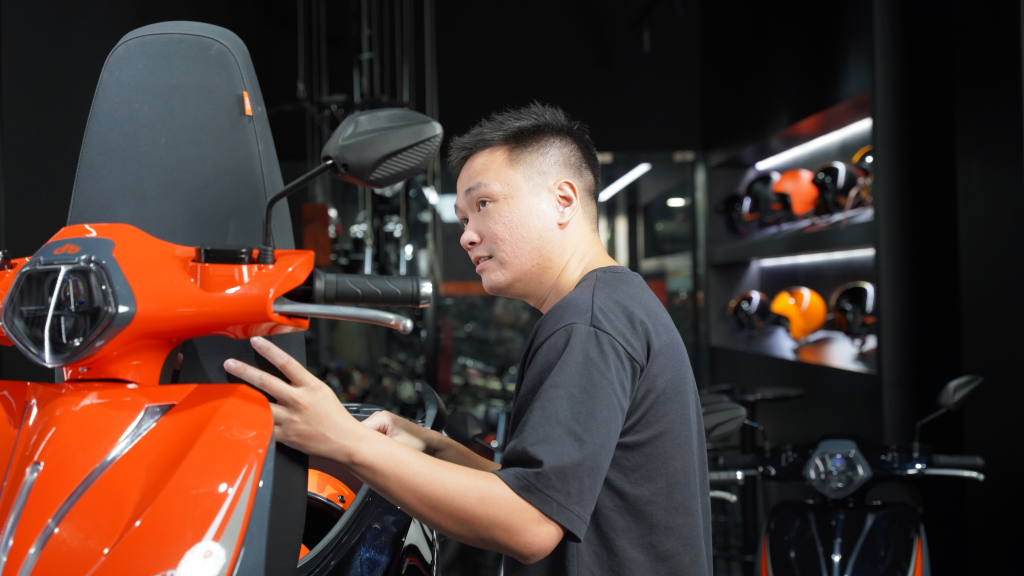
Son Nguyen, founder and CEO of Dat Bike / Photo credit: Dat Bike
Fresh funding for the Vietnamese electric motorbike manufacturer comes as electric vehicle firms in Indonesia and Singapore face difficulties. It also follows a government directive to ban petrol-powered motorbikes in parts of Hanoi by 2026.
Dat Bike’s revenue grew nearly 4x to US$6.4 million in 2024, and it projects an 8x to 10x growth for 2025. The startup has been EBITDA positive since August.
The electric motorbike maker is also looking to hit the road in Thailand, with a commercial launch in the country slated for 2026.
TRENDING NEWS
Also check out Tech in Asia’s coverage of Asia’s greentech scene here.
1️⃣ Green SM launches EV taxi service at Indonesia’s main int’l airport
The service was rolled out at Soekarno-Hatta International Airport, in partnership with Taksi Diamond.
Why it matters:
This could mean that the green mobility service is gaining traction in the market, where it goes toe to toe with regional giants Grab and GoTo.
2️⃣ Xpeng expands charging network in Asia Pacific
The Chinese company has collaborated with Charge Plus to add over 3,800 public charging stations across Singapore, Malaysia, and Thailand.
Why it matters:
This initiative can help ease this anxiety for consumers, given that one of the largest barriers to EV ownership has been the “range anxiety” that comes with battery-powered cars.. The partnership is also mainly for Southeast Asian countries, which could see the company bolstering its presence in the region soon.
3️⃣ Global Energy Alliance mobilizes $1 billion for India’s clean energy push

Image credit: Timmy Loen
This move is part of a worldwide effort to speed up energy transition in emerging economies.
Why it matters:
India is one of the world’s largest economies, and its energy choices have a significant global impact. This also gives global clean tech companies and investors more reason to focus on the country.
4️⃣ Global climate fund allocations to Asia Pacific up by 6 percentage points in H1 2025: report
Fund managers are increasingly attracted to the region because of its growing pipeline of clean energy projects and supportive government policies, among other factors.
Why it matters
For the first time in years, significant global climate capital is flowing into Asia. This can be a hint that global investors have strong confidence in the opportunities within the region.
5️⃣ Singapore’s Clime Capital launches independent technical assistance facility
With SEACEF TAF, Clime Capital aims to provide clean energy firms with pre-investment and post-investment support, alongside its capital infusion.
Why it matters
While there is a growing amount of capital looking for green investments – as the previous story suggests – there are still ways to grow the crop of investable green tech companies. On the other side of the coin, the TAF also helps companies that have successfully raised capital deliver on their promise, helping give more VCs confidence to invest in the region.
STARTUP WATCH
1️⃣ SeaX Ventures joins $8m round for climate tech firm Brineworks
The climate tech startup also received a US$2.1 million grant from the European Innovation Council Accelerator. Brineworks has been developing a system that captures carbon dioxide. It uses the gas to create building blocks for e-fuels, which are then used in sectors like aviation and cargo shipment.
2️⃣ Cambodia-based Atec raises $15.5m for clean cookstove tech
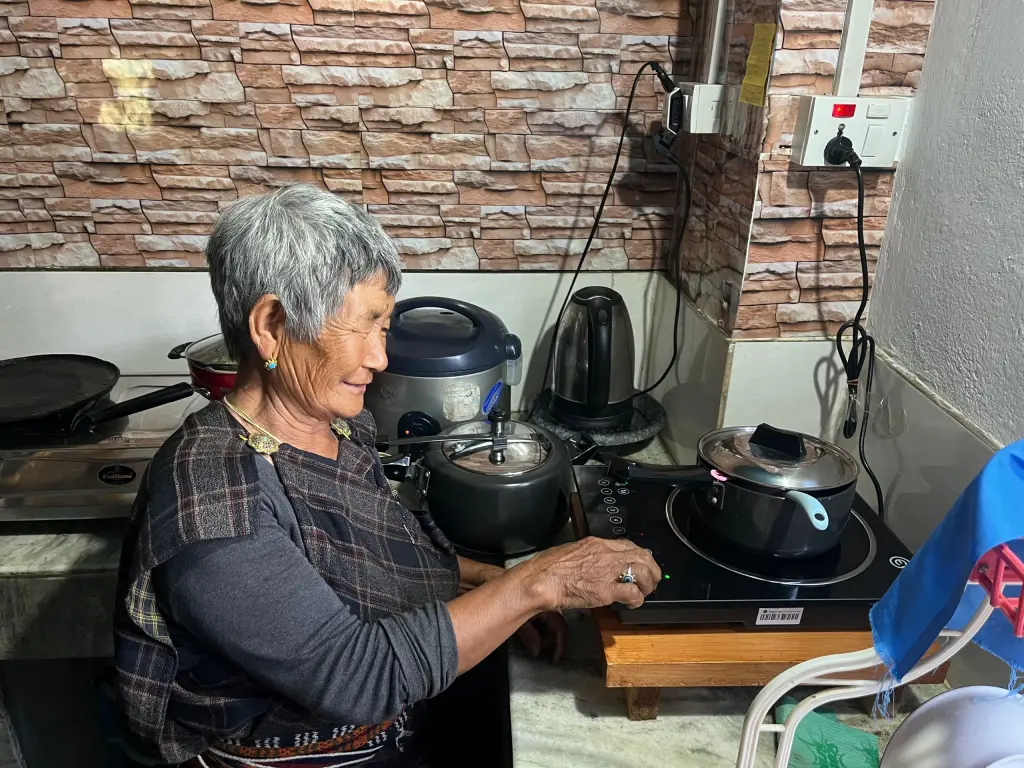
Photo credit: ATEC
The company will use the funds to deploy up to 200,00 smart cookstoves in Bangladesh, Cambodia, Malawi, and Nepal over the next three years. Atec uses a blockchain ledger to measure and verify household-level carbon credits through its tech-enabled cookstoves.
3️⃣ Peak XV joins $3m round for climate tech startup Equilibrium
The Bengaluru-based company helps fund and run projects that can pull carbon dioxide out of the atmosphere and works with over 60,000 farmers and coastal communities.
4️⃣ Electric 2-wheeler maker Simple Energy raises $10 million from existing investors
The firm plans to triple its number of retail stores in India to 150 this year. It currently has 53 stores spread across various cities, including Bengaluru, Pune, and Hyderabad.
5️⃣ Indian cleantech startup Chakr Innovation secures $23M
The company, which works on lithium-ion battery alternatives, plans to use the funds to boost its production capabilities and start expanding internationally.
That’s it for this edition – we hope you liked it! Do subscribe to continue receiving The Offset.
See you next month!
The Offset is made possible thanks to Taiwan Mobile.
The company recently hosted a media gathering under the theme “Tech-Telco Aircraft Carrier Leading the AI Era: New Business Fighters Powering Growth Engines.”
Taiwan Mobile, verified by the Science Based Targets initiative (SBTi), commits to net-zero emissions by 2050.
Stay updated on the go with our mobile app.
Get latest insights with smoother, more personalized experience through TIA mobile app.
Recommended reads
 Southeast Asia’s data center boom has a water problem
 Thailand’s healthtech moment?
 Singapore’s virtual energy boost
 Will SEA have an answer to Hello?
 The data center rush reshaping Batam
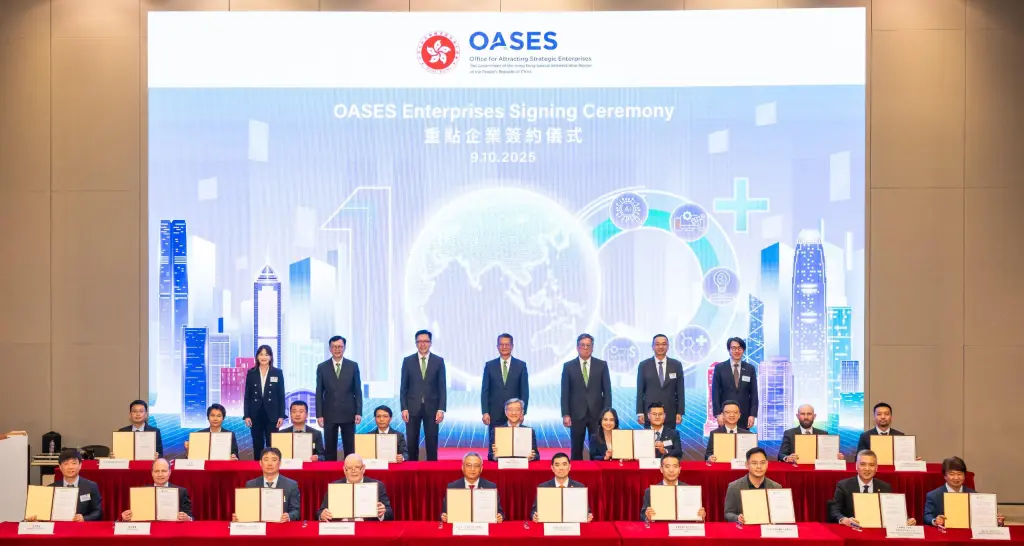 How OASES helps enterprises maximize Hong Kong’s strengths
 SEA’s new gold rush is green
 Philippines’ Nasdaq dream meets market reality
 Banks crash wealthtech’s investing party
 Osome’s AI-powered reshuffle





Editing by Peter Cowan and Mina Deocareza
(And yes, we’re serious about ethics and transparency. More information here.)






📅 Upcoming Events
22 October 2026
Payoneer x CSPN Summit 2026