People in China are buying fewer smartphones. So how can Chinese smartphone makers keep growing? By looking to a whole new continent: Africa.
Xiaomi says it’s launching a department in Africa, which will be headed by its current vice president. While the company has been selling phones in the continent since 2015 through local partnerships, the new department marks its official venture into the area.
While China’s smartphone market might be saturated and already sees fierce competition, interest in smartphones is growing across African countries, some of which are still dominated by feature phones.
Here’s another reason for Xiaomi to be optimistic: Western markets tend to sell phones via carriers, but IDC’s Simon Baker told us that in Africa, most phones are sold on the open market.
But Xiaomi isn’t the first Chinese company to think of heading there. Chinese smartphone makers are already big across the continent, thanks to a brand you probably haven’t heard of: Transsion. The Shenzhen-based company doesn’t sell smartphones in its home market, but it surpassed Samsung as the biggest vendor in Africa, accounting for 35.4 percent of smartphone shipments in the second quarter of last year.
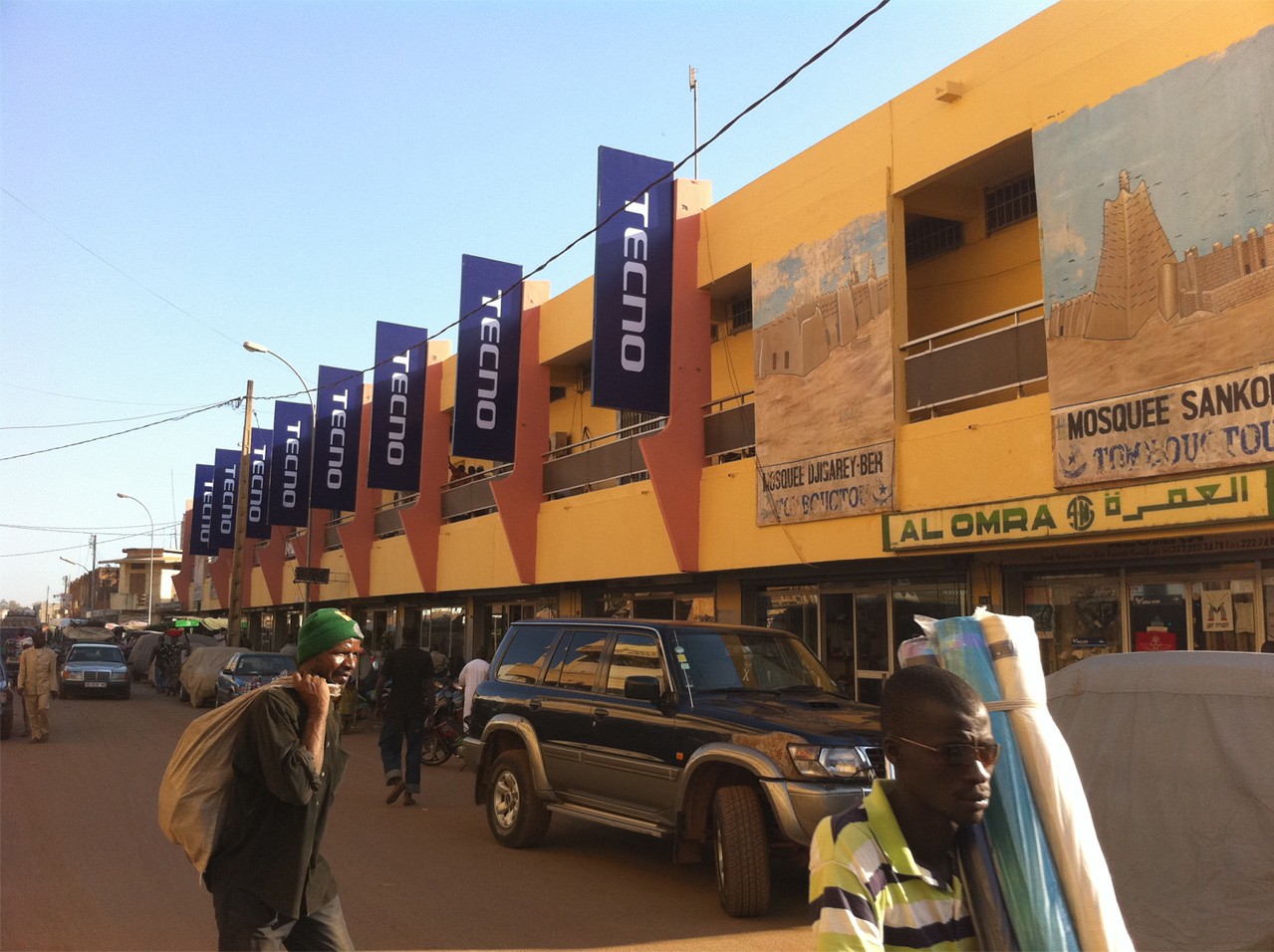
Tecno, owned by Shenzhen company Transsion, is one of the most popular smartphone brands in Africa. / Photo credit: Transsion
Baker says Transsion’s three brands – Tecno, Infinix, and Itel – all have a strong hold on African consumers because they offer a range of competitively priced phones. A recent Tecno smartphone, the Camon 11, has an AI-enabled 16MP front camera, dual rear cameras, a face unlock feature, and a notch for just US$156.
Xiaomi is famous for making cheap handsets even though, recently, it’s been trying to move to the higher-end segment and sell more expensive, fancier phones. That doesn’t mean it’s given up on cheap phones. The company spun off a separate brand named Redmi, which focuses on making lower-priced phones. The first Redmi phone launched in early January features a 48MP rear camera and a midrange Snapdragon 660 chipset for just US$145.
But in Africa, it faces other challenges too. Baker told us that African consumers have limited spending power, while richer consumers in major urban markets are already seeing some saturation.
Xiaomi will probably also need to deal with another domestic archrival too: Huawei. At home, Huawei’s Honor is going head to head with Xiaomi. In Africa, Huawei is already third in smartphone market share, behind Transsion and Samsung.
For more on China tech, visit abacusnews.com or subscribe to the newsletter via abacusnews.com/newsletter for the latest China tech news, reviews, and product launches.
Copyright (c) 2019. South China Morning Post Publishers Ltd. All rights reserved.





Stay updated on the go with our mobile app.
Get latest insights with smoother, more personalized experience through TIA mobile app.












📅 Upcoming Events
22 October 2026
Payoneer x CSPN Summit 2026