- Premium Content It takes our newsroom weeks - if not months - to investigate and produce stories for our premium content. You can’t find them anywhere else.
 Terence Lee · · 7 min read
Revival of B2B ecommerce in Southeast Asia: Meet the key players
When you think of ecommerce in Southeast Asia, two names come up: Lazada and Shopee. These business-to-consumer (B2C) marketplaces, which sell directly to customers, dominate the scene.
But they’re just scratching the surface. Direct-to-consumer brands are primed to take off, and specialized enablers are helping brands join the ecommerce train.
Another trend is rising, and that’s business-to-business (B2B) ecommerce. Companies in this space take on many forms, with one common aim: helping businesses buy and sell to one another.
Here’s a rundown of the key companies in this space.
The B2C giants
While Tokopedia and Shopee are known as consumer marketplaces, a large chunk of their transactions are B2B. In Indonesia, dropshipping – a practice in which middlemen resell goods from suppliers – is big business. These sellers estimate that between 5% and 25% of their sales come from dropshippers.
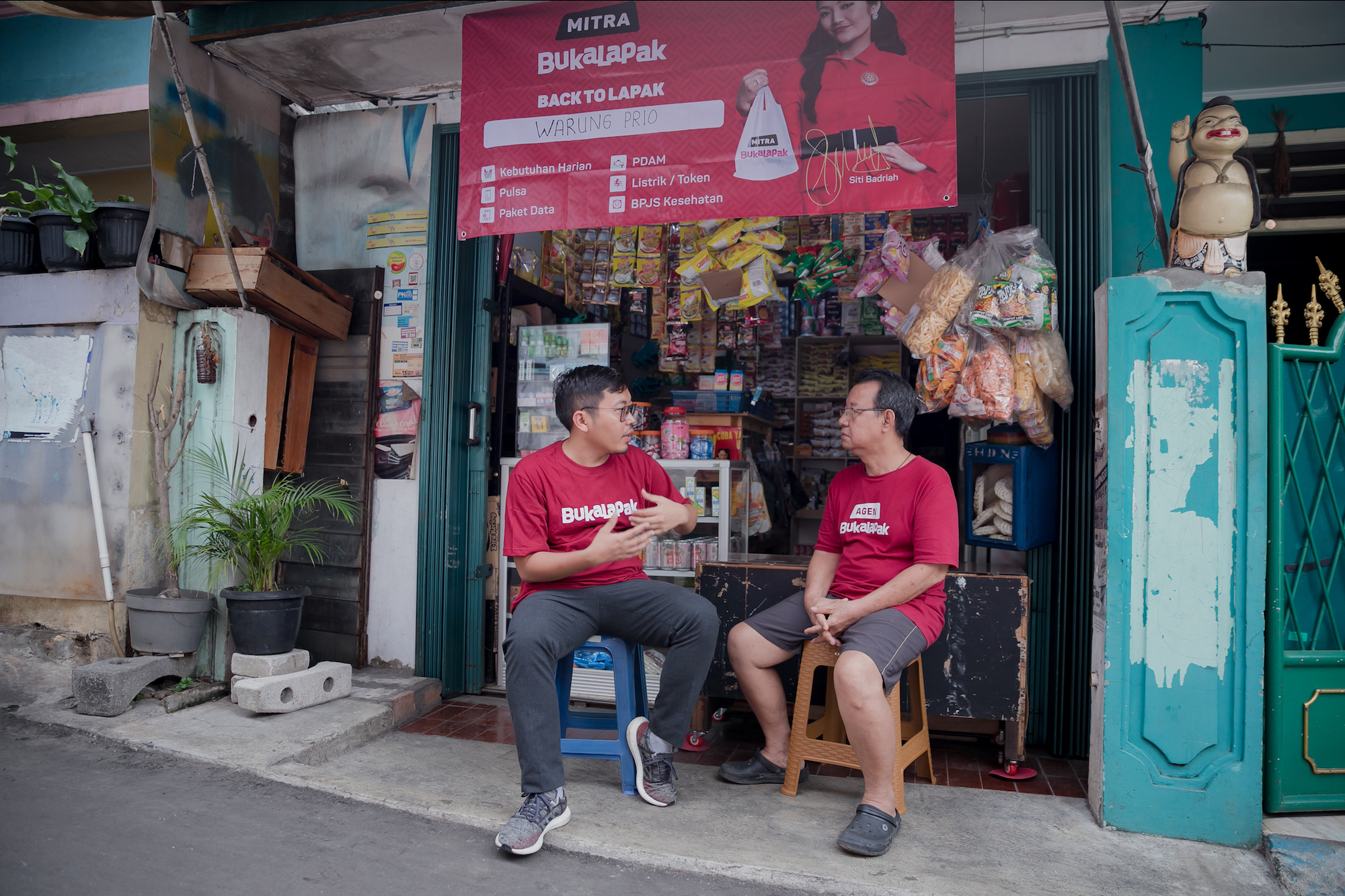
Co-founder and ex-CEO Achmad Zaky with a Bukalapak partner / Photo credit: Bukalapak
Indonesian rivals Bukalapak and Tokopedia have gone one step further. Mitra Bukalapak was launched in 2016, with Mitra Tokopedia following two years later. This business model (mitra is Indonesian for “partner”) ropes in free agents – many of whom are warungs, or mom and pop shops – to resell physical and digital goods.
Mitra Bukalapak has 3.3 million registered partners, of which 1.5 million are warung owners, a spokeswoman says. However, she was unable to share how many of them are active.
Tokopedia, meanwhile, sees 400,000 monthly active Mitra partners on its network (defined as those who have transacted in that time period), the company says.
Regional superapp Grab also has its own local agent network after acquiring Kudo in 2017. The service is currently called GrabKios.
The country has 57 million microbusinesses, according to one estimate.

The Mitra model is still in its infancy, with digital goods making up most of the transactions, people familiar with the projects tell Tech in Asia. These products include game vouchers, mobile data credits, and more, according to the sources, who didn’t want to be named.
Mom and pop upstarts
Agent-based ecommerce
B2B marketplaces
Selling shovels
Money where their mouths are
Stay ahead in Asia’s tech landscape
This is premium content. Subscribe to read the full story.
Companies in this space take on many forms, with one common aim: Helping businesses buy and sell to one another.
We know this is not ideal. ⌛ Sign up in 20 seconds. Cancel anytime.
Our subscriber community includes professionals from these companies:





Stay updated on the go with our mobile app.
Get latest insights with smoother, more personalized experience through TIA mobile app.