- Premium Content It takes our newsroom weeks - if not months - to investigate and produce stories for our premium content. You can’t find them anywhere else.
 Terence Lee · · 7 min read
Ecommerce enablers: Southeast Asia’s next big opportunity?
In 2014, Nuttapon Boonpinon was just one of the thousands of people making a living as an online marketplace vendor.
He started off selling dozens of floor mops a month on Lazada, and the business kept growing. Within three years, HomeHuk became a leading online purveyor of home products in Thailand, offering everything from chairs to floor mats.
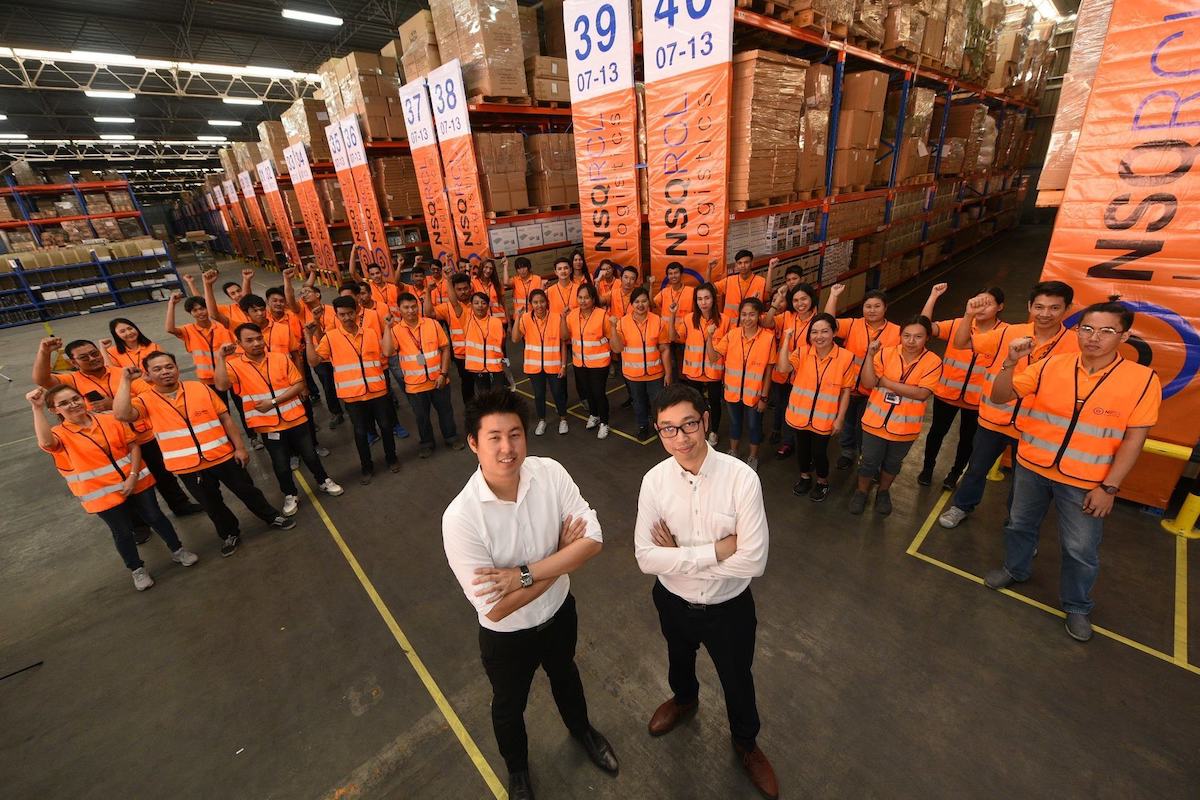
(From right) Nuttapon Boonpinon serves as the managing director of N-Squared, which is collaborating with RCL Logistics to manage a warehouse. / Photo credit: N-Squared
Boonpinon saw a trend: More people were asking him to help run their ecommerce operations.
Eyeing a big opportunity, he set up N-Squared e-Commerce in 2017. The venture has become part of a rising tide of “ecommerce enablers” that help brands manage and grow their online sales.
N-Squared, which runs both HomeHuk and the enabler business in parallel, became profitable in 2018. While both units have grown, the enabler side is now making the most money, and Boonpinon couldn’t be more pleased. “We’re a happy camper,” he tells Tech in Asia.
Southeast Asia’s ecommerce industry is getting larger and more complicated. While Shopee and Lazada are asserting their regional dominance, their local competitors – like Tokopedia in Indonesia and Tiki in Vietnam – are as relevant as ever.

Shopee Celebrity Club livestreaming in action / Photo credit: Shopee
The region is dominated by the chaotic and colorful online marketplace model – which allows vendors to list their own wares and chat up potential customers – as opposed to Amazon’s staid but efficient department store approach.
Sellers on the free-for-all marketplaces have a long to-do list, which means they need help. First, they need to set up a store, list their products, and add pictures, descriptions, and metadata for each item.
Next, they have to market the products, analyze sales performance, and change the product mix – a cycle of tasks that has to be regularly repeated. It’s a herculean effort that requires a unique combination of skills.
History seems to be repeating itself as well. As ecommerce industries have matured, ecommerce enablers have prospered along with them. In the US, the best-known example may be GSI Commerce, which was acquired by eBay in 2011 for US$2.4 billion.
In China, Alibaba-backed Baozun is profitable, listed on Nasdaq, and has a market value of about US$2.2 billion. It achieved that feat by managing just over 220 brands.
Painful pivot
China with Indian characteristics
Diverse kingdoms
Stay ahead in Asia’s tech landscape
This is premium content. Subscribe to read the full story.
Southeast Asia’s ecommerce industry is getting larger and more complicated. That’s music to the ears of these startups.
We know this is not ideal. ⌛ Sign up in 20 seconds. Cancel anytime.
Our subscriber community includes professionals from these companies:





Stay updated on the go with our mobile app.
Get latest insights with smoother, more personalized experience through TIA mobile app.








📅 Upcoming Events
22 October 2026
Payoneer x CSPN Summit 2026