- Premium Content It takes our newsroom weeks - if not months - to investigate and produce stories for our premium content. You can’t find them anywhere else.
 Melissa Goh · · 9 min read
The dark side of ‘buy now, pay later’
25-year-old Stefanie Yeo tried a buy now, pay later (BNPL) offer for the first time last year on a set of invisible braces which cost US$1,500. At that price point, the option to pay in three interest-free installments made perfect sense.
Though she could have afforded to pay for it in full, the Tech in Asia media executive, who does not own a credit card, preferred the option to defer the payment.
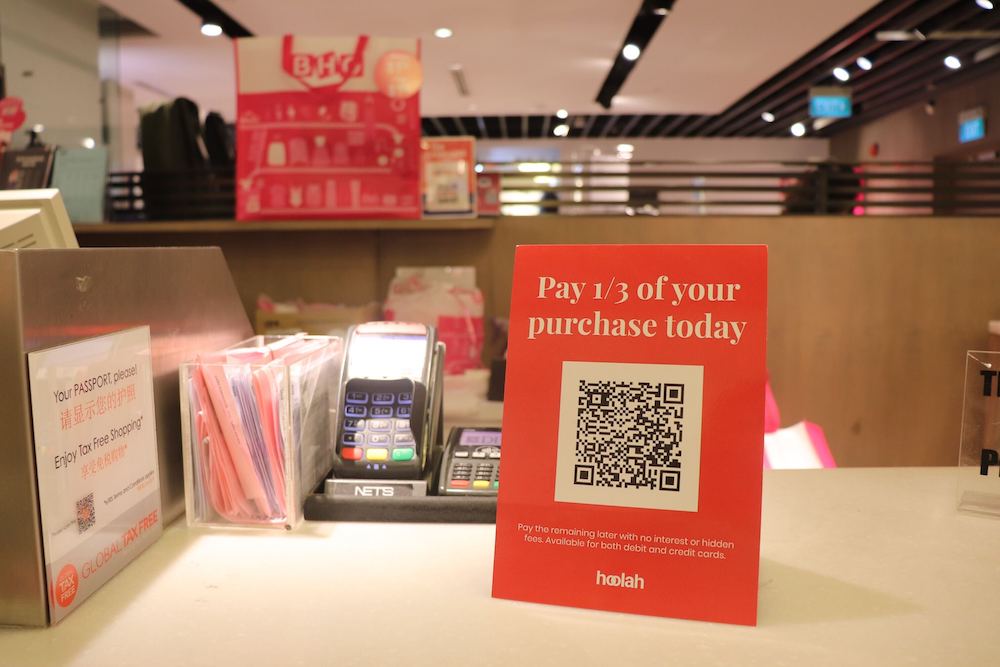
Photo credit: Hoolah
Yeo is not alone. For many millennials, BNPL provides the option to spend on credit with seemingly little risks. The growing popularity of BNPL among millennials and Gen Zs, however, has sparked debate about what this easy access to credit spells for the younger generation.
Designed to be intuitive and convenient, the schemes tout quick sign-ups and approval processes and are fuss-free. The trend, however, has drawn criticism that it may be cultivating a culture of consumerism, overspending, and debt.
“A lot of these companies are actually just focused on trying to get the most number of customers, market share, transactions, and establishing the most number of merchant partnerships,” says Karun Arya, vice president of group corporate affairs at Oriente.
“It’s marketing instant gratification without the risks… and I think that’s a little irresponsible,” he adds.
Oriente, a Hong Kong-based fintech firm which offers its own BNPL scheme – among other lending services – to consumers in the Philippines and Indonesia, thinks firms like it have the potential to both do well and do good.
Beyond enabling shopping, Arya says fintech firms can also play a part in helping people build a financial identity, access credit affordably, and develop a credit profile over time.
Creating a culture of consumerism
A survey of some 1,008 respondents in Singapore found that 38% had used a BNPL service of some sort as of last November.
Among those surveyed, impulse buying was cited as the most common mistake. This comes as no surprise – splitting up the cost of a purchase into bite-sized sums can create a false sense of affordability. When credit is dished out for “free,” it’s easy for buyers to lose sight of potential risks and fees.
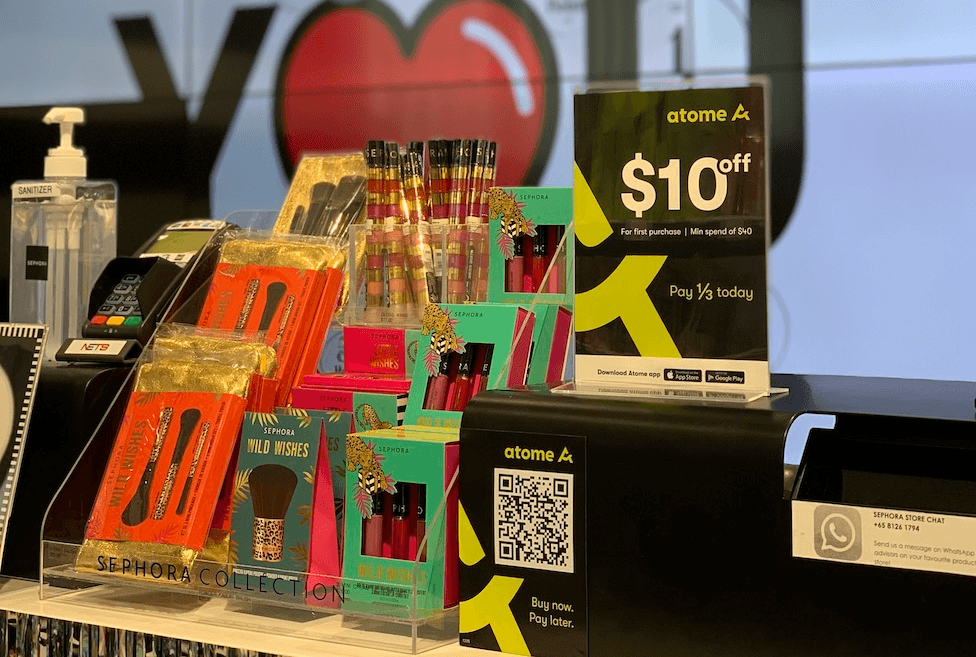
An Atome offering at a Sephora store / Photo credit: Atome
A student at a local university who did not want to be named told Tech in Asia that she uses BNPL “whenever there is an option to,” citing the model’s more transparent fees compared to credit cards and zero-interest rates as her reasons.
No hidden fees, really?
Curbing impulse buying
A regulatory grey area
What financial literacy could look like
Stay ahead in Asia’s tech landscape
This is premium content. Subscribe to read the full story.
What does the convenient credit model spell for the current generation of users?
We know this is not ideal. ⌛ Sign up in 20 seconds. Cancel anytime.
Our subscriber community includes professionals from these companies:





Stay updated on the go with our mobile app.
Get latest insights with smoother, more personalized experience through TIA mobile app.







📅 Upcoming Events
22 October 2026
Payoneer x CSPN Summit 2026