Malavika Velayanikal · · 3 min read
India’s Silicon Valley will die in 5 years, says top scientist

Photo credit: Pixabay.
It’s not by accident that Bangalore emerged as India’s Silicon Valley. Home to IT giants like Infosys and Wipro, research centers of multinational companies like IBM and Texas Instruments, and the country’s top scientific research institutions like Raman Research Institute and Indian Institute of Science (IISc), the city had plenty of catalysts to spark a startup hub. But there was another factor: the weather.
Visitors to Bangalore were pleasantly surprised by its salubrious environment – it felt more Californian than Indian.
Bangalore has always enjoyed a mild, temperate climate, quite unlike most other big Indian cities. Think of the heat and dust of Delhi and its cold, smoggy winters. Or the torrential rain of Mumbai and its clogged roads. Visitors to Bangalore were pleasantly surprised by its salubrious environment – it felt more Californian than Indian. This made it easier to attract tech talent, new age entrepreneurs, and Valley investors.
This summer in Bangalore, however, has been a stark reminder of how much that congenial environment has changed in India’s Silicon Valley. There’s been a prolonged heat wave with daily temperatures hitting upwards of 39 degrees celsius (102.2 Fahrenheit). The characteristic cooling summer showers are conspicuous by their absence. Add to this the constant traffic snarls on the city’s congested roads, and you’re left with a loss of productivity in India’s innovation capital.
See: Bangalore’s now the 2nd best funded startup hub in the world, outside the US
Gone in four decades
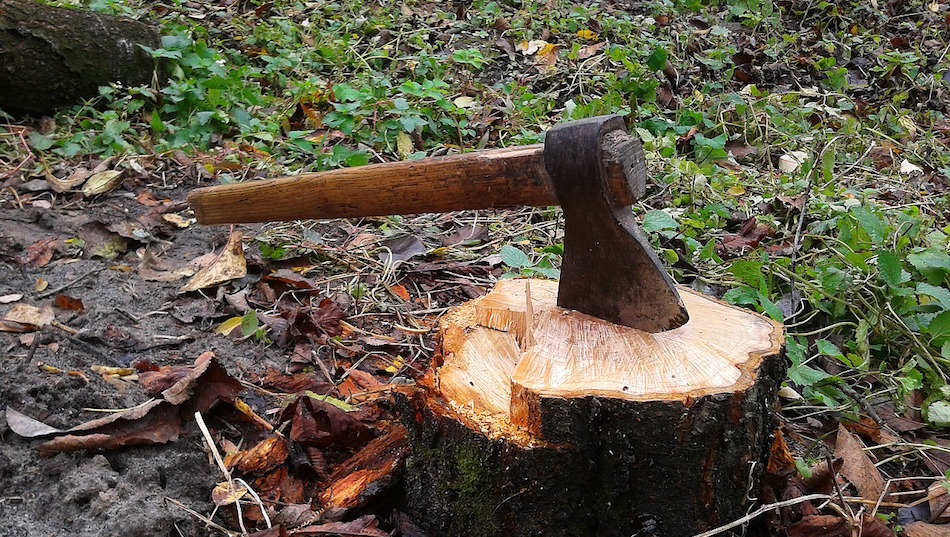
Photo credit: Pixabay.
A new scientific study pinpoints the reasons why Bangalore is becoming more inhospitable by the year. The city has lost nearly 80 percent of its green cover and water bodies in the last four decades. And its concreted surface has increased 525 percent in that time, says a study by IISc. If this “senseless growth” continues, Bangalore will become an unliveable wasteland in five years, says Professor T. V. Ramachandra of the Center for Ecological Studies at IISc, who led the study.
If Bangalore doesn’t get its act together, some other better governed Indian city may become the magnet for tech entrepreneurs and investors.
That may seem like an alarmist statement to some, but there’s little doubt that urban planning has fallen way short of the requirements of an IT boom that has brought so much money and so many jobs to the city. Far from planned growth, we see other considerations come into play.
“It’s disturbing to see private developers dominate government decisions,” Prof Ramachandra is quoted as saying in local newspaper Deccan Herald. “The norm to keep at least 15-20 percent of the city as open space is ignored, stormwater drains and water bodies have been narrowed. At least now, the government should wake up and get its priorities right to make Bengaluru a sustainable city.”
Politicians and bureaucrats talk of Startup India. But such initiatives will mean little if the basic requirements of infrastructure are not met. If Bangalore doesn’t get its act together, some other better governed Indian city may become the magnet for tech entrepreneurs and investors. Then, the professor’s doomsday prediction may well turn out to be a grim reality. For the sake of Bangalore and its startup community, let’s hope the local government pays heed to the warning.
Only yesterday, I signed a petition started by local residents in my neighborhood to stop the felling of trees. Apparently, the civic authorities would rather cut down trees instead of bearing the burden of clearing fallen leaves. The city’s survival can’t be left only to the government – a proactive community has a big role to play.





Stay updated on the go with our mobile app.
Get latest insights with smoother, more personalized experience through TIA mobile app.