- Premium Content It takes our newsroom weeks - if not months - to investigate and produce stories for our premium content. You can’t find them anywhere else.
 Lokesh Choudhary · · 6 min read
Why genAI for farming in India can be fertile ground for Indonesia’s agritech players
Agriculture has long been the backbone of Indonesia’s economy. However, the declining number of young farmers in the country is showing a troubling trend.
Agriculture contributed 12.4% to Indonesia’s gross domestic product in 2022. But only 29% of the employed population are engaged in this sector, down from 50% three decades ago. The number of Indonesians pursuing agriculture has also plummeted – the country lost 5.1 million farmers between 2003 and 2013. If the exodus continues at this rate, Indonesia could lose all of its farmers by 2063.
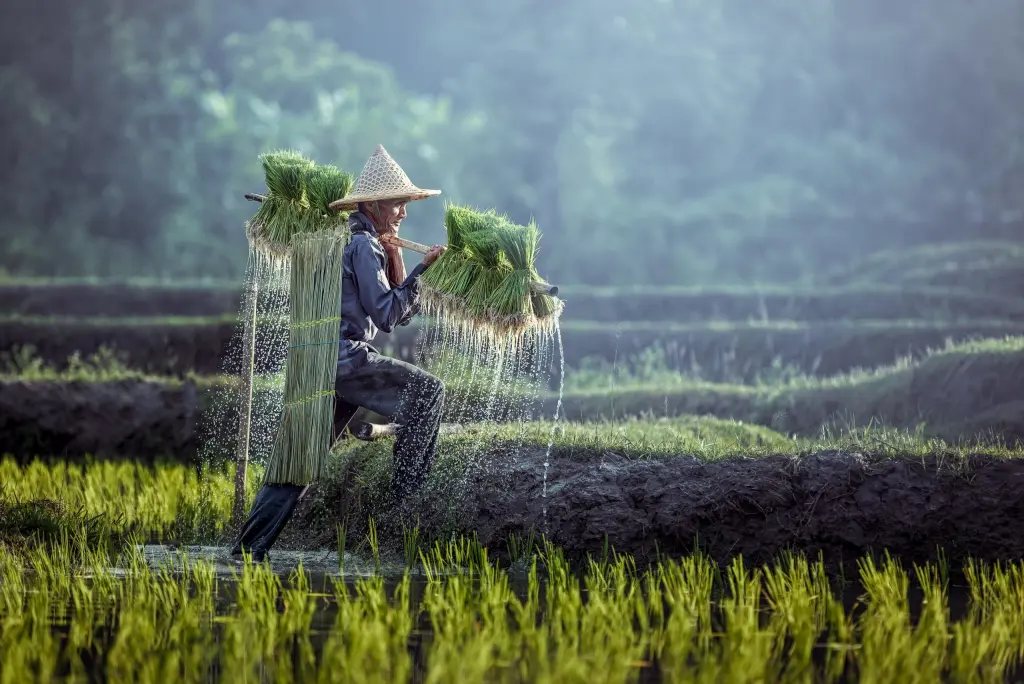
Picture Credit: Shutterstock
A lot of young Indonesians are turning their backs on this field, which offers one of the lowest wages in the country. Instead, they’re taking opportunities in the service sector, lured by the prospect of higher pay and a more stable source of income.
However, the introduction of technology has increased the yield and income of farmers significantly.
Indonesia currently has the most number of agritech players in Southeast Asia. A recent surge in investor attention also drove funding to grow by 2.5x in 2022.
While many agritech firms in Southeast Asia have embraced precision technology in farming such as sensors, automation, smart irrigation, and GPS systems, the emergence of generative AI has broken even more ground.
Since it is still early days for genAI, its applications in Indonesia’s agriculture industry have yet to take root.
But that doesn’t mean agritech companies in other countries, particularly India, aren’t experimenting with genAI. Since India’s agriculture market shares similarities with Indonesia, some of these applications could be adopted in the archipelago.
For instance, Plantix, a Germany-based agritech firm focused on India, is testing genAI on its plant disease diagnosis platform. Users can get a diagnosis as well as suggestions for remedies and preventive measures by capturing and uploading a plant image on the app.
Meanwhile, Cropin, a precision-farming firm established in 2010, is using genAI to rebuild satellite data obstructed by clouds.
On the other hand, products like Kissan AI, FarmerChat, and Jugalbandi are introducing ChatGPT-like conversational AI products for farming.
Issues with conversational genAI
While genAI-based conversational agents are on the rise, they may not be the ultimate solution for agricultural queries.
Case in point: KissanAI, a specialized chatbot aimed at young and inexperienced farmers. Trained on agricultural data, this AI tool provides information on irrigation, pest control, and crop cultivation.
Using genAI in geofencing
Stay ahead in Asia’s tech landscape
This is premium content. Subscribe to read the full story.
Indian agritech firms are experimenting with generative AI to come up with solutions for farmers. Can they take root in Indonesia?
We know this is not ideal. ⌛ Sign up in 20 seconds. Cancel anytime.
Our subscriber community includes professionals from these companies:





Stay updated on the go with our mobile app.
Get latest insights with smoother, more personalized experience through TIA mobile app.