- Premium Content It takes our newsroom weeks - if not months - to investigate and produce stories for our premium content. You can’t find them anywhere else.
 Gabriel Budi Sutrisno · · 5 min read
Can Indonesia’s ESG startups benefit from G7’s $20b commitment?
Recently, environmental, social, and governance (ESG) issues have received more attention from the Indonesian tech sector.
GoTo, for instance, has declared its commitment to become carbon emission free by 2030. Meanwhile, VC firm AC Ventures in October introduced measurable ESG standards for the tech sector.
Startups like waste management firm Waste4Change as well as solar power rental and installation firm Xurya are also rising, seizing this opportunity to do business with a social-impact bent.
But perhaps the biggest evidence of the archipelago’s growing interest in ESG lies in the G20 Summit, which Indonesia hosted in November. US President Joe Biden revealed that G7 member countries and several financial institutions will disburse US$20 billion for Indonesia to tackle its carbon footprint.
The main goal is to assist Indonesia’s energy transition process and support the government’s target to reduce more than 300 megatonnes of greenhouse gas emissions by 2030.
The Indonesian government “encourages collaboration between startups and various existing funding parties,” Khoiria Oktaviani, communication manager at the Energy and Mineral Resources (ESDM) Ministry, tells Tech in Asia. This is in line with its commitment to develop cleaner energy policies, including finalizing the new and renewable energy bill.
Despite that commitment, how much real impact will such funding initiatives have on ESG startups in the archipelago?
Small portion, big momentum
According to Oktaviani, the main advantage for startups is their ability to work on grassroot-level projects. For instance, they can make the installation of new and renewable energy devices more affordable, especially in remote areas.
While Waste4Change says it welcomes funding initiatives like the G7 commitment, it doubts that such assistance will lead to projects for ESG startups.
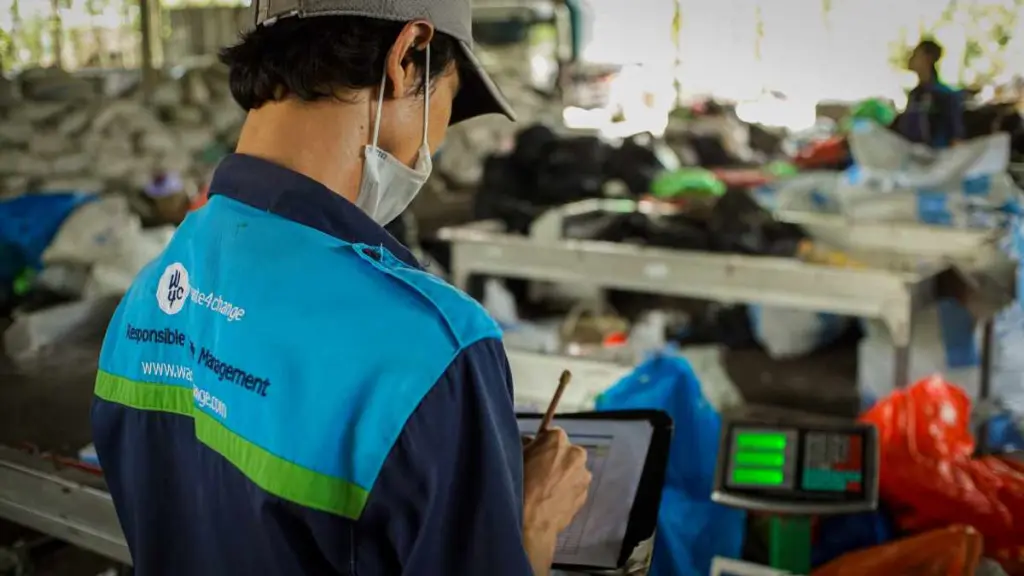
Photo credit: Waste4Change
Instead the implementation will be macro in nature: to support the development of new policies or infrastructure, according to Waste4Change corporate strategist Hana Nur Auliana.
“There are indeed projects with government agencies or local governments, but the portion may be only 10% at Waste4Change, while the other 90% are projects with the corporate sector,” she stresses.
See also: Indonesia’s ‘Uber for waste’ finds profits in garbage collection
Need for regulatory support
Back to environment
Stay ahead in Asia’s tech landscape
This is premium content. Subscribe to read the full story.
The funding initiative may not necessarily trigger government-startup collaboration, but it could increase investor interest and optimism.
We know this is not ideal. ⌛ Sign up in 20 seconds. Cancel anytime.
Our subscriber community includes professionals from these companies:





Stay updated on the go with our mobile app.
Get latest insights with smoother, more personalized experience through TIA mobile app.












📅 Upcoming Events
22 October 2026
Payoneer x CSPN Summit 2026