- Premium Content It takes our newsroom weeks - if not months - to investigate and produce stories for our premium content. You can’t find them anywhere else.
 Nikita Puri · · 6 min read
Indonesia’s ‘Uber for waste’ finds profits in garbage collection
Fragmented, unstructured, disconnected: These are some of the words that a spokesperson from VC firm Openspace Ventures used to describe waste management in Indonesia. “Each stakeholder is exposed to a different set of information, and there is no transparency in terms of the final impact,” he laments.
The stakeholders he’s referring to include individual households, waste banks that collect recyclable material, waste collectors, firms that recycle or upcycle waste, businesses that collect waste to turn them into fuel, and companies that have EPR goals.
Enter Octopus, a Jakarta-based startup that addresses the individual pain points of these stakeholders. Earlier this year, it raised US$5 million in a seed funding round led by Openspace and SOSV.
“We’ve grown by 26x in the past year in revenue with essentially no external funding and have been profitable from day one,” says Moehammad Ichsan, co-founder and CEO of Octopus. The fundraise will take the startup’s growth to a new level as it plans to enter other countries in Southeast Asia by the fourth quarter of 2023, says Ichsan.

Octopus CEO and co-founder Moehammad Ichsan / Photo credit: Octopus
In August, Octopus clocked a monthly revenue of US$2.3 million almost solely from e-waste, which makes up 80% of its waste-trading revenue.
Besides waste trading, Octopus also deals in data. Founded in 2021, the firm has seen a month-on-month growth of 14% to 16% in the volume of recyclables collected and continues to expand aggressively in Indonesia. The latest among its partnerships is a tie-up with Indonesian real estate group Astra to collect waste from its office buildings.
Behind a waste-fueled growth
Supply of material is “limitless” inside the waste-trading system, says Angga Adhitya Fritz Aradhana, vice president of business development and strategic partnerships at Octopus.
Not surprisingly, the last few years have seen a noticeable rise in the startups jumping into the waste management arena for environmental reasons as well as the untapped business opportunity it presents.
Indonesia has a handful of these companies, including the Tridi Oasis Group, which exports recycled plastic to European countries as well as for local use in packaging and textiles.
Others in the sector include Rekosistem, which provides waste management consultancy services, and Plasticpay, which allows people to exchange plastic for points.
But putting Octopus in the same bracket as some of these firms as rivals may not be the right approach. “Octopus isn’t a waste management firm,” points out Fritz. “We are a tech company.”
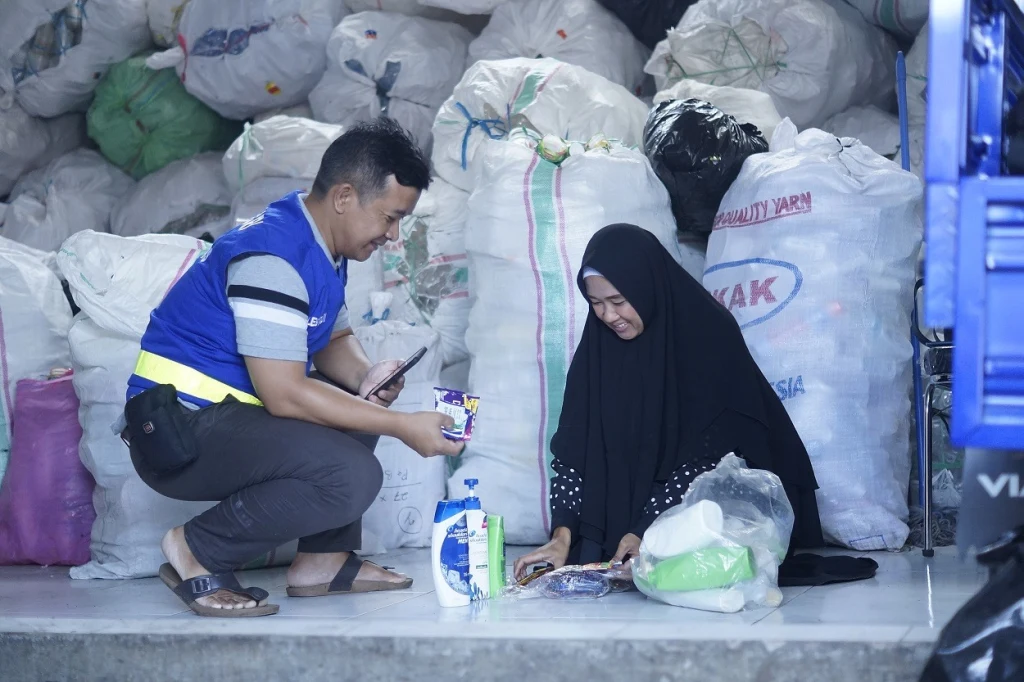
The startup, which has become known as an Uber for waste, has 180,000 monthly active users in 10 cities across Indonesia. Waste-pickup service is free for users.
What’s in a name?
An ascent crafted from waste
Stay ahead in Asia’s tech landscape
This is premium content. Subscribe to read the full story.
Octopus has witnessed 26x revenue growth in the past year and plans to expand to other countries in Southeast Asia in 2023.
We know this is not ideal. ⌛ Sign up in 20 seconds. Cancel anytime.
Our subscriber community includes professionals from these companies:





Stay updated on the go with our mobile app.
Get latest insights with smoother, more personalized experience through TIA mobile app.











📅 Upcoming Events
22 October 2026
Payoneer x CSPN Summit 2026