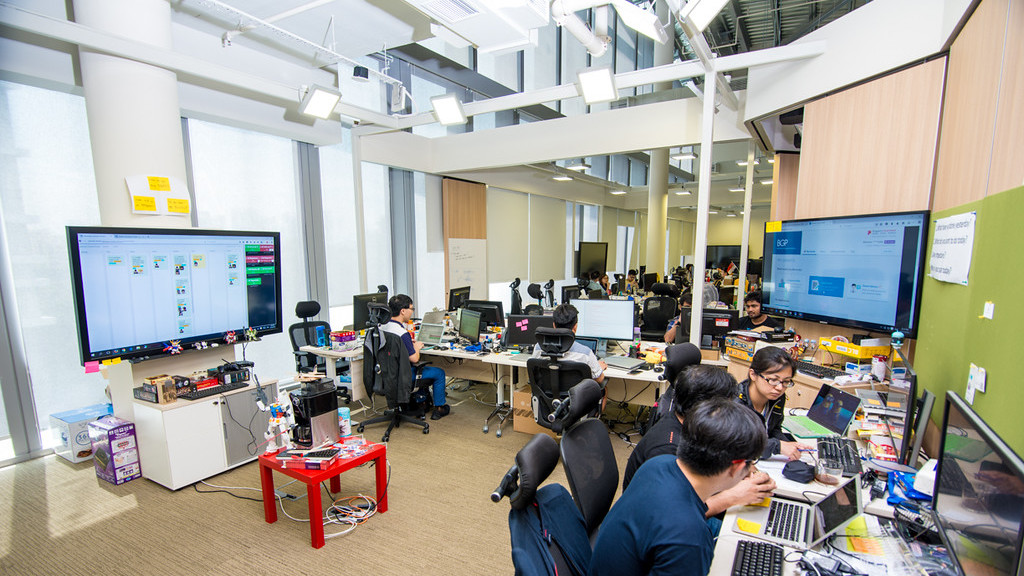
Photo credit: IDA Hive.
In the heart of the Sandcrawler – a building modeled after the huge mobile fortresses in Star Wars – sits an army of coders who are using technology to improve how the Singapore government does things.
They’re part of the Government Digital Service (GDS), a unit started initially in secret and without permission, but has ballooned to a team of over 100 hackers.
Tech in Asia peeked inside The Hive – the place where the coders work – and caught a glimpse of what goes on within. Here’s what we learned.
They’re run like a startup.
When you enter The Hive, you wouldn’t think it’s a government unit at all. There are standing desks, the office is open, and you hear words like agile methodology bandied about.
Agile is something the team practices. It’s a philosophy of software development which emphasizes developing workable software frequently and allowing for adjustments on-the-fly.
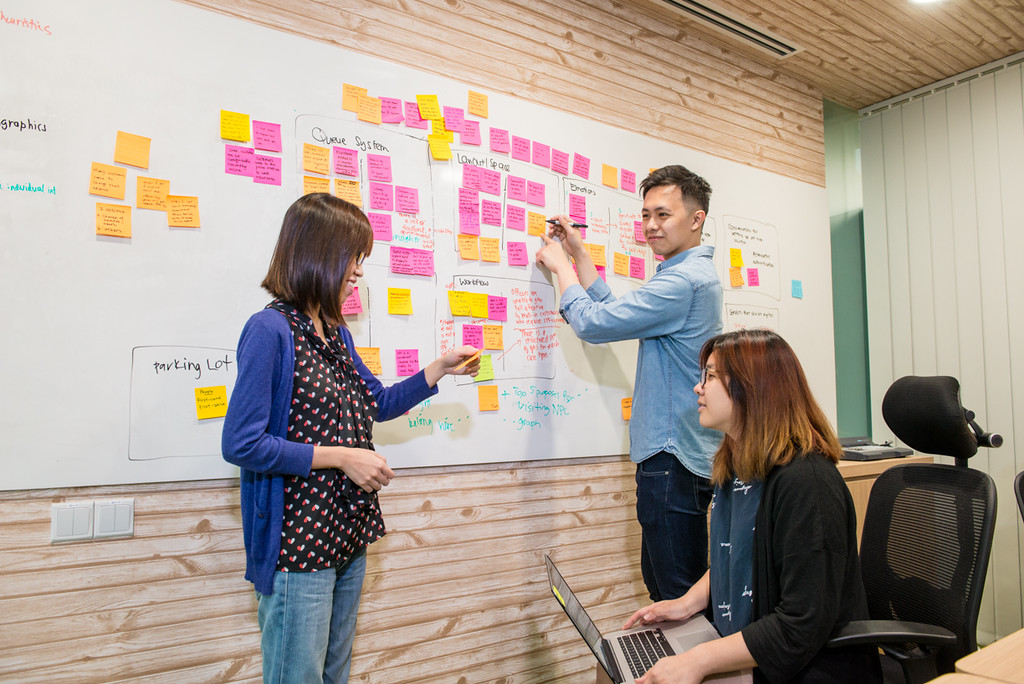
Photo credit: IDA Hive.
While government websites typically wait months before their first deployment, the team aims for one deployment a month, along with small bug fixes in between.
Continuous integration is another philosophy the team adheres to. That involves developers integrating code into a common repository a few times a day. Tests are then done automatically on the new code to detect errors.
This practice purportedly detects and locates errors more quickly and easily.
They’re building a major site on React.js and Ruby on Rails.
The bulk of GDS is focusing on building the Business Grants Portal, a website consolidating various government business grants into one destination so people can easily apply for them.
The site is actually built on both React.js, a Javascript framework for creating user interfaces, and Ruby on Rails, a popular framework for building the backend of web apps.
Both frameworks are tied to CorpPass, the government’s login system for businesses. This blog post explains the stack in detail.
Data.gov.sg is built on Amazon Web Services.
GDS blogs about its approaches and processes – a lot.
They built a tool to test apps simultaneously on iOS, Android, and the web.
They’ve dedicated rooms for usability testing.
The team’s pretty diverse.
They do a lot of experimental prototypes





Stay updated on the go with our mobile app.
Get latest insights with smoother, more personalized experience through TIA mobile app.