Jonathan Chew · · 5 min read
Behind the explosive rise of Indonesia’s Tier 2 and 3 cities

As Indonesia’s capital city, Jakarta has long been fertile ground for businesses and entrepreneurs. Facebook, for example, formally opened its first permanent Indonesian office in Jakarta in 2017. Additionally, the International Chamber of Commerce recently announced the creation of its entrepreneurship hub in Jakarta to support the growth of local businesses.
The city’s status as the country’s business hub means that it’s responsible for a huge chunk of Indonesia’s gross domestic product (GDP) – 17% to be exact. But even as major cities like Jakarta remain critical to Indonesia’s economic development, smaller cities – such as Yogyakarta and Tasikmalaya – are now beginning to take center stage.
These second- and third-tier cities are set to see their GDP contributions rise at a blistering pace in the next few years. According to a report by Alpha JWC Ventures and Kearny, much of this rise has to do with a rapidly ballooning digital economy in Tier 2 and Tier 3 cities, which is forecasted to grow by about 5x by 2025.
With this, second- and third-tier cities are set to increase their contribution to Indonesia’s GDP by another 3% to 5% by 2030. These cities currently contribute an estimated 9% of the country’s GDP.
Taking the online plunge
According to Trian Nugroho, head of regional growth expansion at Indonesia-based tech company Tokopedia, Covid-19 was a major contributor to the acceleration of Indonesia’s digital economy. Many businesses began using online marketplaces for their operations during the pandemic, driving a 61% increase in ecommerce market revenue last year. Tokopedia itself saw more than 3.8 million new merchants joining the platform since January 2020, bringing the total to over 11 million – and almost all of them are micro, small, and medium-sized enterprises.
While digitalization is occurring throughout Indonesia as a whole, it is disproportionately affecting second- and third-tier cities as compared to their Tier 1 counterparts.

Photo credit: willyarrows / 123RF
In smaller cities, offline-reliant businesses – such as mom-and-pop grocery shops – tend to be more prominent. For example, the city of Yogyakarta was estimated to have 15,000 fewer grocery stores compared to the capital region of Jakarta in 2014. However, Yogyakarta’s population is roughly 28x smaller than the capital region’s, which indicates that a larger part of the communities in these smaller cities is served by offline retailers.
With more offline retailers going online, this also drove an increase in consumers’ digital spending in these second- and third-tier cities. More specifically, consumers were expanding their scope of ecommerce purchases to include daily necessities such as groceries and meals, instead of one-off products.
Supporting sustainable selling
As digital behavior in Tier 2 and Tier 3 cities develops, tech companies like Tokopedia must support these changes to ensure they remain sustainable in the long run, says Nugroho. One way companies can contribute to this development is by facilitating intra-city sales to ensure that local businesses have a steady base of customers.
As part of this drive to support intra-city sales, Tokopedia announced its Hyperlocal Initiative last year to champion digital growth in these cities.
Through this initiative, the company introduced a dedicated page on its platform for a “collection of preferred stores (Kumpulan Toko Pilihan (KTP))”, which highlights local merchants to buyers. So far, orders generated from KTP campaigns have gone up by almost 3x, Nugroho notes.

Tokopedia’s “collection of preferred stores” / Photo credit: Tokopedia
Additionally, data from Tokopedia shows that 90% of newly onboarded and incubated merchants through its Hyperlocal Initiative secure their first transactions within a month from joining, and 75% of them continue to have transactions in the following month. These figures indicate that merchants can set themselves up for sustainable growth through the program, rather than it being just a one-off affair.
The company’s data also shows that joining the program has helped improve the user experience for the merchants’ customers. Delivery times have been lowered by 25% due to the shorter distance required for local deliveries, and delivery costs have been cut by 5%.
On top of these efforts, Nugroho adds that it’s also important for companies like Tokopedia to work with other stakeholders – such as the local government – as the businesses behind these initiatives might not have all the resources to drive these efforts on their own.
Earlier this year, the ecommerce giant worked with the Batu City government to organize a local event, the Batu City Local Products Festival, which aimed to help local businesses adopt digital platforms like Tokopedia. The event had a strong impact on sellers – Pia Mangkok Shop, a food merchant in the city, saw a 100% increase in transactions during the festival.
While efforts like the festival have been of significant help, one of the biggest barriers to increasing the adoption of online services in the country is the overall digital literacy of its people, which also includes those in Tier 2 and Tier 3 cities, says Nugroho. At present, Indonesia ranks 61st out of the 100 countries assessed by the Economic Intelligence Unit in the level of education and preparedness to use the internet.
To help overcome this ongoing challenge, Tokopedia hosts webinars to teach smaller, local businesses how to go digital. As part of these webinars, small business owners can learn important skills such as how to optimize advertising strategies or prepare event-specific campaigns for important periods like Ramadan.
The future of local economies
With these efforts in place, Tokopedia expects digital adoption in the country to continue increasing significantly over the next few years, supported by a growing ecosystem of local buyers and sellers.
The company is also looking to expand this even further by including traditional local markets, known as pasars, as part of its efforts to promote digital adoption in Tier 2 and Tier 3 cities. These include markets such as Pasar Cikurubuk in Tasikmalaya, Pasar Beringharjo in Yogyakarta, and Pasar Rakyat Oro-Oro Dowo in Malang.
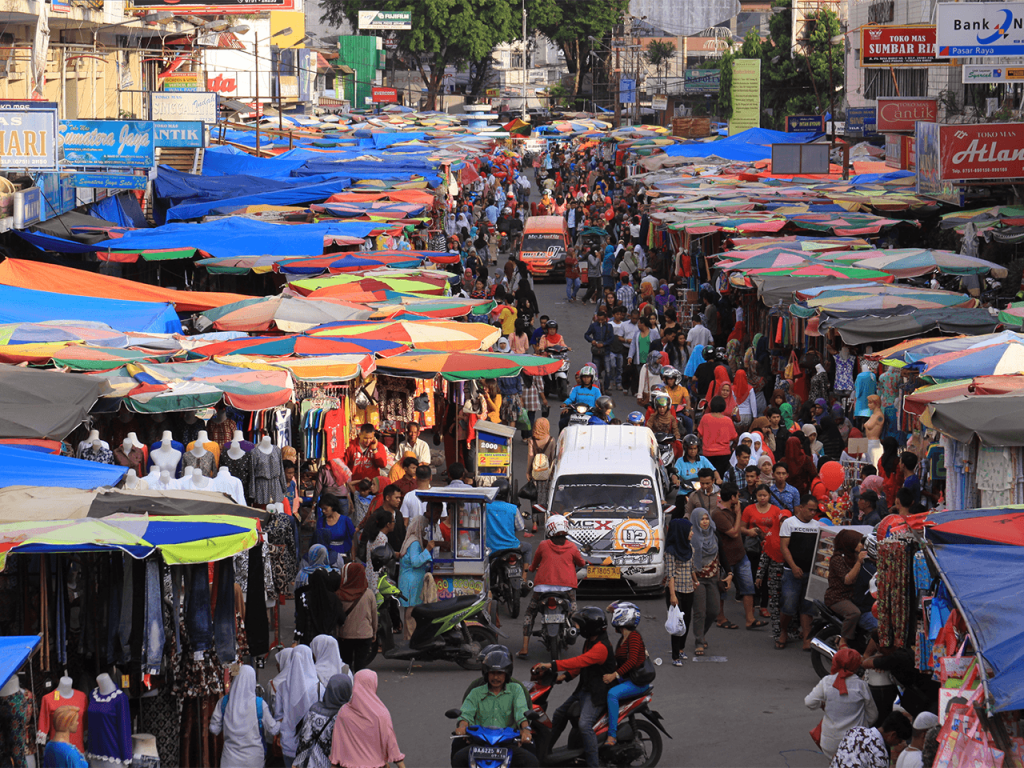
Photo credit: raulbaldean / 123RF
Feedback from traditional market sellers has been positive – almost 300 merchants from these marketplaces have joined the platform’s traditional markets digitalization initiative (Pasar Sehat Sabilulungan Cicalengka) to sell their products online, with Tokopedia looking to further grow this number.
Nugroho says that the company will continue to hold discussions with local stakeholders and governments to further strengthen these organizations’ efforts in bringing local businesses online.
Tokopedia’s goal, he explains, is to bring the consumer experience of intra-city sales in Tier 2 and Tier 3 cities to the same level of those who live in Jakarta. This means enabling people to get anything they want locally at a cheap price with faster delivery times.
“We have a good starting point in this space,” Nugroho adds. “In Tier 2 and Tier 3 cities, we expect most transactions to happen locally [in the future].”
Find out more about how Tokopedia’s marketplace and digital product solutions are driving the Indonesian digital economy on its website.
This content was produced by Tech in Asia Studios, which connects brands with Asia’s tech community. Learn more about partnering with Tech in Asia Studios.
Stay updated on the go with our mobile app.
Get latest insights with smoother, more personalized experience through TIA mobile app.
Recommended reads
 Fave names ex-Touch ‘n Go exec as chief product officer
 HappyFresh is safe, but expect more headwinds for Indonesia’s e-grocery
 Grab, Foodpanda, Deliveroo launch food delivery association in SG
 As gas prices soar, SEA logistics players brace for impact
 Online shopping overtakes gaming in SEA’s internet landscape: report
 Grab reports strong Q2 results, but shares plunge anyway
 Banks smiling, startups sweating with Indonesia’s new payment systems underway
 SG digibank Trust hits 100,000 customers within 2 weeks of launch
 Atome secures major payment institution license in Singapore
 WeLab eyes a ‘pan-Asia franchise’ as digital banking footprint grows





Editing by Nathaniel Fetalvero and Lorenzo Kyle Subido
(And yes, we’re serious about ethics and transparency. More information here.)