- Premium Content It takes our newsroom weeks - if not months - to investigate and produce stories for our premium content. You can’t find them anywhere else.
 Steven Millward · · 3 min read
Quantum computing, without quantum computers
It sounds like a plotline from an episode of US animated sitcom Rick and Morty, but quantum simulation is a real thing – and it’s not some scary phenomenon that can rip apart the fabric of our reality.
Actually, it’s quite prosaic.
Indeed, quantum simulation is just another day at work for Liu Junhua. He explains it as a way for people to do massive quantum computing-style calculations without the need for a wildly expensive and experimental quantum physics-powered computer – something that can only be found in the laboratories of the tech giants building them, like IBM, Alibaba, and Google.
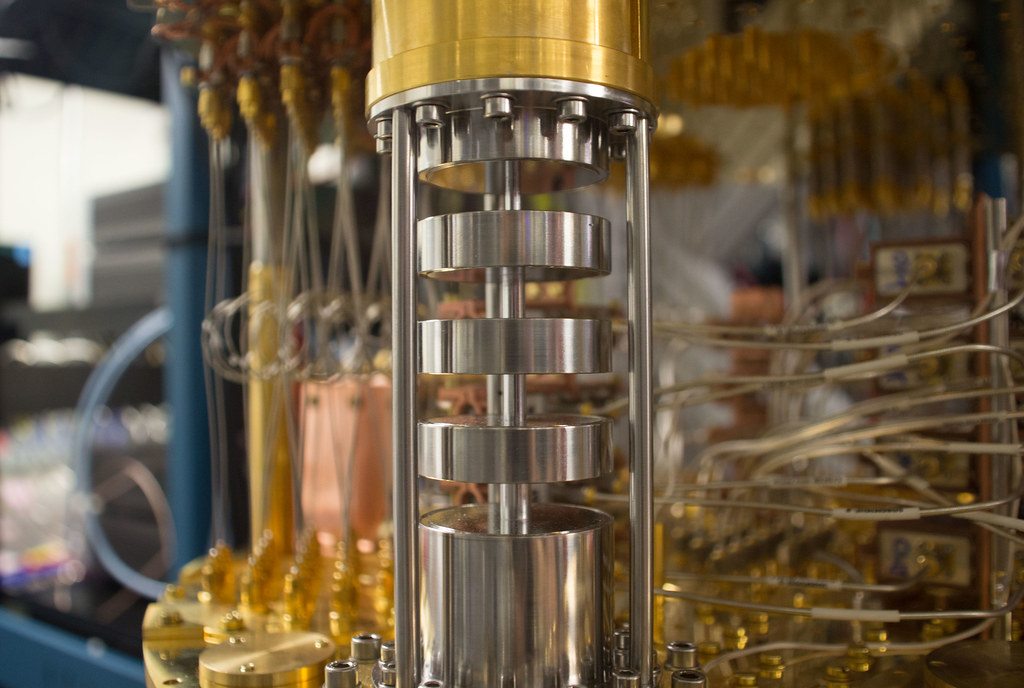
Photo credit: IBM Research
But with the software that Liu’s startup is making, emulated quantum calculations can be done on ordinary personal computers or servers.
Supremacy Future Technologies (SFT), which he set up with former roommate and computational physicist Guo Chu, plans to offer “simulations-as-a-service,” Liu tells Tech in Asia.
Simulating soon
“Right now, quantum computer hardware is not ready. So there is no infrastructure or platform to support the development of quantum applications and quantum algorithms. So we’re trying to address this problem by offering this quantum cloud platform that is independent of quantum hardware,” Liu adds, explaining that they’ll be doing this at scale.
SFT will roll out its simulation service, called QI (pronounced “key”), next month, offering annual or per-project packages to institutions and businesses.
Liu and Guo started SFT earlier this year and are now courting investors so they can spend on research and development for building patents. Liu is targeting around US$2.5 million for the first major injection of funds.
Co-founder Guo reckons that its clients will be split between those wanting to develop quantum algorithms and those that need to test something solid.
“When they want to develop hardware or data operations, they may have some parameters to tune, to find the best parameters for their hardware,” explains Guo. “Or they can use our quantum circuit simulator if they’ve made a quantum computer, but the quantum computer is not perfect, so […] they can verify how good their quantum computer is.”

SFT’s two co-founders / Photo credit: Supremacy Future Technologies
Now with five staffers, SFT is spread across Singapore and China. The patents are housed in Singapore, while the business development is done in China, which both Liu and Guo hail from.
Patent race
Stay ahead in Asia’s tech landscape
This is premium content. Subscribe to read the full story.
A new Singapore startup is about to launch its simulator.
We know this is not ideal. ⌛ Sign up in 20 seconds. Cancel anytime.
Our subscriber community includes professionals from these companies:





Stay updated on the go with our mobile app.
Get latest insights with smoother, more personalized experience through TIA mobile app.