- Premium Content It takes our newsroom weeks - if not months - to investigate and produce stories for our premium content. You can’t find them anywhere else.
 Nikita Puri · · 6 min read
SG firm mints profits from waste management
Among the biggest challenges in the waste management industry is its “precedence-based” nature, says Prashant Singh, the co-founder and CEO at Blue Planet.
“People assume things will go on like they’ve always gone on in the industry,” he observes.
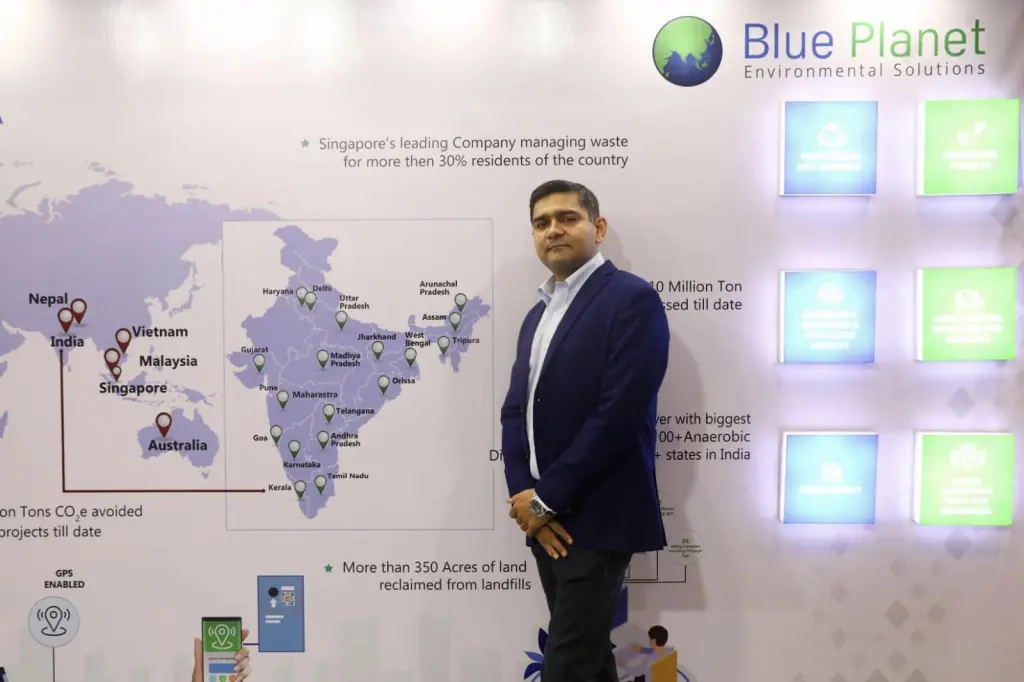
Prashant Singh, co-founder and CEO at Blue Planet/ Photo credit: Blue Planet
But a few years in, this hurdle is turning into the Singapore-based firm’s biggest opportunity as it steadily grows not just its geographical reach and technological know-how but also its profits.
Singh, along with Madhujeet Chimni and Bharadwaj Chivukula, established Blue Planet in 2017. Since then, the company has acquired 10 firms in the waste management and recycling space.
Blue Planet’s fast-paced growth is also reflected in its financials, with its revenue increasing over 6x from 2020 to 2021. And in 2022, it shot up by 24%.
While the company didn’t comment on its revenue growth, the big jump – as seen in the company’s 2021 filings – is likely due to two deals in 2020.
One deal was with India-based Zigma, which has a landfill mining business. The other was with Singapore’s Wah & Hua, a waste management firm that has been in the business for 45 years and currently services about 2 million inhabitants and deals with one-third of the city-state’s waste.
Blue Planet says it has been profitable for two years now and is currently valued at US$321 million, according to VentureCap Insights.
A combination of factors seems to be powering the startup’s rise, including the backing of a bevy of investors such as Helix Capital, a firm that was set up by Chimni and Chivukula.
Blue Planet’s mergers and acquisitions strategy has also served it well, allowing it to integrate solutions from different firms and customize them for different needs.
Growing revenue by laying waste to waste
The clue to Blue Planet’s quick rise and current track to profitability lies in its “geography no bar” approach to acquisitions or projects.
According to Singh, the firm has over 170 ongoing projects in 15 markets, including the US, Canada, Africa, Europe, and Southeast Asia. It also has offices in five countries, including Vietnam and Malaysia, and is establishing an e-waste processing facility in Switzerland – its sixth country office – through a partner.
Singapore contributes significantly to Blue Planet’s revenue, with Malaysia following behind.
No band-aid solutions
Stay ahead in Asia’s tech landscape
This is premium content. Subscribe to read the full story.
An acquisition-fueled growth strategy helped Blue Planet, a waste management firm valued at US$321 million, turn profitable in the last two years.
We know this is not ideal. ⌛ Sign up in 20 seconds. Cancel anytime.
Our subscriber community includes professionals from these companies:





Stay updated on the go with our mobile app.
Get latest insights with smoother, more personalized experience through TIA mobile app.