- Premium Content It takes our newsroom weeks - if not months - to investigate and produce stories for our premium content. You can’t find them anywhere else.
 Emmanuel Samarathisa · · 7 min read
Malaysia’s new tech hub plan rehashes old ideas. Here’s what it needs to do instead
Dan Lain-Lain (Malay for “and others”) is a weekly column by TIA journalist Emmanuel Samarathisa that dissects the goings-on in the Malaysia tech scene, but with a heavy mix of current affairs, policy and politics. Click here to read past articles.
Malaysia’s KL20 Summit was held last week and featured a host of startup and tech personalities as speakers or panelists.
KL20 essentially stands for Kuala Lumpur 20. It signifies the government’s ambition for the capital city to be among the top 20 startup hubs in the world by 2030.
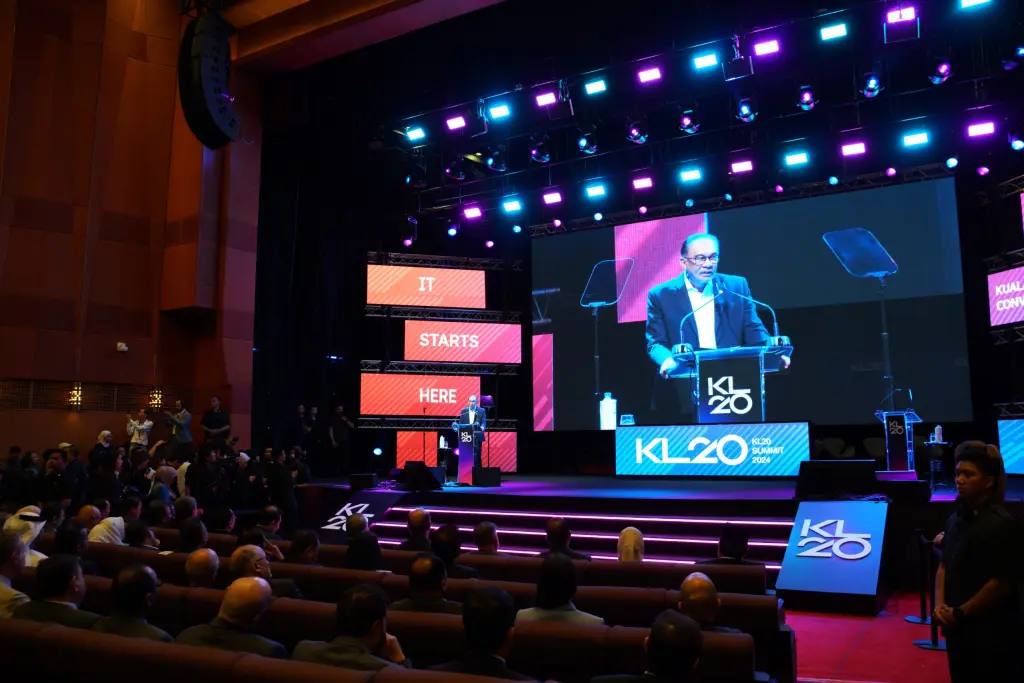
Prime Minister Anwar Ibrahim speaking to delegates and attendees on the first day of the KL20 Summit / Photo credit: KL20 Summit
To make this happen, the government released an action paper that details some of the steps that it intends to take to make Kuala Lumpur attractive for startups, founders, VCs, and just about anyone involved in the tech ecosystem.
One of the standouts from the action paper – because it was widely reported – is the clutch of golden passes the country is offering.
There’s the Unicorn Golden Pass to attract global unicorns to set up shop in Malaysia. Perks include exempted fees for employment passes for senior management, subsidized rental fees, concessionary tax rates on corporate profits and relocation services.
There’s also the Innovation Pass, a multi-tier employment pass program, as well as the VC Golden Pass, which offers limited partners funding access opportunities, subsidized office spaces, expedited license registrations, and exempted fees for employment passes.
Other initiatives include a VC school where aspiring professionals or young fund managers would attend a course on the basics of the business, including financial analysis.
It all sounds good, but does it stand up to scrutiny?
Wither, USP
No one in the conference actually answered what Malaysia’s unique selling point was.
Let’s be real: VCs want money. And who can say no to government money? Anyway, let me illustrate: One of the panelists – I’m not going to mention who – on Day 2 told the audience that Malaysia is a “sleeping giant.”
The person, who runs a Southeast Asia fund, based this observation on how some of their investee companies have branches or subsidiaries in Malaysia.
That same panel had others who were looking at Malaysia more closely now despite being in the region for some time. These were people who’d boast about investing in unicorns and so on.
Rinse and repeat
Where do we go?
Stay ahead in Asia’s tech landscape
This is premium content. Subscribe to read the full story.
A realistic assessment is in order if Malaysia were to be a choice destination for top VCs and unicorns.
We know this is not ideal. ⌛ Sign up in 20 seconds. Cancel anytime.
Our subscriber community includes professionals from these companies:





Stay updated on the go with our mobile app.
Get latest insights with smoother, more personalized experience through TIA mobile app.










📅 Upcoming Events
22 October 2026
Payoneer x CSPN Summit 2026