
Along the streets in Seoul, South Korea. Photo credit: HB Kang.
It is a country that is proud of its many global accomplishments. Many would have encountered something made in or originating from South Korea at least once in their lives. According to a presentation by Nathan Millard, CEO of G3 Partners, South Korea has a 83 percent smartphone penetration rate, one of the world’s highest, an estimated $23.6b ecommerce market and a high $31.7k GDP per capita.
In the last few years, you would likely have held a Samsung Galaxy Smartphone or watched TV on a Samsung SmartTV. You could have rode in a Hyundai or SsangYong vehicle before. Perhaps you have listened and danced to Psy’s “Gangnam style” or to the many other Kpop groups that got you swinging, or shopped online at their global ecommerce marketplaces like Qoo10. Hell, you could have even shed tears watching “Descendants of the Sun” or another top South Korean drama.
The South Korean economy attributes its success to the chaebols (Korean conglomerates),which were no doubt effective in driving the South Korean economy in the 1960s-1990s. But since the Asian financial crisis in 1997, only 19 of the 30 largest chaebols remain. Did this lead to the beginning of a new startup ecosystem, where rising entrepreneurs helped fill the gap in driving economic growth for the country? I asked a few local startups operating in the market for their insights.
Market opportunities
Education is everything (and programming too!)
According to Wikipedia, “Higher education is an overwhelmingly serious matter, where it is viewed as one of the fundamental values of South Korean life… Graduating from a top university is the ultimate marker of high status, future socio-economic status, marriage prospects. The pressure to succeed academically is deeply ingrained in South Korean children from an early age.”
A serious matter indeed. South Koreans spend an average $6k-$9k per child annually on education alone, or 16 percent of total public expenditure in 2011. There are just under 100,000 hagwons (‘cram schools’) with 75 percent of South Korean children attending them. The curriculum is also expanding to cover more fields, and programming is set to become part of the elementary school curriculum in 2019.
Seeing opportunity in this, Asaph Kim co-founded 3.14 Co Ltd. The Chief Design Officer and his co-founder came together in 2014 to build Kamibot.
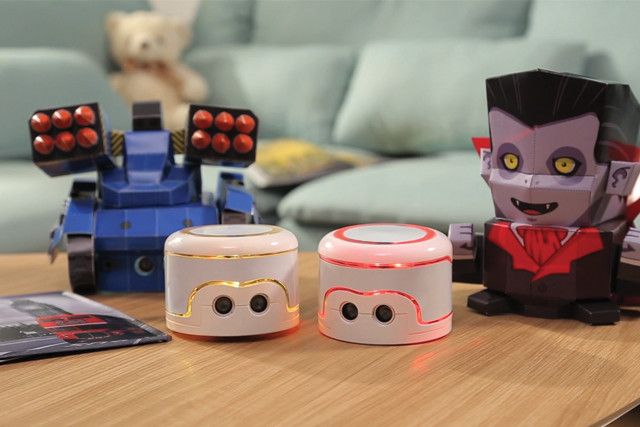
Photo credit: Kamibot products
He elaborates on his invention, “Kamibot is a programmable robot that kids can learn to code with. They get to make paper character skins for and customize their robots while learning how to program. I think what’s interesting is that 68.8 percent of kids in Korea are in some sort of extra-curricular study program/academy. Most kids over here hang out with their friends at their respective academies. Parents in Korea spend about $210 on each child per month so that they can learn some other stuff outside of school. In my opinion, this is a vertical that is very strongly influenced by parents.”
There’s a need for localization
Daniel Chan, CEO and founder of Toss Lab, describes the need for localization for productivity tools in Asia.
The startup ecosystem
Advice to startups





Stay updated on the go with our mobile app.
Get latest insights with smoother, more personalized experience through TIA mobile app.