Elaine Ramirez · · 5 min read
These origami robots can teach kids how to code
Back when I was a kid, computer literacy meant learning how to surf the web and to type without looking at the keyboard. At best, we learned the difference between a LAN and the internet, and that was in a high school-level class.
Today, the bar is exponentially higher as initiatives the world over are calling to incorporate not just computer literacy, but coding and programming into elementary curriculums. In South Korea, coding is set to become part of the elementary school curriculum (link in Korean) in 2019, and part of the middle school grind from next year.
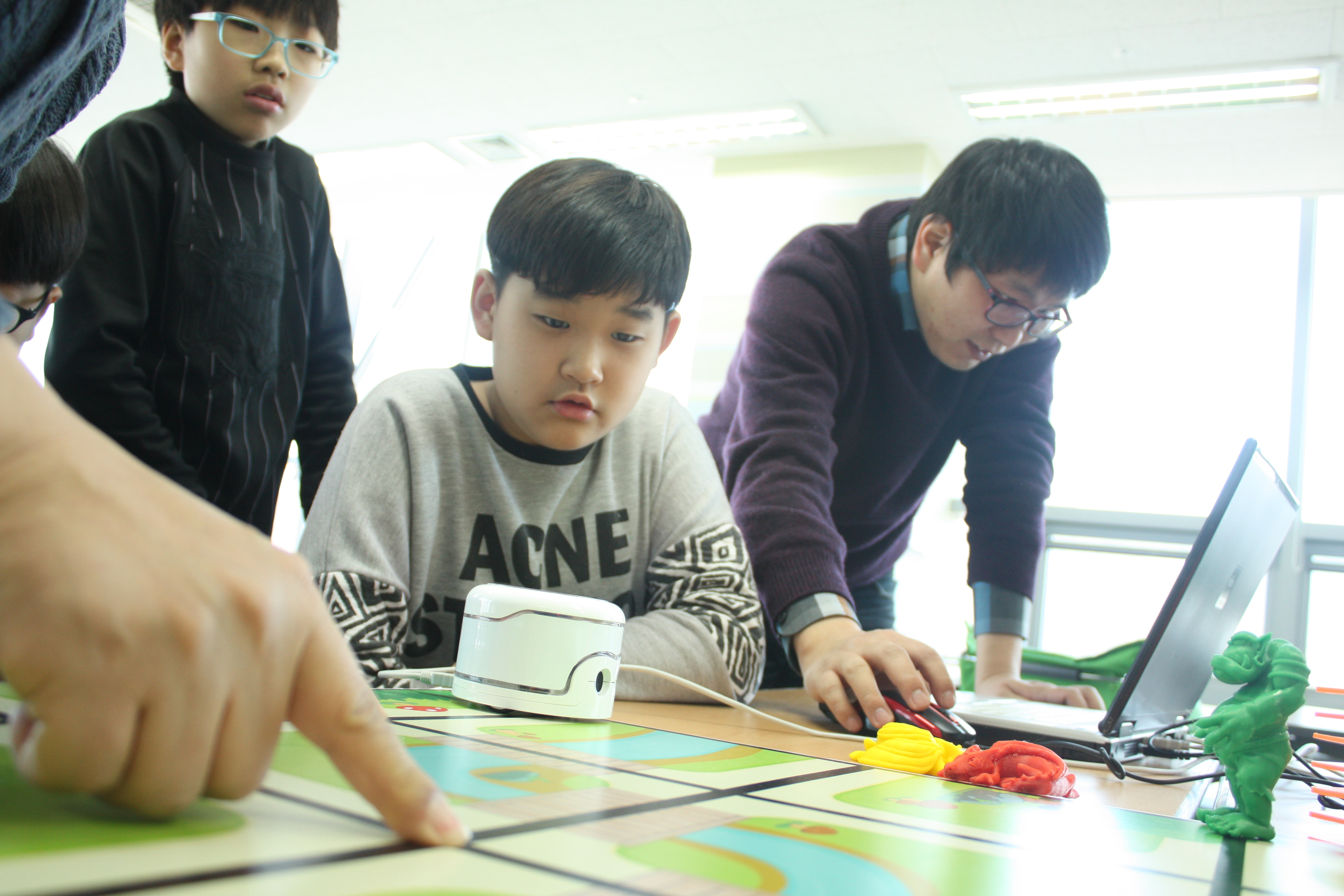
But many classrooms struggle to make the difficult subject fun to learn. Alvin Chae, a firmware engineer and circuit designer, is seeking to do it by fusing his seemingly disparate passions for tech and origami.
He co-founded 3.14 simply to make smart papercrafts, but the Korean startup’s mission has turned into something bigger – teaching kids an essential skill by making basic robotics and engineering fun to learn, while unleashing their creativity with customizable robot characters.
Now his team is making a programming curriculum so their flagship product, the Kamibot, can be used in classrooms and at home to teach kids C++ and potentially other languages.
“I remember how hard it was to get into coding at first, but how I could get lost in a papercraft project for hours,” Alvin, the CEO, tells Tech in Asia. “That’s how the team and I came up with the idea to combine both of these passions to create an interactive toy that makes coding fun for kids.”
Starting from Scratch
Co-founders Alvin Chae and Asaph Kim, two papercraft hobbyists, joined forces in 2014 to create origami dinosaurs, dubbed KamiKami, with circuits printed inside the paper that lit up with the user’s touch. Popular demand led them to turn them into moving objects, and they set out to make a robot with changeable parts.
The Kamibot was born, with flashy LED lights, a top that turns, and sensors to prevent it from bumping into stuff. Its trademark flair is the lineup of paper character skins ranging from Dracula and Frankenstein to an army tank, with blank templates available for DIY designs.
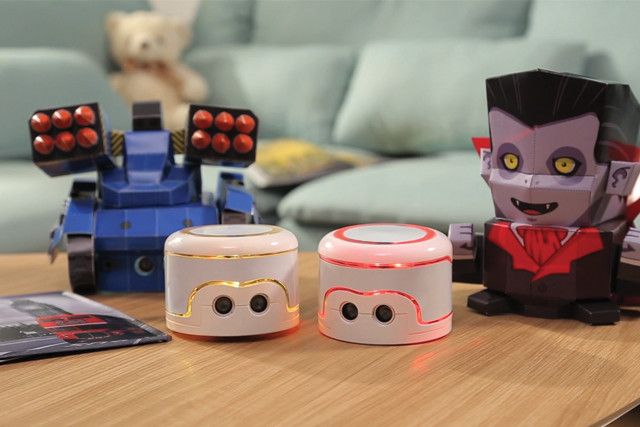
“We want robots to constantly change with the kid’s tastes. One day they might like Hulk, the next day My Little Pony. So, it’s a robot that is changing with taste so you don’t get bored of it,” says Asaph, the design chief. “How better to keep their attention than with relevant characters that mean something to them?”
But it became essential to turn the toy into something useful, lest it end up collecting dust with the velveteen rabbit. “Parents don’t really want to spend a lot of money on toys for their kids that just end up being played with once and put on a shelf. You get more value out of an educational toy, which is why we decided on creating a codable, programmable robot,” he says.
On top of their no-brainer mobile app to remotely control the robot, the team of five has developed an educational API programming tool designed to look like Scratch. Students start by using the block-based drag-and-drop language to make the Kamibot move forward, backward, left, and right. It’s similar to the curriculum on Code.org, but meant to be more engaging with a real-life robot instead of an on-screen character.
Kami toys, only fun for boys?





Stay updated on the go with our mobile app.
Get latest insights with smoother, more personalized experience through TIA mobile app.