Xavier Kong · · 2 min read
NTU takes the piss out of concrete after using urine, sludge for cement
Scientists from Nanyang Technological University (NTU) Singapore have discovered a new bio-cement that uses industrial carbide sludge and urea from mammal urine as key components for production.
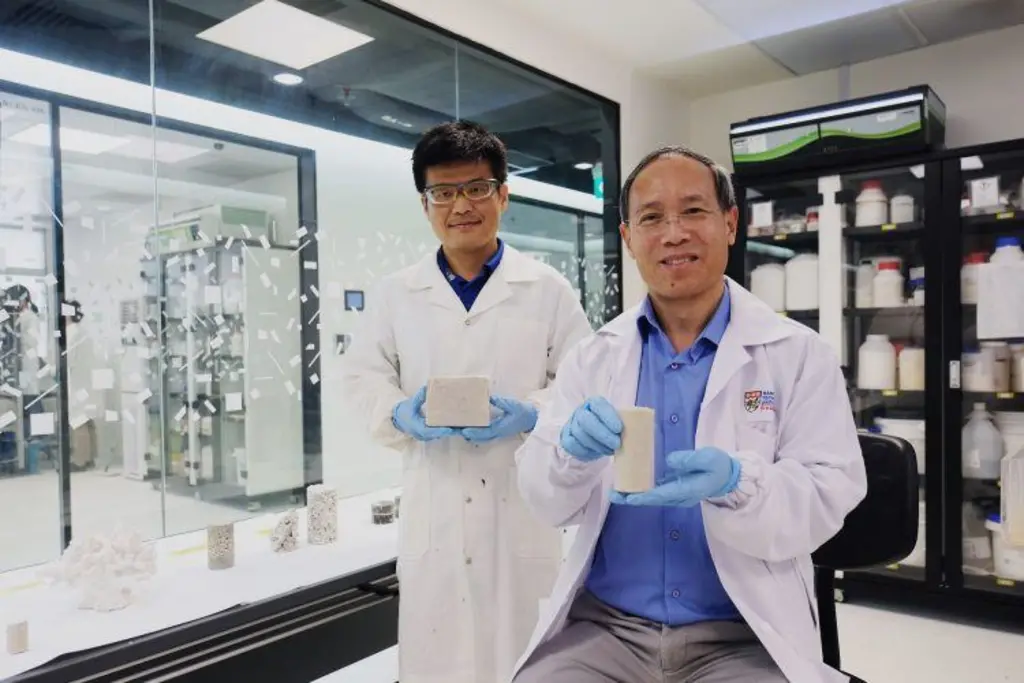
NTU senior researcher Wu Shifan (left) and professor Chu Jian / Photo credit: NTU Singapore
The research team, led by NTU professor Chu Jian, chair of the School of Civil and Environmental Engineering, has published a proof-of-concept paper saying that the new bio-cement can be a sustainable and cost-effective method for soil improvement. It can also be used as a means of restoring monuments and strengthening shorelines.
“Our research makes bio-cement even more sustainable by using two types of waste material as its raw materials,” said Chu. “In the long run, it will not only make it cheaper to manufacture biocement, but also reduce the cost involved for waste disposal.”
Bio-cement is a green, renewable, and more sustainable alternative to regular cement that typically uses bacteria to form a hardening reaction that binds soil into a solid block. The new discovery requires less energy and generates fewer carbon emissions than traditional cement production methods.
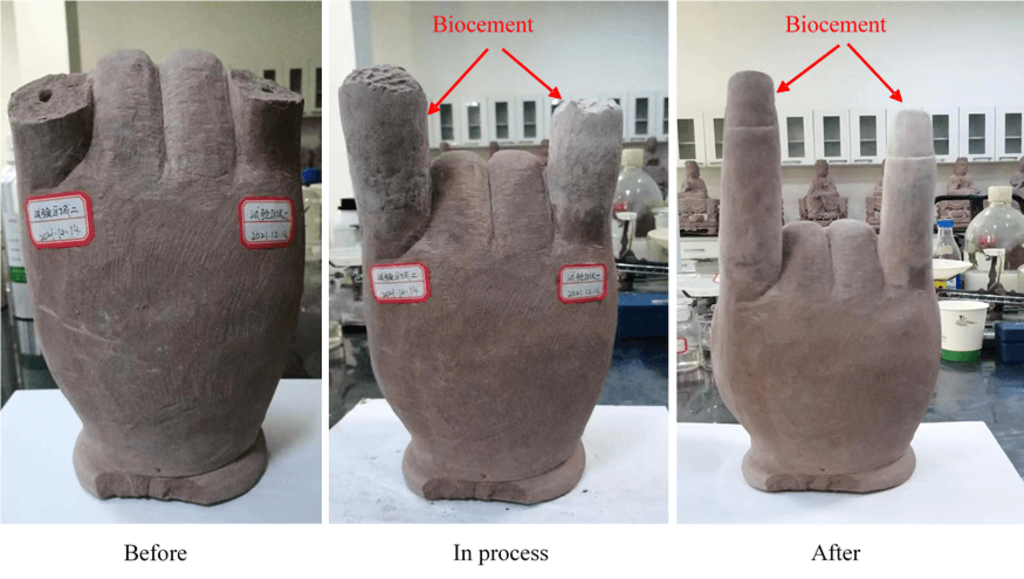
A Buddha hand repaired using biocement / Photo credit: NTU Singapore
“Limestone is a finite resource – once it’s gone, it’s gone. The mining of limestone affects our natural environment and ecosystem too,” Chu added.
In collaboration with national agencies in Singapore, the research team is trialing its bio-cement while exploring further large-scale applications of the new discovery.
See also: Dutch startup plans to keep Southeast Asia afloat – literally
Editing by Miguel Cordon and Lorenzo Kyle Subido
(And yes, we’re serious about ethics and transparency. More information here.)





Stay updated on the go with our mobile app.
Get latest insights with smoother, more personalized experience through TIA mobile app.