 Rebecca Liew · · 5 min read
This edtech company is changing remote learning for Indonesian students

Indonesia’s education sector has seen great shifts in a short amount of time. Last year, the Covid-19 outbreak forced the country’s teachers and over 68 million students to take on distance learning amid nationwide school closures – a move that amplified the country’s digital infrastructure issues, among other challenges.
One edtech company was quick to address the shift to remote learning amid the pandemic: Quipper, a global online learning platform with a presence in Japan, the Philippines, and Indonesia.
Maintaining quality education online
As schools shut in Indonesia, Quipper saw an opportunity to provide a platform that could make learning online easier for both educators and students.
It launched Quipper School Premium (QSP), a business-to-business program that provides integrated solutions for both online and hybrid learning. Through a combination of learning and content management systems, QSP allows educators to manage classes, assignments, and even exams remotely. The program also provides tools for teachers to create and manage their own content, as well as ready-made content aligned with the curriculum for teachers to assign to students.
The company also developed direct-to-student online learning video service Quipper Video, which provides students with a platform where they can watch lecture videos from experienced teachers, tackle tasks, and deepen their studies.
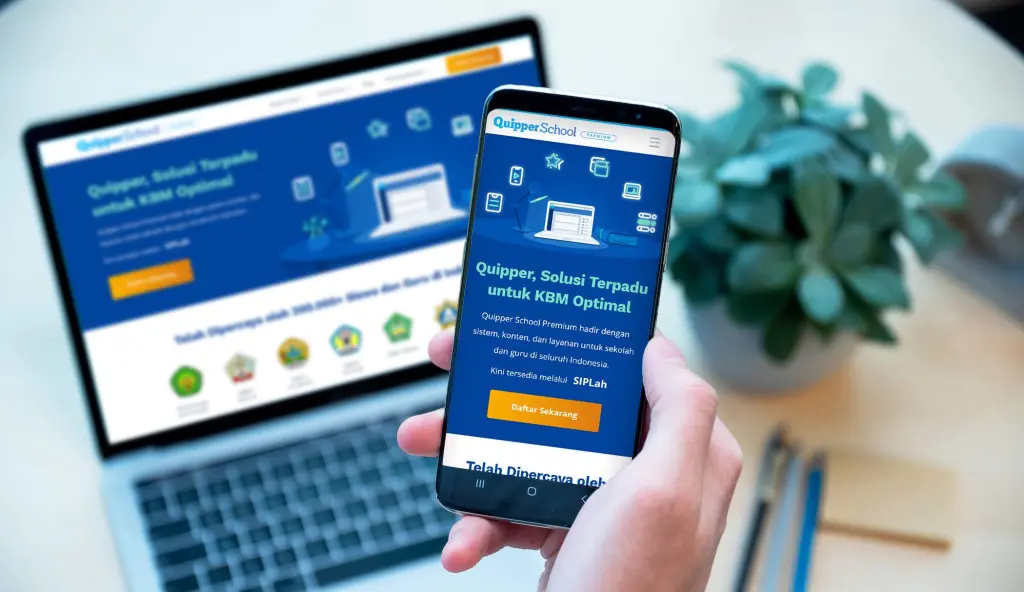
Photo credit: Quipper
To ensure that its content is kept up-to-date for its target market of junior and high school students, Quipper works with in-house subject specialists, Indonesia’s Ministry of Education and Culture, and education experts who are well-versed in the government regulations surrounding Indonesia’s education system.
“In developing content, our content team is divided into smaller teams to target different age groups,” explains Yuki Naotori, country manager of Quipper Indonesia. “Our main focus is to ensure the highest standard of quality.”
This starts with Quipper’s subject experts examining the course material by the education ministry before mapping out a series of content topics and modules for development. The actual legwork then begins: creating study guides and quizzes, shooting materials for video lessons on Quipper Video, and editing and reviewing the content.
Bridging connectivity issues
Though steps are being taken to ensure that education is kept affordable for students, another hurdle comes in the form of connectivity issues for some users – a reflection of Indonesia’s still-developing telecommunications infrastructure.
“When [the country] shifted to online learning last year, a crucial issue that students and teachers faced was the access to digital teaching content,” observes Naotori. Network connectivity issues, for example, made it difficult for students to access online digital content while teachers lacked the know-how to create content on learning management systems. These were just two factors that could impede the quality of education for millions in Indonesia.
A crucial issue that students and teachers faced was the access to digital teaching content.
In response, the edtech firm has channeled its resources into training over 370,000 teachers to make the online learning experience more effective during the shift to distance learning amid the pandemic.
“Creating and delivering digital content require creativity, so we support them in this growth through a webinar series that takes place throughout the year and assign dedicated support staff to help answer any user queries,” the Quipper country manager notes.
Affordability and relevance are key
When schools began to shut down in March last year, Quipper launched a campaign called Bisa Tetap Belajar (BTB), which loosely translates to “everyone can study.” Between March and June 2020, teachers and students were granted free access to over 10,000 videos and 75,000 quizzes on the platform, attracting the attention of even Indonesian President Joko “Jokowi” Widodo.
The company also collaborated with the Ministry of Education in its #BelajarDariRumah campaign, which broadcasts Quipper’s content on local public television network Televisi Republik Indonesia (TVRI), Indonesia’s national free-to-air TV channel.
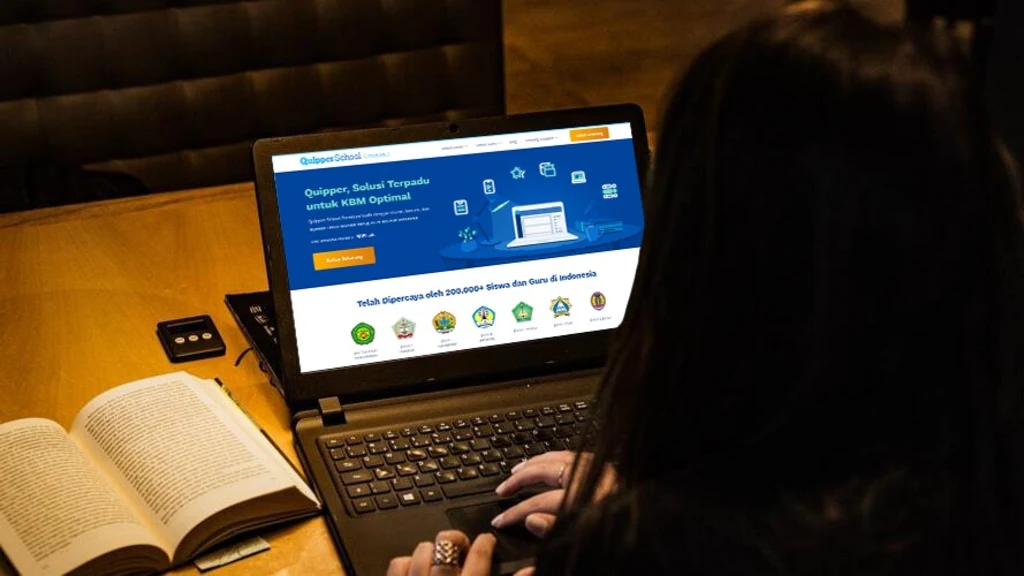
Photo credit: Quipper
To further aid students and schools in the new remote-learning dynamic, Quipper introduced an audio transcription-based content search feature, allowing students to search for related videos based on keywords mentioned during a class. Essentially, students can now discover content that might otherwise not be discoverable based on the title of a video or its description, allowing them to save on both time and internet data.
Additionally, the edtech firm worked with local telco providers Telkomsel and Indosat to grant its users limitless internet data, ensuring easy access to their studying and teaching material.
“As a company, we need to be able to adapt quickly to changes because that’s one reason why students and teachers use our platform,” shares Naotori. As a result of the campaign, student sign-ups on Quipper increased 2x while teacher sign-ups grew 3x. To date, Quipper has over 11 million registered users and 400,000 registered teachers across the Philippines and Indonesia collectively.
Education for everybody
Being an edtech firm in Indonesia requires far more than staying on the pulse of the latest syllabus, however. It also involves taking active steps to stay competitive. Therefore, Quipper ensures that its educational packages remain affordable for learners. A full school-year subscription costs between US$40 and US$55 while its online try-out test can cost as little as US$13.
Furthermore, Indonesia’s Bantuan Operasional Sekolah, a national financial assistance scheme for students with financial difficulties, expanded its coverage to include subsidies on online learning content and tools from edtech providers like Quipper.
This allows Quipper to continue developing innovative edtech products while achieving its goal of democratizing education for the masses. The company is currently developing more advanced edtech solutions and working on expanding its reach to lower-grade and university levels, as well as other educational categories.
“Our vision has not changed since the beginning, and that’s to deliver the best education to each market and all corners of the world,” says Naotori.
Converted from Indonesian Rupiah. Rate: US$1 = IDR14,543.25
Quipper is an edtech company with operations in Indonesia, Japan, and the Philippines that offers high-quality products to help students, teachers, and schools achieve their goals. Visit its website to find out more.
This content was produced by Tech in Asia Studios, which connects brands with Asia’s tech community. Learn more about partnering with Tech in Asia Studios.
Stay updated on the go with our mobile app.
Get latest insights with smoother, more personalized experience through TIA mobile app.
Recommended reads
 Building a human capital operating system for students
 The AI talent war in Asia: who’s winning, who’s losing, and why
 Surge backs $5.1m round of first accelerator participant from Thailand
 How CFOs can balance their duties in driving startup growth
 Crypto.com slashes 20% of global workforce
 Mass firing, less hiring: Can Indonesia see hope in a grim job market?
 PayMongo receives demand to investigate board chairman
 Exclusive: SG kidtech firm bags $2.2m seed round
 Employment Hero nets $130m, buys Australian HR tech firm
 AI hiring heats up in Singapore





Editing by Nathaniel Fetalvero and September Grace Mahino
(And yes, we’re serious about ethics and transparency. More information here.)




