Sign up for the Daily Newsletter, sent exclusively to our Premium subscribers. We break down the big and messy topics of Asia’s tech and startup community. Get the newsletter in your inbox everyday with a Premium subscription.
Hello reader,
The importance of financial inclusion to a country is often overlooked. It helps build the key concepts of credit and savings and is a major step toward inclusive growth, i.e., growing financially stable together as a population, irrespective of age, gender, race or income.
Financial inclusion is a major issue that needs to be addressed, especially among countries in Southeast Asia. For example, a staggering 47% of the Philippines’ adult population are unbanked as of the second quarter of 2021. Yet, the topic, like most things related to banking or finance (ahem, taxes), is often met with an eye roll.
The advances in fintech and digital transactions are, nonetheless, painting a brighter picture for financial inclusion in Southeast Asia. More and more startups are making financial services easily accessible. Today, we analyze how the Philippines’ digibanks are accelerating financial inclusion in the country.
Today we look at,
- How the Philippines is banking on a digital remedy
- The latest funding round of one of India’s top hyperlocal delivery players
- Other newsy highlights such as lucrative fintech funding rounds and an exclusive club with an odd requirement
Premium summary
A digibank revolution awaits
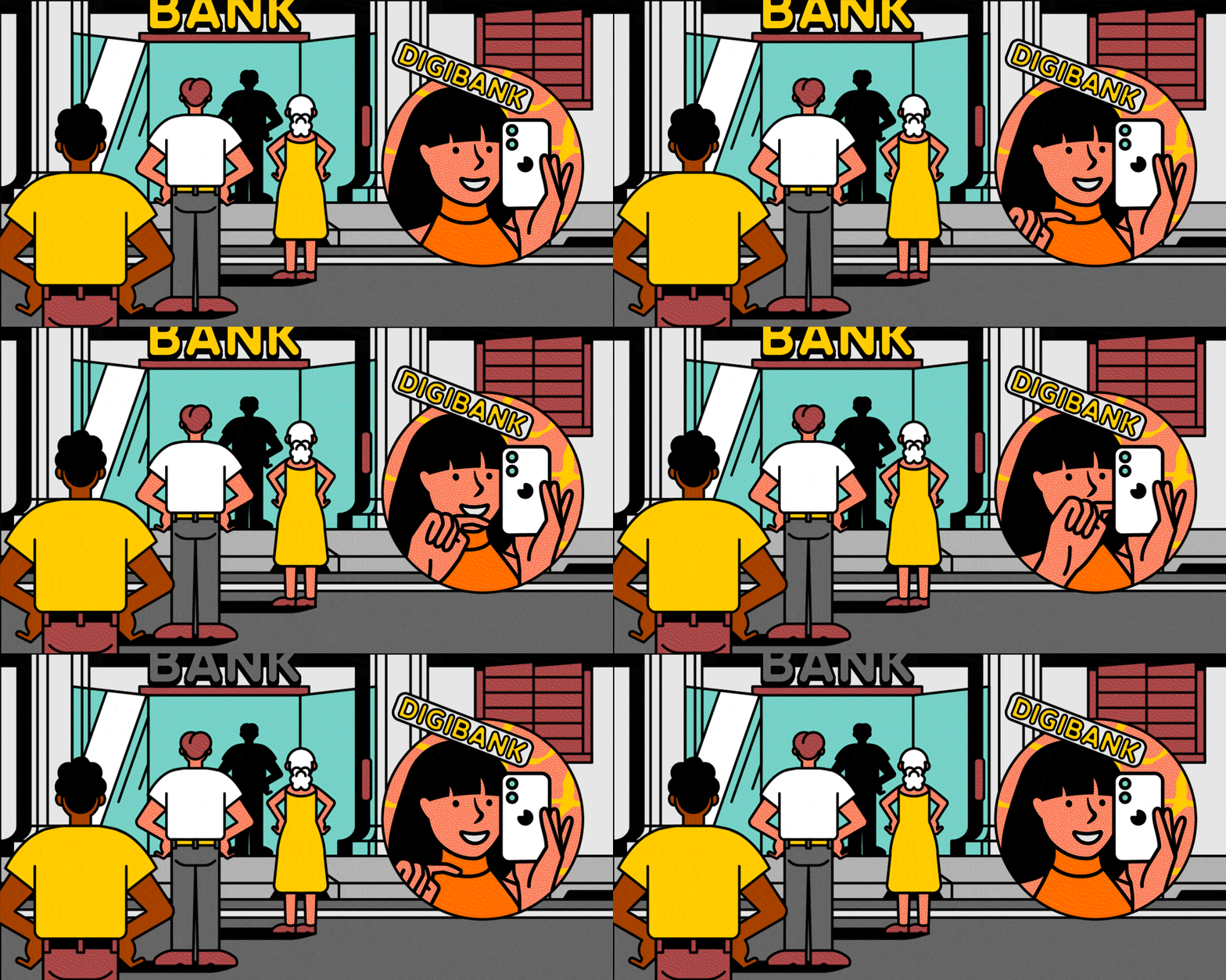
Image credit: Timmy Loen
With a plethora of documents required, long queues, and a barrage of financial jargon to face, there are very few things I hate more than visiting my bank. Regardless of its importance, bank visits are cumbersome. Luckily, I haven’t visited one in a long time.
While that is partly due to the pandemic, it is mainly down to me changing the way I transact. I count on digital banking and fintech apps for payments, investments, and other daily transactions. As digital transactions slowly spread its roots across the Philippines – thanks to a new group of digibanks – I cannot wait to see its citizens join me on the bandwagon.
- It’s a team sport: Digital bank executives point to the current state of internet connectivity in the Philippines, which has an internet penetration rate of 67%, as a roadblock to the industry’s development. “Telcos also have to up their game and build the infrastructure to make it possible for digital to play in those far-off places,” says Albert Tinio, chief commercial officer and co-founder of digital bank GoTyme.
-
The chosen ones: In October 2021, the Bangko Sentral ng Pilipinas (BSP), the country’s central bank, issued digital bank licenses to only six players – GoTyme, Maya Bank, Tonik, Overseas Filipino Bank, Union Digital Bank, and UNObank. Nine other applicants for the license were not approved, as “they had not completed the requirements in time,” according to a BSP statement.
-
The more the merrier: Players in the space feel there is a need for more digital bank operators in the Philippines. It is a “misnomer to say it is crowded,” Jojo Malolos, president and CEO of GoTyme, tells Tech in Asia. Similarly, Tonik Bank CEO Greg Krasnov believes that having more digibank players will help to accelerate financial inclusion in the country.
Consider it Dun





Stay updated on the go with our mobile app.
Get latest insights with smoother, more personalized experience through TIA mobile app.











📅 Upcoming Events
22 October 2026
Payoneer x CSPN Summit 2026