- Premium Content It takes our newsroom weeks - if not months - to investigate and produce stories for our premium content. You can’t find them anywhere else.
 Melissa Goh · · 8 min read
Delivery bots may arrive sooner than you think
Are you ready to accept your parcel deliveries from a robot courier?
While your answer to that question might be a resounding yes, how soon that happens will likely depend on where you live – sooner if you live in Singapore and Malaysia versus Indonesia or the Philippines and faster still if you live on a university campus.
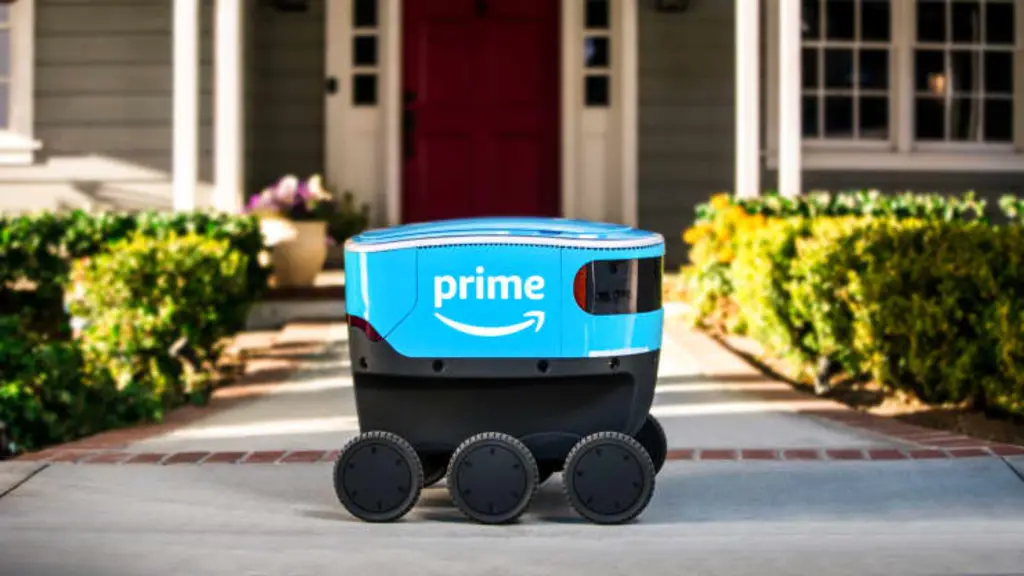
Amazon’s fully electric delivery robot Scout / Photo credit: Amazon
Ecommerce companies, from Amazon and Alibaba to Meituan Dianping, are locked in a race to put robots on roads – and in the air too, if that’s what it takes. This comes as the firms push to optimize their last-mile operations, which can make up a substantial portion of total delivery costs. Years into development and trials, however, autonomous delivery robots remain far from mainstream.
The biggest hurdles standing in the way of their commercial rollout are neither technology-related nor about regulations. The real roadblock, says one expert, is the angry customer.
A key issue facing last-mile delivery workers is that delivery companies have a hard time tailoring their services down to each customer’s needs.
Calls made between a delivery driver and recipients have become a big part of a delivery experience because of each customer’s unique requirements – be it a request for the parcel to be left at the concierge, change for their cash payment, or additional time to get to the door.
This complexity is the reason trials have so far focused on predictable use cases and environments, such as within university campuses or housing estates, says Sarabjit Singh, associate partner at management consulting firm McKinsey & Company.
“In a controlled environment, you know who your audience is. If they are students, they’re tech-savvy, they [might] order pizza, food – things which are predictable in terms of what the items are and who’s collecting the deliveries,” Singh adds.
A race to automation
Last-mile delivery costs can often reach or even exceed 50% of total parcel delivery expenses, leading to a “strong drive for cost reduction,” Ninja Van chief operating officer (COO) Joel Ong tells Tech in Asia in an email interview.
Singapore-headquartered Ninja Van delivers 1.7 million parcels across Southeast Asia every day for companies including ecommerce marketplaces Shopee, Lazada, Tokopedia, and Sendo.
Even within cities, sending a parcel isn’t cheap. “Deliveries in urban areas today can cost US$1 to US$2 a drop. An average ecommerce order on a site like Shopee will be around US$10. So the delivery cost alone can be 10% to 20% of your order value,” Singh says.
To tackle this, a plethora of autonomous robot solutions have emerged. These range from four- to six-wheeled vehicles on sidewalks to mobile parcel lockers and drones.
Are bots feasible?
Low-cost workers beat drones
More complex than self-driving cars
Stay ahead in Asia’s tech landscape
This is premium content. Subscribe to read the full story.
Ecommerce players have been investing in the technology, and their efforts are bearing fruit.
We know this is not ideal. ⌛ Sign up in 20 seconds. Cancel anytime.
Our subscriber community includes professionals from these companies:





Stay updated on the go with our mobile app.
Get latest insights with smoother, more personalized experience through TIA mobile app.








📅 Upcoming Events
22 October 2026
Payoneer x CSPN Summit 2026