- Premium Content It takes our newsroom weeks - if not months - to investigate and produce stories for our premium content. You can’t find them anywhere else.
 Samreen Ahmad · · 6 min read
Why air taxis need to solve real-world problems to take off
When Satya Chakravarthy, founder of India’s The ePlane Company, envisions the future of air taxis, he doesn’t imagine ferrying busy executives over traffic or shuttling tourists around landmarks and scenic views. Instead, he thinks about how the aircraft can transport patients stuck in gridlock.
“In a city like Bengaluru, an ambulance can take over an hour to move a few kilometers,” he tells Tech in Asia. “If we can cut that to 10 minutes, that’s a real problem solved.”
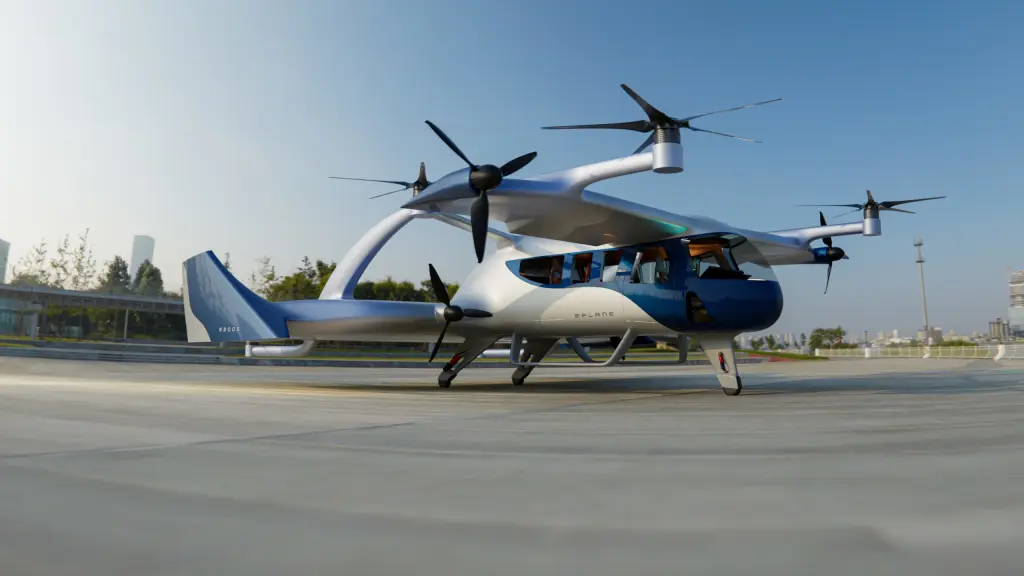
EPlane’s air taxi prototype / Photo credit: The ePlane Company
This explains why ePlane’s first certified aircraft will not be a taxi at all, but an electric ambulance. The company plans to eventually adapt the same aircraft for passenger use.
EPlane’s decision underscores a broader industry challenge. After billions of dollars in investment and over a decade since the first modern electric vertical take-off and landing (eVTOL) aircraft flew, air taxis are still not operating at commercial scale anywhere in the world.
Yet, ambition in the industry remains undimmed.
For instance, air taxis are part of Dubai’s plan to be a smart city. The government has signed an exclusive operating deal with California-based Joby Aviation, announced there will be multiple vertiports, and positioned itself as an early launch market. Joby Aviation has also acquired a manufacturing facility in the US recently for developing electric air taxis for commercial passenger service.
In the US, Archer Aviation is chasing regulatory approval, aiming to fly paying passengers ahead of the 2028 Los Angeles Olympics.
In India, startups such as ePlane and Sarla Aviation are betting on niche use cases, from air ambulances to short urban rides.
Still, the difference between promise and reality has become harder to ignore.
“This isn’t about one company failing,” says Amit Verma, founding head of engineering and AI at Neuron7. “It is about a five-year gap between hype and execution across the industry.”
That divide was created during the boom from 2020 to 2022, when air taxi startups raised vast sums – many through SPAC or blank-check listings – on aggressive timelines. Aircraft prototypes flew. Marketing videos circulated widely. Valuations soared.
See also: Why Xpeng’s wildest tech isn’t coming to Southeast Asia just yet
But aviation does not move at startup speed.
Not yet ready
Not-so-great expectations
Stay ahead in Asia’s tech landscape
This is premium content. Subscribe to read the full story.
Air taxis hold promise as flying ambulances and for urban rides, but regulatory and tech hurdles show why they are not ready for mass adoption.
We know this is not ideal. ⌛ Sign up in 20 seconds. Cancel anytime.
Our subscriber community includes professionals from these companies:





Stay updated on the go with our mobile app.
Get latest insights with smoother, more personalized experience through TIA mobile app.