 Samantha Cheh · · 6 min read
Fintech firm connects cross-border sellers and global opportunity

Summary:
- Southeast Asia’s digital economy has been fueled by the rapid adoption of mobile-first, real-time payment systems, but businesses still struggle with slow settlements, high costs, and complex localization across diverse markets.
- Diverse regulations, varied local payment preferences, and rising fraud risks make cross-border payments a major operational burden for merchants.
- PayerMax addresses these challenges by unifying hundreds of local payment methods into one AI-powered risk and payments platform, offering real-time fraud prevention, deep industry expertise, and strong regulatory alignment across global markets.
- Discover how PayerMax can streamline your cross-border payments and reduce risk.
The digital economy has opened up new avenues in how people interact and transact. The rise of in-app transactions, virtual goods, and digital subscription services has unlocked new opportunities in the digital economy, and in turn, led to a significant growth in Southeast Asia’s payments landscape.
“Over the past decade, we’ve seen Asia’s payment landscape undergo a remarkable transformation, with dramatic shifts toward mobile-first, real-time, account-to-account payments and QR code ecosystems,” says Wang Hu, president of fintech solutions provider PayerMax.

Wang Hu, president at PayerMax / Photo credit: PayerMax
In particular, he points to the emergence of local payment rails like Singapore’s PayNow and Thailand’s PromptPay, which are “reshaping consumer behavior and merchant expectations” by expanding access to cheap and fast transactions.
Cross-border payments are likely to get better over time as these QR systems become increasingly integrated with one another via regional collaborations.
Good for customers, bad for business
However, while cross-border payments for consumers have become more streamlined, the same cannot be said for businesses. In fact, for plenty of merchants in emerging Southeast Asia, it remains a massive source of stress.
Digital payments still have to run through the traditional financial system, which is built on legacy processes that aren’t equipped to handle the sheer volume of demand today.
Additionally, the growth of localized payment systems and diverse market preferences creates massive operational complexity and merchant burden, particularly for digital enterprises.
There’s also the challenges of localizing payment options in a region as diverse as Southeast Asia, Wang points out.
“Each country has its own preferred apps and local schemes,” he says. “That means that cross-border payments can’t follow a one-size-fits-all model, and merchants need to be able to plug into what local customers actually use.”
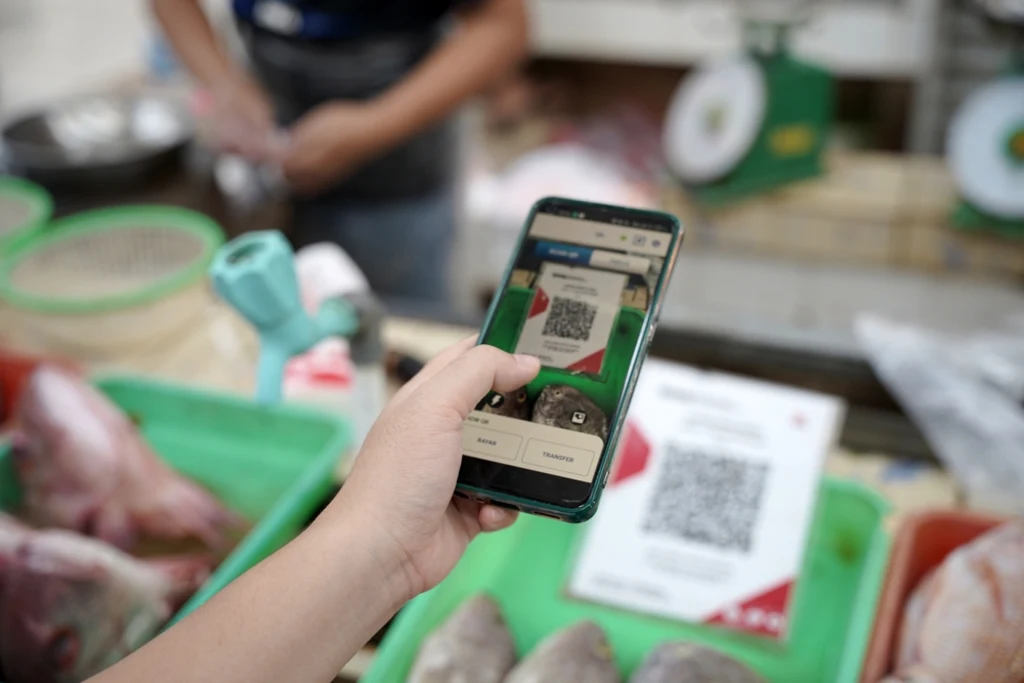
Photo credit: Daniel Pawer / Shutterstock
The localization issue is only made more complex by the region’s diverse regulatory environment. Every market has its own compliance requirements, data privacy standards, infrastructure, and fees structures.
For merchants, payment localization is a necessary but challenging issue that is further complicated by the fraud risks posed by cross-border payments. Because payment systems and regulatory frameworks vary across jurisdictions, risk management becomes more complex across borders.
According to Wang, cross-border payment risk in Asia has become even more difficult as fragmented payment systems and increasingly sophisticated abuse patterns continue to evolve.
“For many businesses, payment risks such as fraud and chargebacks can quickly erode profitability,” he says.
Left unchecked, merchants could find themselves on the hook for large portions of lost revenue due to fraud. Some estimates suggest that fraudulent chargebacks will cost Asia Pacific as much as US$6 billion by 2028.
“In short, when payments don’t work seamlessly, it directly impacts a merchant’s bottom line and growth potential,” Wang says.
Bridging many solutions into one
From an early stage, PayerMax recognized how important it was to bridge these highly localized systems in order to help solve merchants’ cross-border pain points.
“We were among the first Asian fintechs to be born in an emerging market to try and interconnect hundreds of alternative payment methods – from popular mobile wallets to real-time bank transfer networks – into one platform,” explains Wang.
Discover how PayerMax is streamlining cross-border payments
At the core of PayerMax’s strategy is a focus on preventing fraud through a one-stop AI-powered solution that monitors transactions in real time in order to catch suspicious activities before they can cause damage.
These solutions can also be customized to different use cases, with PayerMax able to feed in industry-specific data into its solution for greater accuracy.
For example, PayerMax works closely with over 93% of Asia’s leading game publishers and social apps. That experience has given the company access to deep insights into how these publishers operate and what dynamics they might be dealing with in different markets and local contexts.

Photo credit: TimeStopper69 / Shutterstock
“Let’s say you’re a game publisher battling in-game purchase fraud. We have the know-how to identify trends early and we use our AI-driven risk solution to tailor our platform,” Wang says.
That deep industry knowledge also makes PayerMax a great partner for merchants looking to expand into new markets, especially as geopolitical shifts and macroeconomic headwinds intensify.
New regulatory challenges, such as stricter know-your-customer and anti-money laundering checks as well as evolving rules around AI are other considerations.
“These macro uncertainties are demanding extra prudence from fintechs, and from the start, our stance has been to embrace regulation rather than treating it as a burden,” he says. “We work with regulators, not around them, to build a strong compliance backbone that shields our customers from complexities and allows them to focus on their core business.”
From global to local
PayerMax’s approach to streamlining cross-border payments for merchants has also centered around building a strong network of collaborators throughout Asia Pacific and beyond. For Wang, this strategy is a direct result of increasingly “multidirectional” global trade flows.
“Companies today expand across multiple emerging corridors simultaneously – for example, between Southeast Asia, the Middle East, and Latin America – rather than following a linear East-to-West path.”

Photo credit: CrizzyStudio / Shutterstock
PayerMax was an early entrant in emerging regions and has established 18 offices worldwide with local teams on the ground. As merchants expand globally, the company supports them wherever their growth takes them, adapting to how they operate and monetize across different markets, including more mature ones such as the US, Japan, and Korea.
“[These local teams] help ensure we can be close to our partners and understand each market’s nuances,” says Wang.
To make localization even easier, PayerMax invested in obtaining regulatory licenses in key markets, which allows the company to work directly with local payment providers.
“In essence, we bridge global merchants to local networks by combining our worldwide reach with local legitimacy and expertise,” says Wang.
If there is one lesson to take from the last 10 years of global payments, it’s that change is constant. What merchants are grappling with today won’t be what they’ll likely be facing in six months or a year from now.
From Wang’s perspective, the future of payments will be shaped by AI. “It will transform how we manage risk, personalize financial services, and drive inclusion,” he says.
At the same time, he foresees greater collaboration throughout the financial ecosystem, with not just fintech firms and traditional institutions working together but also regulators having much more of a say in how innovation is balanced against the need for security and trust.
“In today’s climate, earning trust through compliance capabilities is just as important as having cutting-edge tech innovation,” he concludes.
With deep roots in emerging markets, PayerMax’s payments solution brings hundreds of payment alternatives into a single platform to connect cross-border merchants to global opportunity.
Learn more about how PayerMax helps merchants navigate today’s evolving cross-border payments landscape.
This content was produced by Tech in Asia Studios, which connects brands with Asia’s tech community. Learn more about partnering with Tech in Asia Studios.
Stay updated on the go with our mobile app.
Get latest insights with smoother, more personalized experience through TIA mobile app.
Recommended reads
 How financial infrastructure powers global startups
 Coins.ph plots move beyond crypto to daily money app
 Vietnam’s fintech sector enters a post-MoMo reality
 Add to bot: how AI agents could reshape online retail
 DBS hits fintech firms with large fee hikes for custodian service
 Making mandatory e-invoicing simple for Vietnam’s SMEs
 Amartha banks on grassroots strategy to drive financial inclusion
 PH digital banks chase profits as regulator ups the stakes
 This system is tackling Indonesia’s $422m payment fraud
 SG minister highlights AI adoption pitfalls in SEA




Editing by Stefanie Yeo, Winston Zhang, and Jaclyn Tiu
(And yes, we’re serious about ethics and transparency. More information here.)






