 J.T. Quigley · · 5 min read
From New York to Tokyo, Decoded Fashion is giving startups access to the fashion world
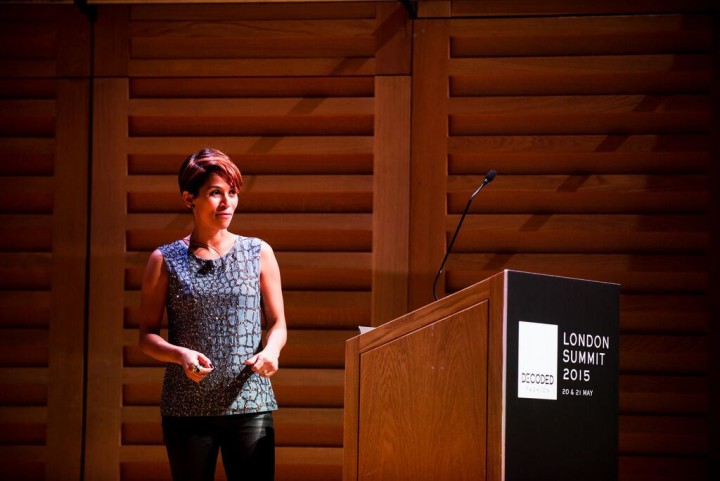
Bacelar on stage at Decoded Fashion London Summit 2015.
What do fashion shows and tech expos have in common? Both are looking seasons – if not years – into the future. Despite this common ground, however, the two sectors rarely intermingle. The tech and startup world prides itself on being casual, even nerdy – a far cry from the luxury fashion space, where every fold and frill is deliberate.
The Apple Watch, perhaps more than any piece of hardware before it, got people talking about how technology could leave a mark on the fashion world. New York-based Decoded Fashion is similarly challenging the notion that tech and fashion have to exist independently. Apple’s fancy wrist computer may have proven that a tech firm can benefit from some fashion advice, but Decoded Fashion is showing fashion designers and luxury retailers that tech and startups can streamline and improve their business.
Through events held across the globe, the company is chipping away at the conservatism that’s still widespread in fashion and retail. Country-by-country, it’s showing those industries the benefits that modern technology and startups can provide.
Creating access
Decoded Fashion was founded in 2012 by Liz Bacelar, a former producer at CBS News with a decade of experience in journalism.
“Before 2012, there were no events or platforms anywhere in the world that connected executives in fashion, beauty, and retail with startups,” she says. “A startup founder at an early stage couldn’t just talk to an executive-level person. Just pitching, or looking for a client in the first place, was very hard.”
For the globetrotting founder, the Decoded Fashion summits are all about providing real opportunities for the tech, fashion, and retail sectors to collaborate.
“The idea behind Decoded Fashion is creating access, and the second part is the discovery and curation on a global level,” she adds.
The decision to found the startup in New York was based on the migration of startups from Silicon Valley to the Big Apple, which Bacelar says was quickly becoming the epicenter for lifestyle tech.
Decoded Fashion hosted the world’s first “fashion hackathon” in 2013. The startup was acquired by London-based Stylus Media Group last March for an undisclosed sum, but Bacelar remains at the helm, hosting each event herself.
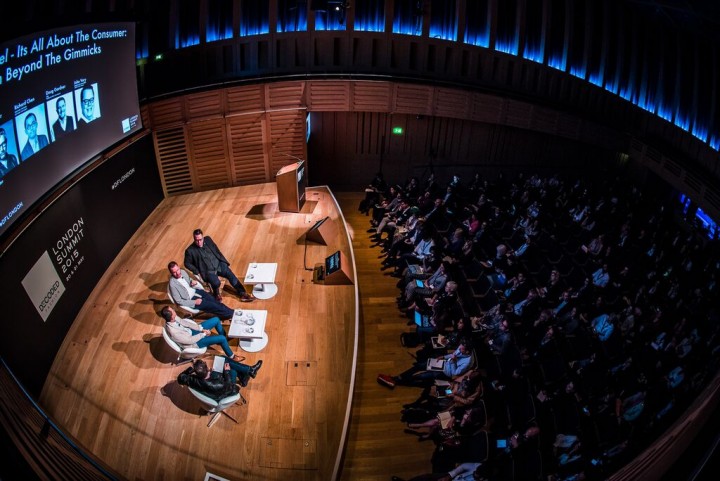
The Decoded Fashion model scaled with ease to London, which was going through a similar startup boom phase in 2012. A partnership with Pitti Uomo – the largest men’s fashion show in the world – then brought Bacelar and the Decoded Fashion Summit series to Milan.
Over the years, summit attendees have listened to talks by such influential tech and fashion heavyweights as David Karp, the founder of Tumblr; David Lauren of Ralph Lauren; Renzo Rosso, the founder of Italian fashion label Diesel and OTB Group; and Farfetch founder Jose Neves. The events have also facilitated a variety of business deals, such as a collaboration between Kate Spade and Everpurse to design bags with built-in smartphone charging, and the acquisition of iMall.eu by Farfetch. Bacelar adds that two startups that were formed after the teams met at Decoded Fashion have received investment from Y Combinator and TechStars (Disclosure: Y Combinator invests in Tech in Asia. Read our statement of ethics here).
New York to Tokyo
Now, after bringing startups and fashion executives together in North America and Europe, Bacelar has her eyes on Asia.
“Japan is a huge market for all things luxury, and we saw Korea as being the place where all things revolve around mobile, but I was never sure that the fashion industry in those countries was ready to have a conversation about technology,” she says.
Ultimately, it was Conde Nast Japan – the publisher of the Japanese editions of Vogue, GQ, and Wired – that approached Bacelar about bringing her event platform to Tokyo.
“I was really curious to see how the startup ecosystem was growing in Japan and the challenges it faces,” she says. “Japan reminded me why I started the company. Access is so hard, so allowing entrepreneurs to be connected with the highest ranks – that just sounded really cool to me.”
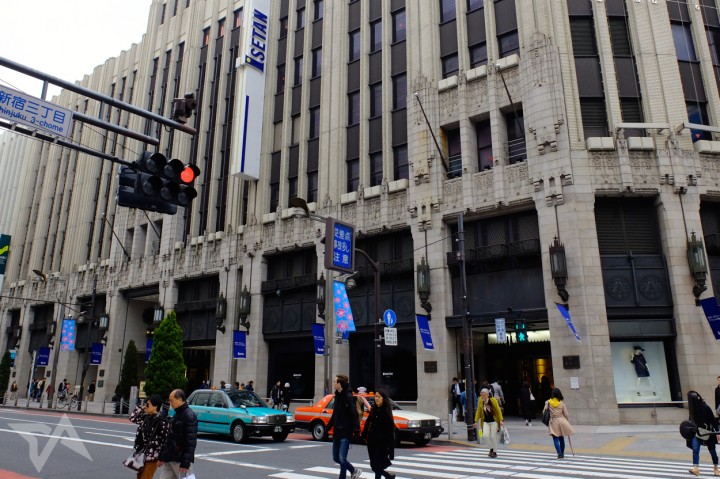
Isetan’s flagship store in Shinjuku.
Decoded Fashion has tied up with high-end department store chain Isetan for its Tokyo Summit. Isetan’s flagship location in Shinjuku, in the heart of Tokyo, is considered one of the most influential department stores in the world. Unsurprisingly, it was selected to house a dedicated Apple Watch retail location – one of only three in the world.
“We always want to get the biggest name in town aware of startup innovation and getting connected to them,” Bacelar says. “Isetan is the one for Japan, as a multi-brand retailer. Their desire to innovate the in-store environment is unique. Their current focus is not on ecommerce, as they really cherish the experience that’s created when you go inside. Shopping at Isetan is just special, on a global level.”
At Decoded Fashion’s Tokyo Summit on Thursday, five Asian startups will compete in a pitch contest for a chance to showcase their product or service at one of Isetan’s department stores.
Decoded Fashion was tasked with finding startups that could bring a bit of technological flair without changing the essence of the brick-and-mortar retailer. Bacelar was given a challenge: what would the consumer of the future expect a tech-forward physical store to have?
“It’s not just thinking about putting screens all over the place, nothing gimmicky,” she says. “We’re focusing on cutting edge experiences, and letting customers personalize those experiences to their liking.”
Next stop: Singapore
Decoded Fashion’s Tokyo event will set the stage for future events in Asia. What country is next on Bacelar’s road map?
“Everyone wants me to say China,” she says. “But it’s definitely gonna be Singapore.”
Her hope is to host Decoded Fashion’s first Singapore Summit in May 2016, the same time as Singapore Fashion Week.
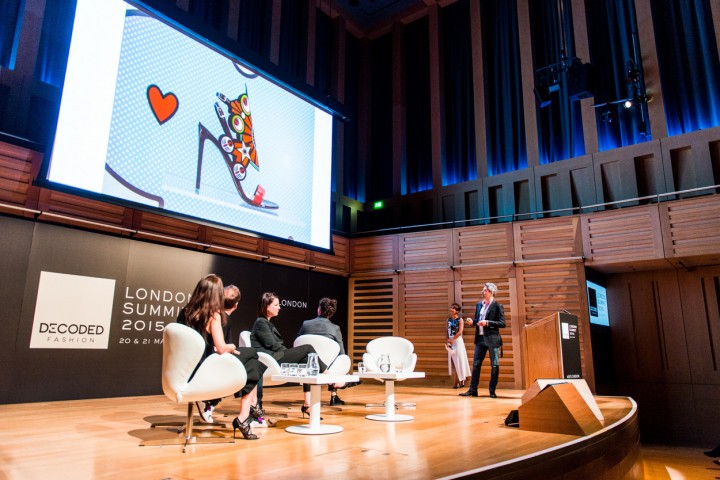
Before the inaugural Asia event even kicks off in Tokyo later this week, Bacelar is also planning ahead for her return next year. While Japan may have the perfect storm of being a country that embraces both the technological and the fashionable, she encountered an unexpected weakness in the Japanese startup ecosystem: a lack of female involvement.
“One of my greatest disappointments in Japan this year is not finding one female-led startup,” she says. “It shows a huge weakness in the market. When you’re building something in retail or fashion that’s a big deal, because women make the purchases, they control the money in the household.”
She adds:
“We usually have an equal number of men and women at our events, and this time that’s not the case. I hope that can be a moment of reflection for the Japanese startup ecosystem. My call to everyone is, at an event about disruption, how can we change that?”
Tech in Asia is the official media sponsor of Decoded Fashion’s Tokyo Summit.
Stay updated on the go with our mobile app.
Get latest insights with smoother, more personalized experience through TIA mobile app.
Recommended reads
 Daily news roundup – February 8
 These companies are ready to connect with you at the Tech in Asia Conference 2020 Virtual
 The most active investors in Vietnam’s startups
 How much is your startup worth? We heard the perspective of a VC.
 Singapore’s co-living firms are on the rise
 Circles Life’s breakthrough: building a digital telco SaaS platform
 UK-based foodtech accelerator CamLab launches remote program in Asia
 Tech in Asia Conference 2022 – the reunion we’ve been waiting for
 3 tips for running an optimal booth at a tech conference
 One step closer to virtual reality for an anime metaverse





Editing by Malavika Velayanikal, Michael Tegos, and Nadine Freischlad
(And yes, we’re serious about ethics and transparency. More information here.)




