 Jonathan Burgos · · 4 min read
Declaring Covid-19 as a pandemic is our best shot at defeating an invisible enemy
Dear readers,
I’m glad that the World Health Organization (WHO) finally classified the Covid-19 outbreak a pandemic. Truth be told, I wanted to use that label a month ago, but my colleague Eileen Ang wisely advised me not to. It was WHO’s call to make, not mine.
In my mind, it should have been declared a pandemic as early as mid-February. And it’s not because using it grabs readers’ attention. I knew that people would only take Covid-19 seriously if it were officially considered a problem of epic proportions. WHO’s declaration is having the desired effect – just look at the headlines in the last few days.
The US has suspended flights from Europe for 30 days. Singapore is placing citizens and residents on 14-day home stay if they traveled across Southeast Asia, Japan, Switzerland and the UK, while Malaysia will prohibit its citizens from going abroad and foreigners from entering the country for two weeks starting tomorrow. The Philippines widened the quarantine in the national capital region to cover the entire island of Luzon. Following the steps undertaken by hard-hit Italy, Spain has imposed a nationwide lockdown as Europe becomes the “epicenter” of Covid-19 according to WHO.

Philippine military personnel inspect commuters as the country’s capital enforces quarantine. Photo credit: AFP
Only time will tell whether these government measures will help to eventually curb the pandemic. But the economic fallout from the unabated spread of the coronavirus is more worrying. Just look at how central banks are panicking: The US Federal Reserve, for example, slashed its benchmark interest rate by a full percentage point to near zero. That’s the second time that it has reduced rates in less than two weeks.
Indeed, the economic impact of Covid-19 will be bigger and longer-lasting than that of the 2008 global financial crisis, Singapore Prime Minister Lee Hsien Loong said via Facebook. Some of the city-state’s biggest corporations are bracing for tougher times, with Singtel freezing wages and CapitaLand’s senior management and board members taking a pay cut. Across Asia, our recent survey shows that the businesses of 8 in 10 of startups in the region have been negatively affected by the pandemic.
With the level of infections around the world surpassing that of China, the situation will most likely worsen before it gets better.
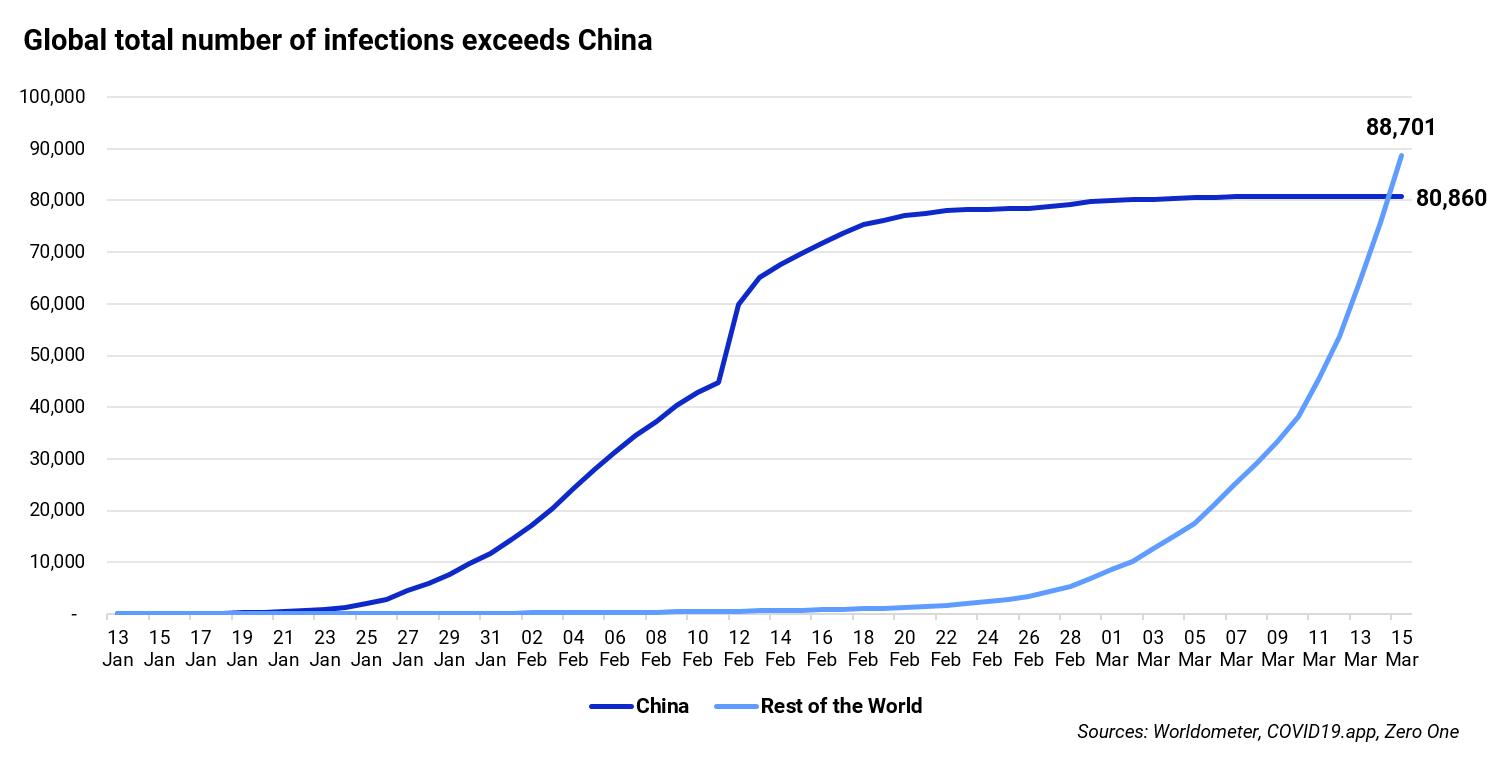
It’s hard to fight an invisible enemy, but it will be harder to win this battle if we don’t have the right data. To ensure that Asia’s tech and startup community have the information they need to make critical decisions, we’ve unlocked some of our subscriber-only articles about Covid-19 and its impact on business:
*Commentary: Turning disaster into a driving force
*Asian startups in state of tension amid coronavirus pandemic: Tech in Asia survey
*Asian tech deals slow as novel coronavirus epidemic spreads
*Commentary: How the coronavirus outbreak will make China’s tech titans stronger than ever
*Travel slumps, ecommerce thrives as Wuhan coronavirus spreads
We need to stay healthy and vigilant during these times. Being careful doesn’t mean we’re paralyzed by the fear of getting infected by this dreaded disease. Life must go on.
Once we’ve put precautions in place, we have to do our best to maintain a “business as usual” stance. That is the only way we can mitigate the economic malaise that will result from this pandemic. To this end, Tech in Asia is proceeding with this year’s Product Development Conference by hosting it online, making it our first-ever virtual summit.
You can be assured that Tech in Asia will be relentless in delivering insightful and inspiring narratives despite this pandemic. In fact, our coverage has grown from strength to strength week after week.
Check out our most recent premium content:
Long reads
*Behind CXA’s difficult journey to launching its ambitious insurtech platform
*FabHotels moves in on India as market leader Oyo downsizes
*Hoolah is tapping into a growing millennial demand to ‘buy now, pay later’ in Asia
*Commentary: China’s manufacturing confidence soars. It could be a false rally
*Bytedance poaching Facebook, Google talent in Singapore push
Rising startups
*50 most recently funded startups in China
*50 rising startups in Southeast Asia
*These are the most active investors in Singapore’s startups
*Temasek joins ShopBack’s $75m funding round
*Teen-focused payments app FamPay nets $4.7m from Y Combinator, others
Please support good journalism by subscribing to our premium content.
Speak to you again next week.
Cheers,
Jonathan
Editor-in-Chief
Stay updated on the go with our mobile app.
Get latest insights with smoother, more personalized experience through TIA mobile app.
Recommended reads
 Binance, YG team up for metaverse, blockchain projects
 Daily news roundup – February 8
 Terra co-founder Daniel Shin likely to testify on Terra collapse
 Lionel Messi backs Spin co-founder’s ⚽ venture
 Arrest looms for Terraform Labs founder as Seoul court issues warrant
 What is Hodlnaut hiding?
 How Sequoia Capital is adapting amid the tech winter
 Can Sociolla’s supporting features take center stage?
 How new business models are driving the modern hospitality industry (Infographic)
 Unpacking this SG firm’s dubious $583m valuation








📅 Upcoming Events
22 October 2026
Payoneer x CSPN Summit 2026