- Premium Content It takes our newsroom weeks - if not months - to investigate and produce stories for our premium content. You can’t find them anywhere else.
 Vincent Fernando, CFA · · 4 min read
Commentary: China’s manufacturing confidence soars. It could be a false rally
Amid the doom and gloom that the Covid-19 outbreak has brought to the global economy, there’s one bright spot: The China Purchasing Managers’ Index (PMI) is signaling a strong rebound in March for the manufacturing industry.
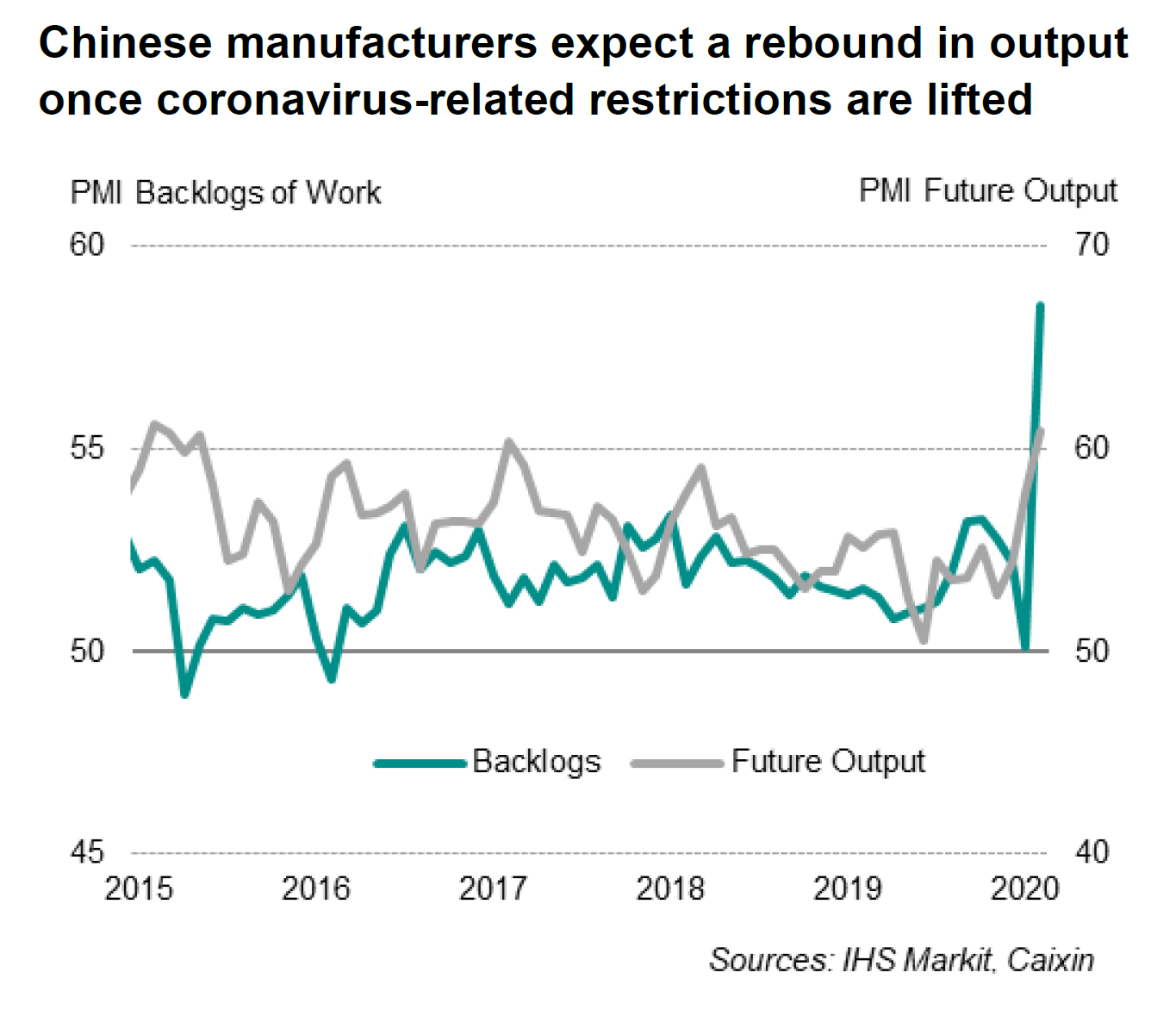
Underpinning this optimism is the fact that 90% of Chinese state-owned companies have begun operations once more. Several multinational factories have restarted production as well, albeit at lower capacity levels.
Are we past the worst?
With the confidence level so high and Chinese production expected to normalize by the end of March, it may be easy to think that we are out of the woods. Unfortunately, the situation isn’t that simple.
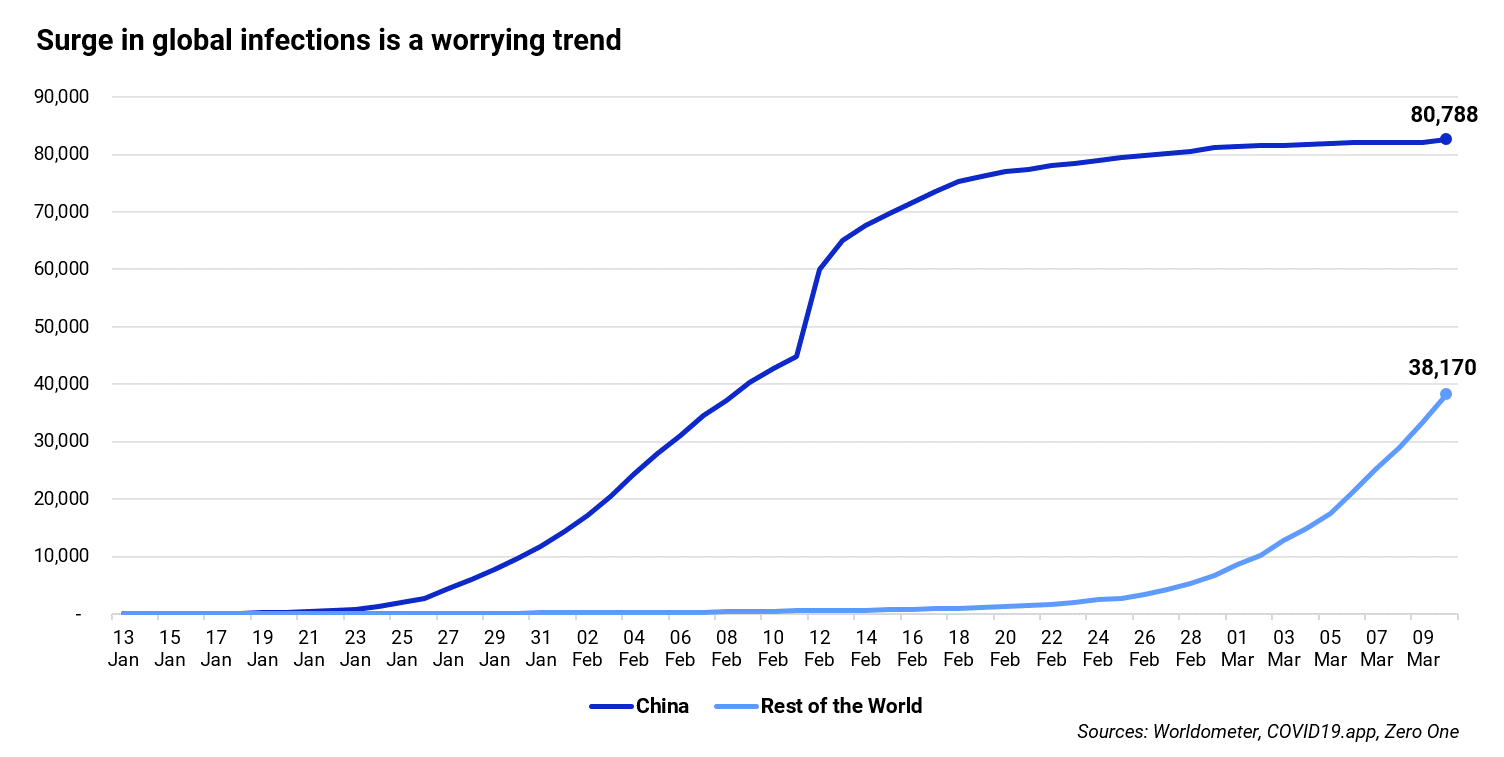
As seen in the chart below, while infections in China have started plateauing, incidents abroad – in South Korea, Europe, and the US – are only beginning to climb. The World Health Organization has classified the Covid-19 crisis as a pandemic and urged governments to step up measures to contain the virus from spreading further.
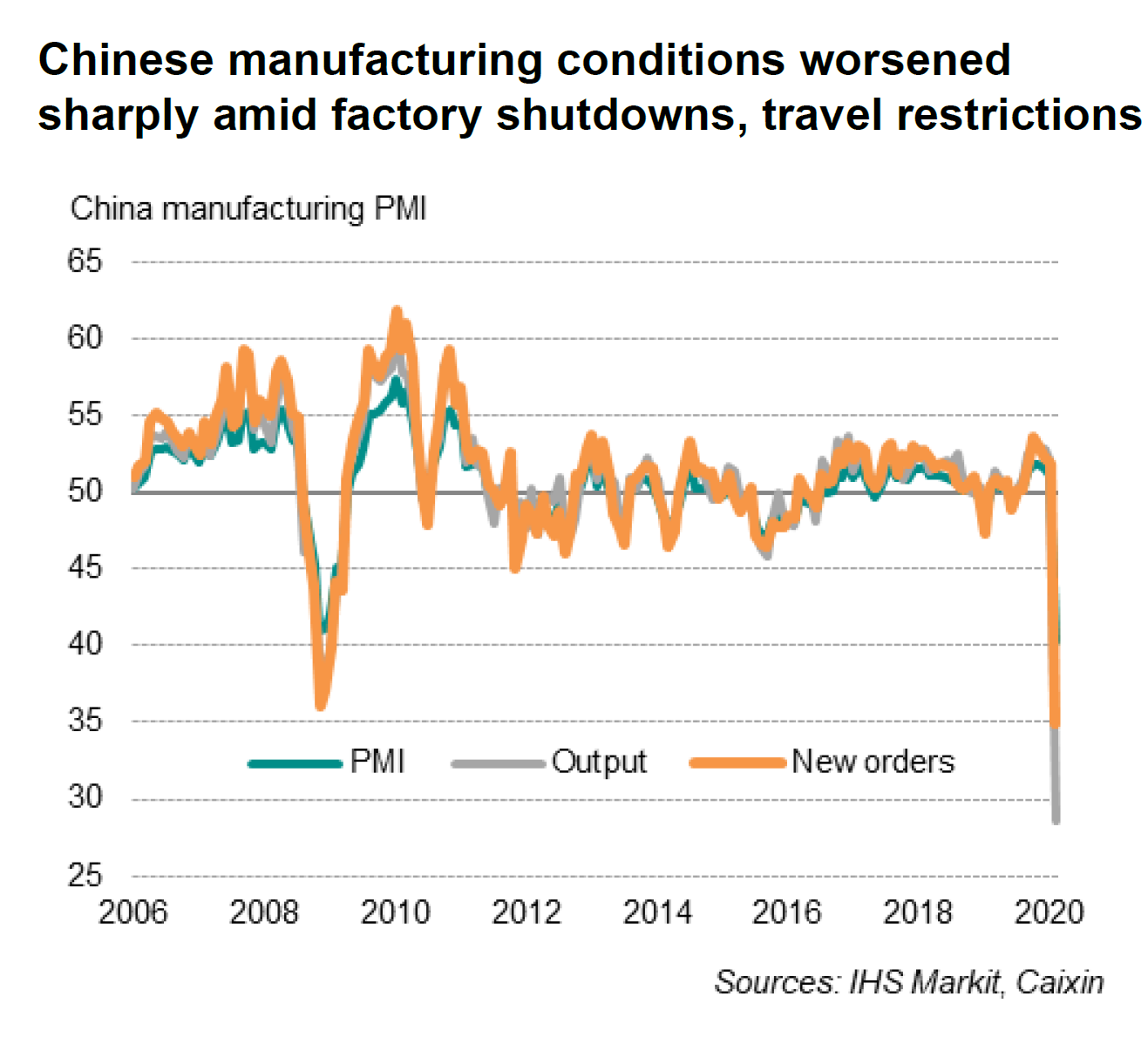
Since the outbreak began accelerating in January, global supply chains have been disrupted as factories in China closed down in an effort to contain the virus. The chart below shows that this has severely affected the Chinese economy, with output, new orders, and employment all falling to record lows. Inventory backlog in the country has also accumulated at its fastest pace in nearly 15 years.
Profit warnings spike
Uncertain macroeconomic conditions have caused business activities to falter, leading to a deluge of profit warnings from companies across the world.
Hardware firms such as iPhone maker Foxconn forecast a 15% drop in first quarter revenue as it struggles to get production back to normal. Auto manufacturers such as Hyundai have suffered similar setbacks – the carmaker suspended operations at its factory complex in South Korea due to a lack of components from Chinese suppliers. Even Chinese internet giants Baidu and Weibo weren’t spared, with both companies expecting revenue this quarter to fall by up to 13% and 20%, respectively.
With the virus spreading worldwide and hampering the global economy, the impact on China may be significant even if authorities succeed in containing the outbreak in the mainland.
The pandemic will likely cut global demand as consumers everywhere err on the side of caution and limit outside activities. Governments are scrambling to curb the outbreak. The US has suspended all travel from Europe, except the UK, for 30 days effective March 13. Italy recently placed the entire country on lockdown.
Startups hit
Central banks can’t save us
Stay ahead in Asia’s tech landscape
This is premium content. Subscribe to read the full story.
The truth is that few industries will be immune from the upcoming economic slowdown arising from the coronavirus pandemic.
We know this is not ideal. ⌛ Sign up in 20 seconds. Cancel anytime.
Our subscriber community includes professionals from these companies:





Stay updated on the go with our mobile app.
Get latest insights with smoother, more personalized experience through TIA mobile app.








📅 Upcoming Events
22 October 2026
Payoneer x CSPN Summit 2026