- Insights This article was written by a TIA community member. Insights pieces undergo the same rigorous editorial process that newsroom-produced articles have.
 Tim Romero · · 5 min read
Why the integrator strategy can work for AI startups despite challenges
This article is from an episode on Disrupting Japan. This is heavily revised from the original show transcript. For the full interview, go here.
Preferred Networks is one of the brightest startups in Japan’s AI scene. It attracted about nearly US$130 million in venture funding and have grown to more than 130 people over the past few years.
The startup provides the technology behind Toyota’s driverless cars, some of Fanuc’s industrial robots, and other cutting-edge applications. As a side project, Preferred Networks also built Japan’s most powerful commercial supercomputer.
I sat down with Daisuke Okanohara, the company’s technical co-founder, to learn more about Preferred Networks’ strategy.
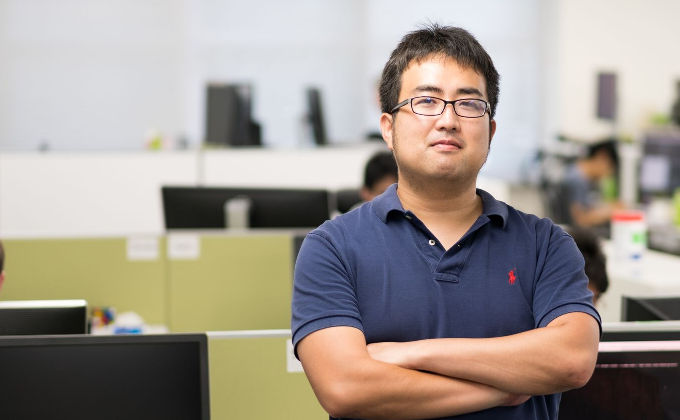
Daisuke Okanohara, technical co-founder at Preferred Networks
When did you start Preferred Networks?
I started my original company, Preferred Infrastructure, while I was in college. It focused on AI and internet of things before we realized that it was difficult to work on two things. Although the business was doing good, we decided to divide it into groups, each of which focused on one thing. That’s when we spun off Preferred Networks to focus on AI and bring it to different industries.
What is Preferred Networks’ core business model?
Our main business is doing research projects and providing licenses to our customers. Each market we deal with – autonomous driving, industrial robotics, machine learning, life sciences, and healthcare – requires a different business model. So we have one model for each market.
We’re flexible in addressing various markets with our core competencies. Since AI development requires several hundred different ideas or products, we can’t just simplify it to one technology.
Most AI companies try to focus on key products. Why did you choose to serve different industries instead?
This is part of our unique culture in Japan, where we want different cultures or markets to create an environment where innovation emerges.
When we visited Silicon Valley and discussed with several venture capitalists, they told us, “Please focus on one product or service.” But we didn’t listen. Maybe this is not the standard way to do business, but I think trying to solve different problems may reveal new connections between various products or markets.
We can also try creating new things at lower costs today. Previously, we built new software products in several months or in a year with several engineers. Today, we can make new models in one week.





Stay updated on the go with our mobile app.
Get latest insights with smoother, more personalized experience through TIA mobile app.