Winston Zhang · · 6 min read
Cyberport 5: Supporting the future of AI in Asia and beyond

Summary:
- Cyberport is spearheading Hong Kong’s AI strategy by establishing the territory’s first and largest Artificial Intelligence Supercomputing Centre (AISC), providing the significant resources required to boost R&D in sectors like healthtech, new energy, and data science.
- Beyond hardware, Cyberport offers a HK$3 billion (US$385 million) subsidy scheme, expert consultancy services, and global talent-nurturing partnerships with international universities and accelerators.
- Through initiatives like Cyberport Connect and a network of over 220 investors, the organization has facilitated approximately US$770 million in investment, positioning Hong Kong as a strategic “springboard” for AI firms to scale and list on global markets.
- Learn more about how exactly Cyberport can help you on its website.
AI has become a familiar term, and you can find the tech in almost everything – from consumer applications to industry-shaping innovations. The sheer scale of AI means that sustainable growth and development requires collaboration between the public and private sectors.
In Hong Kong, these efforts are being driven by Cyberport, the territory’s flagship digital tech and AI accelerator. It’s establishing Cyberport 5, a 66,000 square meter expansion to its existing campus.
It will feature advanced infrastructure, including a data center and high-speed connectivity, alongside smart offices and co-working spaces. It also aims to support high-performance computing and strengthen Hong Kong’s position as a regional AI hub.
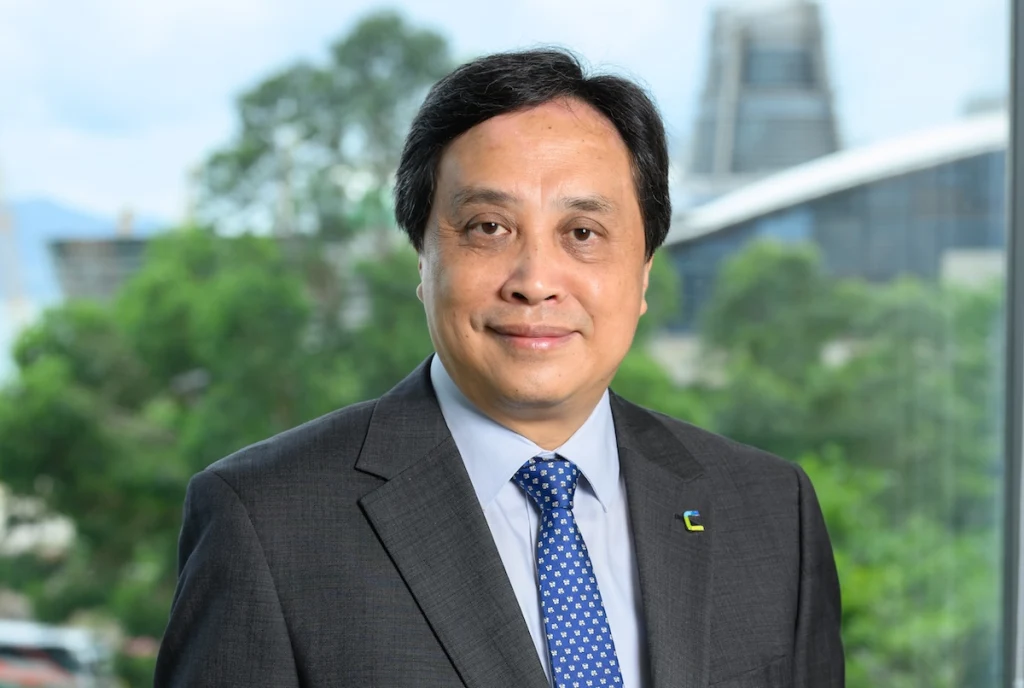
Simon Chan, chairman of Cyberport / Photo credit: Cyberport
Cyberport 5 will be located next to the Artificial Intelligence Supercomputing Centre (AISC), which aims to strengthen Hong Kong’s R&D capabilities in AI-empowered areas. These include general large language models (LLMs) as well as vertical LLMs for industries such as smart mobility, healthtech, and content generation, among others.
To date, a number of leading companies have established a presence at Cyberport 5, such as global tech firm Lenovo and neurotechnology company BrainCo. This underscores Cyberport’s appeal as a strategic base for AI research, innovation, and commercialization in Hong Kong and the region, says Cyberport chairman Simon Chan.
“AI’s ability to unlock productivity, accelerate R&D, strengthen risk management, and create new business models means that building a robust AI ecosystem is essential for Hong Kong’s future economic growth,” he adds. “Cyberport’s vision is to position Hong Kong as an international hub for AI and digital innovation, empowering industrial digitalization and intelligent transformation across all sectors.”
Tech and talent
Cyberport’s support covers many areas.
On the technical side, the scale of what’s needed to power AI research and solutions is clear. In fact, the industry’s call for high-performance, secure, and scalable computing resources shaped the design of AISC. The center can provide the required computing power and is certified to do so, being equipped with 3,000 petaFLOPS of computing power. A FLOP (floating-point operations per second) is the unit of measurement that calculates the performance capability of a supercomputer.

The Cyberport campus / Photo credit: Cyberport
Cyberport, with AISC at its core, has been able to drive a comprehensive AI ecosystem spanning computing power, data, LLMs, model risk assessment, industry application, governance and ethics, cybersecurity, talent cultivation, and connection to capital and markets. AISC has supported 30 AI projects subsidized by the Hong Kong government to drive innovations in LLMs, new materials, synthetic biology, and medical AI applications.
Additionally, through the HK$3 billion (US$385 million) AI Subsidy Scheme, Cyberport works with the government to ensure that universities, enterprises, and R&D institutions can access the necessary computational power to develop advanced technologies such as large language models, new materials, synthetic biology, and medical AI models.
It also partners with a growing network of global innovation hubs and educational institutions to facilitate greater cross-border collaboration. These include Kazakhstan’s Astana Hub, IT Park Uzbekistan, Indonesia’s Telkom University, Saudi Arabia’s King Abdulaziz City for Science and Technology, and Dcamp, a South Korean accelerator.
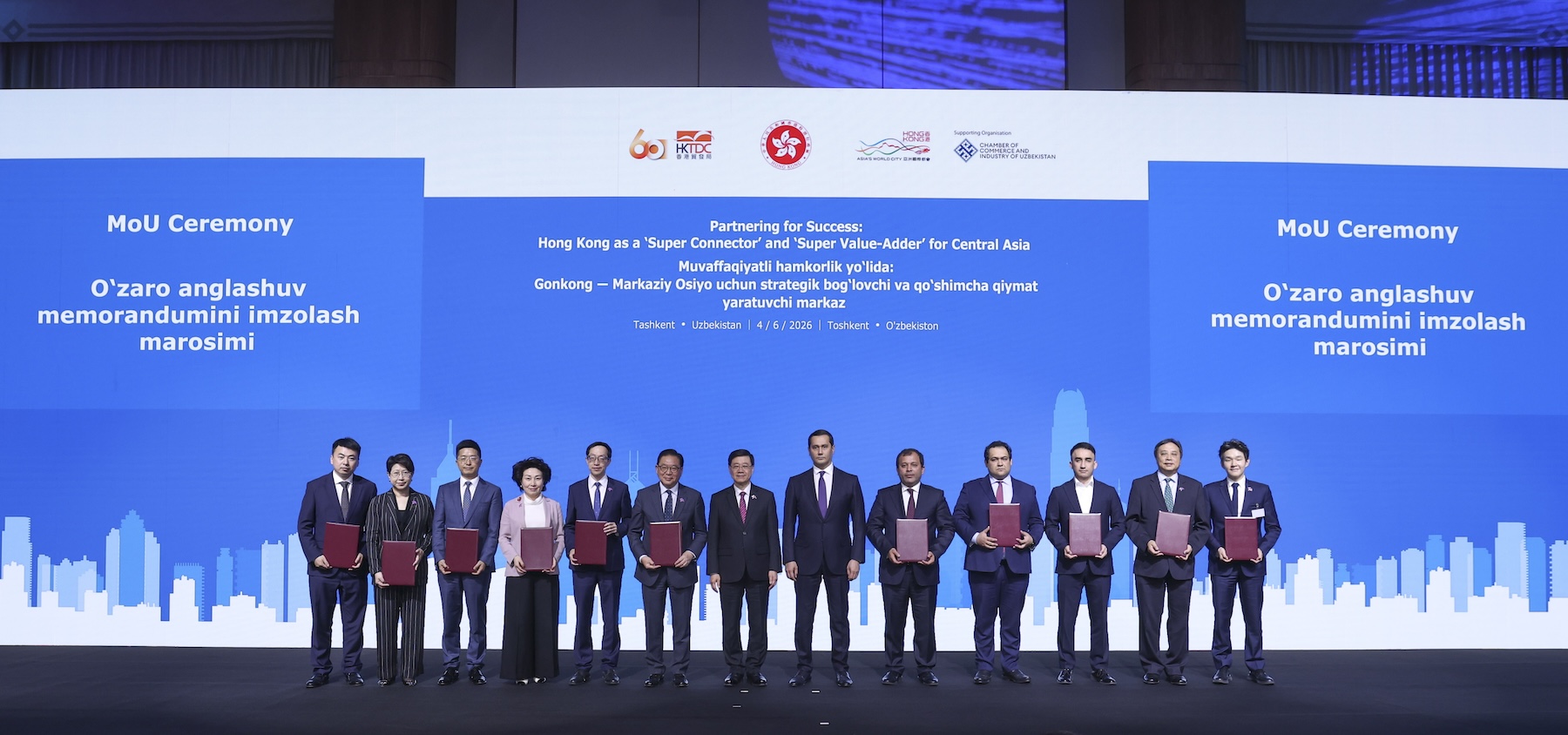
The signing of a Memorandum of Understanding (MoU) with Uzbekistan / Photo credit: Cyberport
These collaborations form part of Cyberport’s broader strategy to connect Hong Kong’s innovation ecosystem with emerging markets and international partners.
In fact, Cyberport was part of the business delegation led by John Lee, chief executive of Hong Kong, to Kazakhstan and Uzbekistan in June 2026, strengthening innovation, technology, and economic ties between Hong Kong and Central Asia.
The accelerator also led a delegation to Bandung and Jakarta in Indonesia, where companies from Cyberport’s community signed six letters of intent with Telkom University to advance joint research, proof-of-concept projects, and pilot initiatives. The visit included engagements with Bandung Techno Park, Indonesian government bodies, and major enterprises such as Telkom Indonesia.
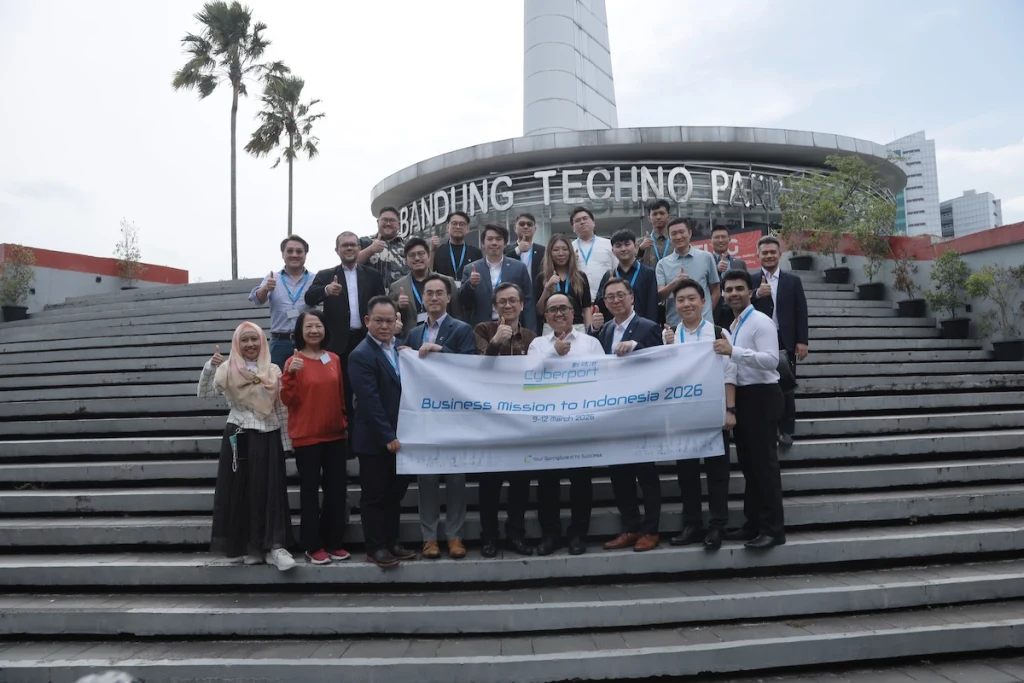
The Cyberport team in Bandung, Indonesia / Photo credit: Cyberport
These allowed it to explore collaborations in AI, digital infrastructure, cybersecurity, and other emerging technologies.
Meeting real needs
These international partnerships go beyond meetings and letters of intent. Through an initiative called Cyberport Connect, firms can meet with local and overseas partners for both new business and investment opportunities.

Cyberport’s Chan points out that through the Cyberport Investors Network – which brings together over 220 investors worldwide – and the Cyberport Macro Fund, it has facilitated more than HK$6 billion (US$770 million) in combined investments.
“For enterprises setting foot in Cyberport with ambitions for expansion, we aim to springboard them to success,” Chan affirms. “[Besides funding,] we can also connect them with opportunities to get listed in Hong Kong and abroad.”
All these various forms of support stems from Cyberport’s continuous engagement with startups, enterprises, academia, regulators, and industry stakeholders, allowing it to tailor its facilities and support to what the market genuinely requires.
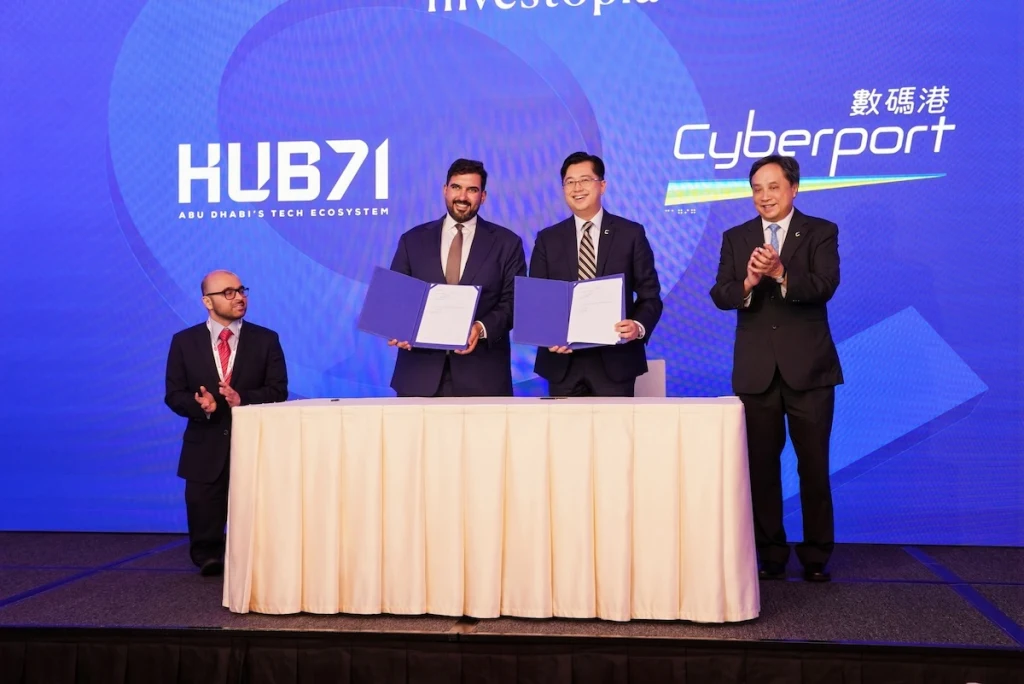
Signing of a MoU with Abu Dhabi’s Hub71 / Photo credit: Cyberport
“Our approach is grounded in real industry feedback, regulatory collaboration, and hands-on experience from nurturing over 500 AI and big-data startups and numerous leading Chinese Mainland and overseas AI companies such as Biren, iFlytek, Inspur Cloud, and CertiK.”
On the horizon
It’s evident that Hong Kong is confident in AI’s transformative potential. The tech may have only really risen to prominence in the past few years, but Cyberport is determined to play a starring role in positioning Hong Kong as a leader in the space.
“Cyberport’s AI development strategy for the future is to super‑connect industries, geographies, and capital, while delivering super‑value‑added infrastructure and support that enable enterprises to innovate, scale, and globalize from Hong Kong,” says Chan.
By supporting startups as well as connecting them with overseas partners of all stripes, the goal is to become a thought leader and proactive changemaker in this burgeoning space.
“We aim to solidify Hong Kong’s status as an international AI powerhouse and a global springboard for technology companies.”
Wholly owned by the Hong Kong Special Administrative Region (HKSAR) Government, Cyberport is Hong Kong’s digital tech hub and AI accelerator. Its vision is to empower industry digitalization and intelligent transformation to promote digital economy and AI development and to foster Hong Kong to be an international AI, innovation, and technology hub.
Learn more about how you could benefit from Cyberport’s myriad initiatives on its website.
This content was produced by Tech in Asia Studios, which connects brands with Asia’s tech community. Learn more about partnering with Tech in Asia Studios.
Stay updated on the go with our mobile app.
Get latest insights with smoother, more personalized experience through TIA mobile app.
Recommended reads
 Who pays for AI in your language?
 MoneySmart grows revenue by 26% in 2025, but AI threatens margins
 The truth about AI language models: No one wants to pay for them
 Tracking AI hiring in Singapore: OpenAI, Anthropic, and more
 Korea’s physical AI ambitions meet the factory’s bottom line
 SEA financials tracker: Moladin’s revenue rises 6% in 2025
 On‑demand services lift Line Man Wongnai’s 2025 revenue to $544m
 Flipkart’s costly late push into quick commerce and food delivery
 Inside Singapore’s government team that kills its own products
 Once an IPO hopeful, SCI Ecommerce nears collapse





Editing by Stefanie Yeo and Jaclyn Tiu
(And yes, we’re serious about ethics and transparency. More information here.)