Like many indie studios, Toge Productions had a rough start. From theft, to homelessness, and failed MMOs, it’s a company that has seen has seen its fair share of hardships. Despite this, Toge Productions has become one of Indonesia’s most successful indie studios and its Infectonator series is fast becoming a global brand. So what’s its secret, and how did Toge Production grow from an unlucky duo to one of Asia’s most recognizable indie studios?
Toge Productions began in 2008 when two friends decided to enter a game design competition. Kris Antoni was the artist and Sudarmin Then provided the programming, but what started as a hobby became something more.

Toge Productions’ founders Sudarmin Then (left) and Kris Antoni (right).
Despite failing to meet the competition’s submission date, Antoni and Then had seen the light. They quit their day jobs and began working on game development full time. “We wanted to give it 100 percent,” Antoni states, and through sponsorship and ad revenue from their first project, they earned the $3000 needed to start Toge Productions.
See: Indonesia’s Toge Productions Wants to Grow Like a Bean Sprout
The beginning was tough: with only $2000 and two PCs to their name they struggled to make ends meet. Things got worse when Antoni’s father kicked the developers out of his home, forcing them to take refuge in Sudarmins’ garage. Despite breathing in car exhaust every morning, having their laptop, mobile phone, and camera stolen by a rogue cleaning lady, and running only on cheap ramen, Toge Productions was profitable in its first year and has continued its upward trajectory since then.
In 2009, Toge Productions expanded, bringing in former schoolmates Andrew Jeremy and Timothy Bernard. With this extra punch, Toge Productions was able to take it to the next level.
Infectonator’s success, coupled with support from Mochi Games, allowed Toge Productions to move from the garage to a Jakarta office space in 2010. The money it received from Mochi Games was to create and run the social MMO Planetary Conflict. Unfortunately the four developers realized that running an MMO required a team larger than theirs. “It was brutal,” Antoni summarized. “We barely covered our costs…but we learned a lot of lessons.”
After the near-disaster of Planetary Conflict, Toge decided it preferred to make “single player games that are deep and engaging.” It also decided to stick with premium content, stating: “when someone pays for a game, they are investing… and are more likely to put time and effort into [it].”
In 2012, Toge released its most successful game to date: Infectonator 2. Infectonator 2 has been played over 11 million times on Kongregate and Armor Games. The mobile version, known simply as Infectonator, has been downloaded around half a million times on Google Play and iOS, with an average rating of 4.5 to five stars in both. Featuring celebrities, real-life languages, and retro visuals; it’s easy to see why it has been such a success. Also, being given the option to eat Justin Bieber seems to have satisfied many erstwhile fans!
See: Indonesia’s Infectonator 2 Clinches Major Game of the Year Award
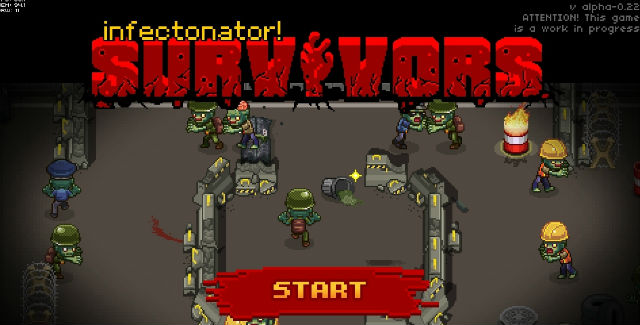
The success of Infectonator 2 and other games allowed Toge to increase its development team and prepare for its most ambitious task: the PC game Infectonator: Survivors.





Stay updated on the go with our mobile app.
Get latest insights with smoother, more personalized experience through TIA mobile app.











📅 Upcoming Events
22 October 2026
Payoneer x CSPN Summit 2026