Terence Lee · · 6 min read
Arcstone is Google Analytics for manufacturing, and it could change how factories are run
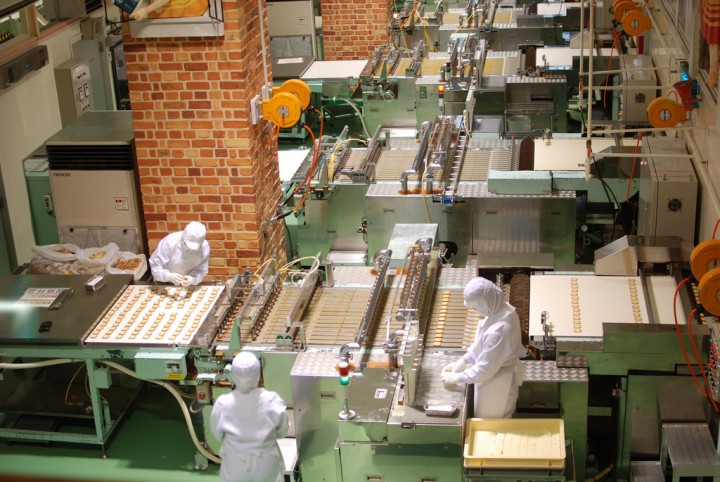
“Competition is for losers,” declared PayPal founder Peter Thiel in a Stanford lecture about startups. He elaborated on the theme in his book Zero to One, positing that startups should aim to monopolize a niche market first before expanding outwards.
Arcstone is following that prescription to a T. The Singapore-based startup is building a truly modular and customizable analytics platform for manufacturers. Think of it as a Google Analytics or Mixpanel for factories – but instead of tracking website visitors, Arcstone gives users an overview of what is happening on the production floor.
The company was founded by Willson Deng, an American software engineer who graduated with an industrial engineering degree from UC Berkeley and a master’s from INSEAD business school. Manufacturing bores most people, but he geeks out over it. He worked with Boeing in their manufacturing plant, and had stints at everything from smart meters to wineries to gourmet chocolates, all on the manufacturing side. He also worked as an engineer at Bioproduction, a startup that did production simulations for pharmaceutical companies.
“I’ve always found it fascinating: the idea of being able to walk into a factory and see everything in motion and see things moving along. It’s always been a fascination to me ever since I was young. If you watch How It’s Made on Discovery Channel, it’s been an inspiration for many of the production guys out there.”
Here’s a video of the show, zooming in on how drill bits are made. It actually has over 700,000 views, not bad considering it’s not a cat video:
The fact that many more people care about eating sausages than how they’re made is an advantage to Deng. His combination of domain expertise in manufacturing and engineering lets him spot opportunities others miss. Better, it allows him to act on the idea. Manufacturers won’t even listen to your pitch if you don’t have experience in production. That raises the barrier to entry for Arcstone’s competitors. Indeed, when Deng asked if I know of any other tech startup in the manufacturing space in Singapore, I drew a blank.
Building smart factories
Arcstone hasn’t raised any funding from investors, and it probably doesn’t need to do so to be a sustainable business (nonetheless it is raising a seed round to fund product development and sales). It has already secured six paying clients and generated six figures in revenue since it started in April 2013. Some customers include robotics and automation tech firm ABB, as well as Phoon Huat, a Singapore-based manufacturer of baking ingredients.
But what makes Arcstone special? While mom-and-pop stores have simple processes when making their goods, blind spots increase as they get bigger and production lines rise in complexity. Arcstone lowers the cost of monitoring manufacturing plants and increases the speed at which users can deal with changing situations.
For instance, it tells manufacturers which production line to fit in a rushed order, and where to pull people from to work on an urgent task. It alerts workers which line to move to without needing supervisors to shout orders, and the manufacturer’s clients check at which stage the production process is at. It automates scheduling of workers, notifies the maintenance crew when a machine breaks down, and sounds the alarms to supervisors just as things are getting delayed.
For many manufacturers today, error handling is often retroactive and resembles a firefighting situation. “You don’t hear about the news until the end of the day when people are clocking out and then they tell you something has gone wrong. And by then a lot of time has been wasted,” says Deng.
Arcstone isn’t the first company to focus on optimizing manufacturing processes, but Deng believes it has an edge. Some companies focus solely on optimization and analytics. This means they can’t prevent what’s called a “garbage-in, garbage-out” situation in which flawed data renders any analysis impossible.





Stay updated on the go with our mobile app.
Get latest insights with smoother, more personalized experience through TIA mobile app.