
Single folks in Asia looking to date can choose from a slew of homegrown apps to help them get lucky, like Paktor and Noonswoon. Grouvly, which launched on January 2 in Hong Kong, is the latest startup to throw its hat in this increasingly crowded ring.
Grouvly arranges dates for groups of three friends looking to meet three other members of the opposite sex (or of the same sex if you’re gay). After registering for an account via Facebook, a Grouvly team member will screen one’s application to make sure they fit the app’s target demographic of young, educated professionals.
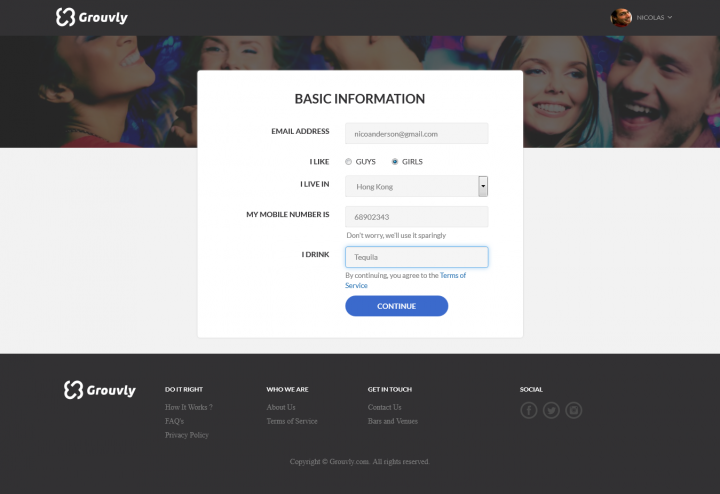
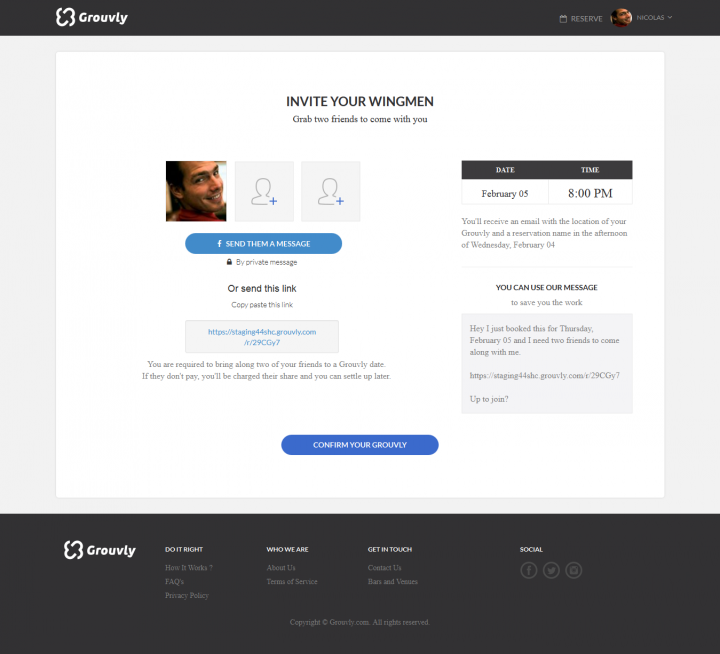
Once a user passes the screening process, he or she will specify a calendar date for the meetup and invite two additional friends to join. When a match is found based on common Facebook interests, Grouvly sets a venue and time for everyone to meet at. Each person in both groups pays HK$150 (about US$20) through the app, which covers the cost of the first drink. Grouvly has secured a few partnerships with bars in Hong Kong, where it directs its users after matches are made.
“We don’t want to position ourselves as a dating app. We want to position ourselves as a social club, where young professionals and highly educated people have a one-button solution for going out and meeting people,” says Paredes.
Is Grouvly a clone of Grouper, the US-based app that does exactly the same thing? Founder Camilo Paredes doesn’t shy away from acknowledging that his company is inspired by another one. But Grouper is available only in the US and the UK, and Paredes thinks Asia presents a unique opportunity for the concept. “Asians, they are a bit more timid, so I thought this would be great to replicate [here],” he says.
Grouvly is still in its infancy. Mobile apps for Android and iOS remain in development, so users instead have to go register through the desktop and mobile web. The company’s FAQ page also says that matches might take one to two weeks to complete – likely because the app just launched and not enough people are using it (Grouper launches in a particular city only after a certain amount of users there have downloaded the app). (Update: Paredes says the one-to-two-week wait period is deliberate, as it helps generate excitement among users and ensures the team can coordinate the best match). In order to drive traction, Paredes and co-founders Karren Rebosure and Michael Burns have begun a Facebook marketing campaign. But the team hopes that the nature of the app’s mechanics will spur organic growth.
“The key thing of this business is word of mouth,” says Paredes. So as long as we provide a good service and technology works, people should talk about us. We also get viral loops, because we acquire one user and the user invites two people.”
Paredes is building Grouvly off of the heels of Duriana, a Kuala Lumpur-based startup that rolled out a peer-to-peer ecommerce app across Southeast Asia. The company raised US$800,000 in late 2013, but in the year in between the round and Grouvly’s founding, Paredes was running the company remotely from the Philippines due to visa issues in Malaysia. He claims he stepped down from the company once this arrangement grew unfeasible. Grouvly marks a fresh start for the founder in Hong Kong, where the expat social scene is hot and perhaps looking for new dating apps.
Paredes won’t comment on Duriana or its competitor Carousell, which raised a US$6 million round last December from Sequoia Capital. But he says that Duriana and Grouvly are two fundamentally different companies that require different approaches for growth.





Stay updated on the go with our mobile app.
Get latest insights with smoother, more personalized experience through TIA mobile app.