- Premium Content It takes our newsroom weeks - if not months - to investigate and produce stories for our premium content. You can’t find them anywhere else.
 Sumathi Bala · · 5 min read
With VR and neuroscience, startup snags big clients by making market research more honest
When Danone Aqua, wanted consumer market research done on its products, the Indonesia-based bottled water company decided to go with a young startup called Neurosensum instead of engaging a big research consultancy.
“They used advanced virtual reality (VR) technology that allowed consumers to get an immersive experience as if they were at a hypermarket to test our products. Usually, we need to physically bring our customers to a store like 7-Eleven to get consumer market feedback. This is costly and very time-consuming,” says Ashish Verma, head of strategy and insights at Danone Aqua.

Image credit: 123RF
The technology has helped the Jakarta-headquartered company – a unit of global food and beverage giant Danone – to slash costs and streamline its decision-making process.
“If we could roll out a product a month earlier than our competitors, the benefit is tremendous. If Neurosensum can produce a report in 15 days, for example, instead of the usual three months, it gives big companies like us a big market edge,” adds Verma.
Despite its relatively new approach, Neurosensum market research business has been steadily gaining traction. Based in Singapore and Jakarta, the startup has acquired 38 bluechip clients since it was established in February 2018. Its clients come from various sectors, including consumer goods, ecommerce, finance, and banking.
Neurosensum is spearheaded by market research veterans Rajiv Lamba and Vivek Thomas. Both co-founders have more than 15 years of experience in the industry and were driven to transform the research consultancy sector.
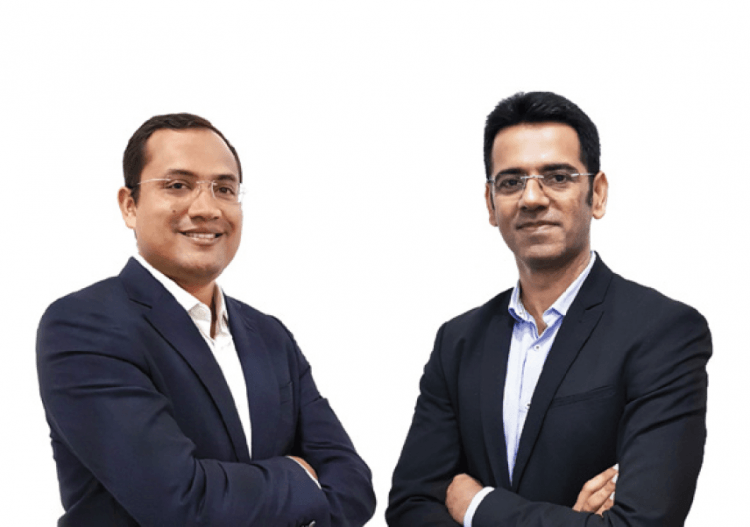
Vivek Thomas (left) and Rajiv Lamba, co-founders of Neurosensum / Photo credit: Neurosensum
With typical research methods, consumers can sometimes give polite or socially acceptable answers – a practice that can skew results. “It does not really answer the marketing team’s quest to read the mind of consumers,” points out s Rajiv, who serves as Neurosensum’s global managing director. But using neuroscience like the startup does allows you to “decode the mind” via algorithms.
“The future research is to bring consumers to a VR lab,” he continues, where they put on a headset and get immersed in the desired environment.
Apart from VR, Neurosensum also uses facial coding, brain mapping, and eye-tracking tools to gather meaningful data for interpretation.
For example, instead of attending meetings, respondents will use electroencephalogram (EEG), a test that detects electrical activities in the brain via small electrodes or metal discs attached to the scalp. The machine will then record the changes and movements in respondents’ neural activity when they are shown stimuli like TV ads.
Neurosensum’s algorithm will then translate the record into answers for research questions. The startup charges between US$7,000 to US$30,000 for a market report.
Stay ahead in Asia’s tech landscape
This is premium content. Subscribe to read the full story.
The startup has acquired 38 bluechip clients since it was established in February 2018.
We know this is not ideal. ⌛ Sign up in 20 seconds. Cancel anytime.
Our subscriber community includes professionals from these companies:





Stay updated on the go with our mobile app.
Get latest insights with smoother, more personalized experience through TIA mobile app.