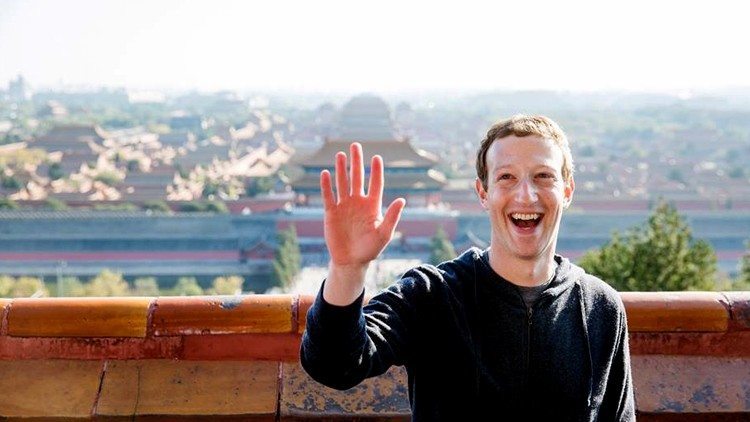
Zuck in Beijing. Image credit: Zuckerberg’s Facebook.
Something like a controlled case study in copyright law took place in China over the last few weeks. The Beijing Municipal High People’s Court saw two cases: one from Apple, one from Facebook. Both American companies were complaining that a Chinese firm had hijacked their trademarks. But in the end, only one won.
A potato chips and canned vegetables factory in Southern China’s Guangdong province is no longer known as “Face Book.” But a leather goods manufacturer is still churning out products labeled “IPHONE.”
Facebook’s face time
Both cases revolved around a central tenant of Chinese copyright law which, according to the Financial Times, states that “a multinational with a globally recognized brand must prove that its trademark is also well known within China” in order to have a case.
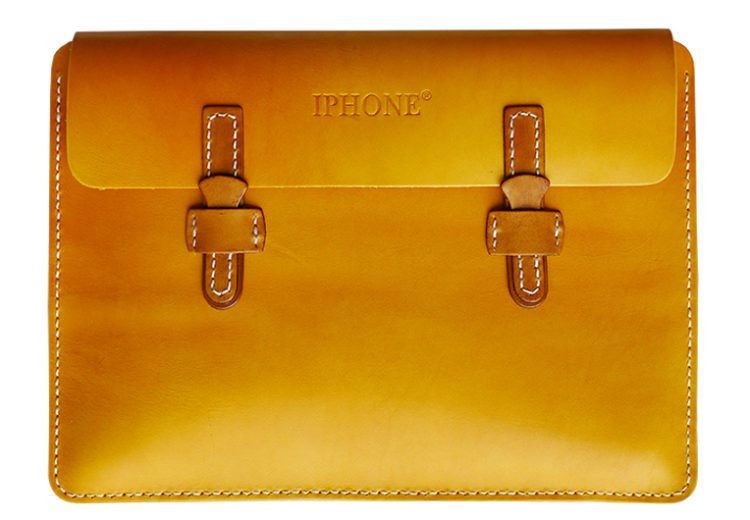
A bag made by the company that won its case against Apple. Image credit: Xintong Tiandi.
By that logic, the results of the cases are baffling – iPhones are omnipresent in China and are a widely-regarded status symbol; Facebook, on the other hand, has been completely censored for half a decade.
There are some finer points of the cases – particularly the timelines – that lend a bit of credence to the idea that these results are just coincidence. But they also fit perfectly into the recent trends of both companies in China.
In recent months, Apple has seen its fortunes take a downturn in China. The company’s iBooks and iTunes Movies stores were censored off the Chinese internet in April, which was followed by a dire quarterly earnings report that showed China sales collapsing. Apple CEO Tim Cook is reportedly visiting China later this month, where he will meet with government officials to try and smooth everything over.
Zuckerberg has not only embraced learning Mandarin, he’s embraced the mandarins themselves.
Facebook, on the other hand, figured out a long time ago that buddying up with Chinese officials was the best way to lubricate its presence in the mainland. CEO Mark Zuckerberg has not only embraced learning Mandarin, but he’s also embraced the mandarins themselves, having meetings with the likes of propaganda chief Liu Yunshan and president Xi Jinping.
Jokes about “zucking up” to the government aside, it does look as though Facebook’s efforts have paid off – the company has been able to develop solid relationships with businesses in the mainland despite being blocked, for example helping companies like Air China advertise to potential customers abroad.
Cook is no stranger to Chinese officialdom either – he met Xi Jinping at a state dinner in the United States last year. But with this copyright case, the recent censorship, and Apple’s other China-woes, it appears as though the company may need to up its game.
If you’re heading over to China to fix something, then it’s already too late. Zuckerberg and Co. have taken their sycophantic government photo-opping seriously, and the dividends are already apparent – the company has a healthy advertising business in the country, and relations are so good that there’s even been speculation of Facebook potentially launching a China-specific (read: censored) version of its service.





Stay updated on the go with our mobile app.
Get latest insights with smoother, more personalized experience through TIA mobile app.