- Insights This article was written by a TIA community member. Insights pieces undergo the same rigorous editorial process that newsroom-produced articles have.
 Cynthia Luo · · 6 min read
Ad money moves to retail media as brands vie for attention on crowded marketplaces
By now, most businesses are familiar with the consequences of the Covid-19 pandemic: faltering offline sales, fluctuating foot traffic, and lockdown mandates that make many brands wish they built an ecommerce infrastructure sooner.
As consumers in Southeast Asia shift from going to shopping malls to buying essentials on Shopee, Lazada, Tiki, and Tokopedia, advertising dollars naturally followed, giving birth to retail media in emerging markets.
In 2018, Amazon paved the way in the US by launching Amazon Advertising, which became the first bid-and-buy marketplace. Boston Consulting Group now estimates that retailers have a US$100 billion business opportunity to capture – if they can keep up.
The old marketing tools
The main goal of marketing, no matter the medium, is to highlight a business or product to the right consumers to score a potential sale. And like most things, there is a bad, a good, and a much better way of doing things.
Traditional marketing channels consisted of linear TV, radio, and print because these mediums were popular at the time. But with the birth of the internet emerged newer platforms such as websites, streaming, and email. Then came the rise of social media and apps that shook up the advertising landscape once more.
The shifts have proved one thing: business went where the consumer was. So when sources of traffic and revenue once again change – let’s say due to a pandemic – the marketing mix will undoubtedly accompany it.
In the next 12 months alone, many marketers are planning to decrease spending in cinema, print, and out-of-home advertising, while the majority will increase budgets earmarked for social media and search engines.
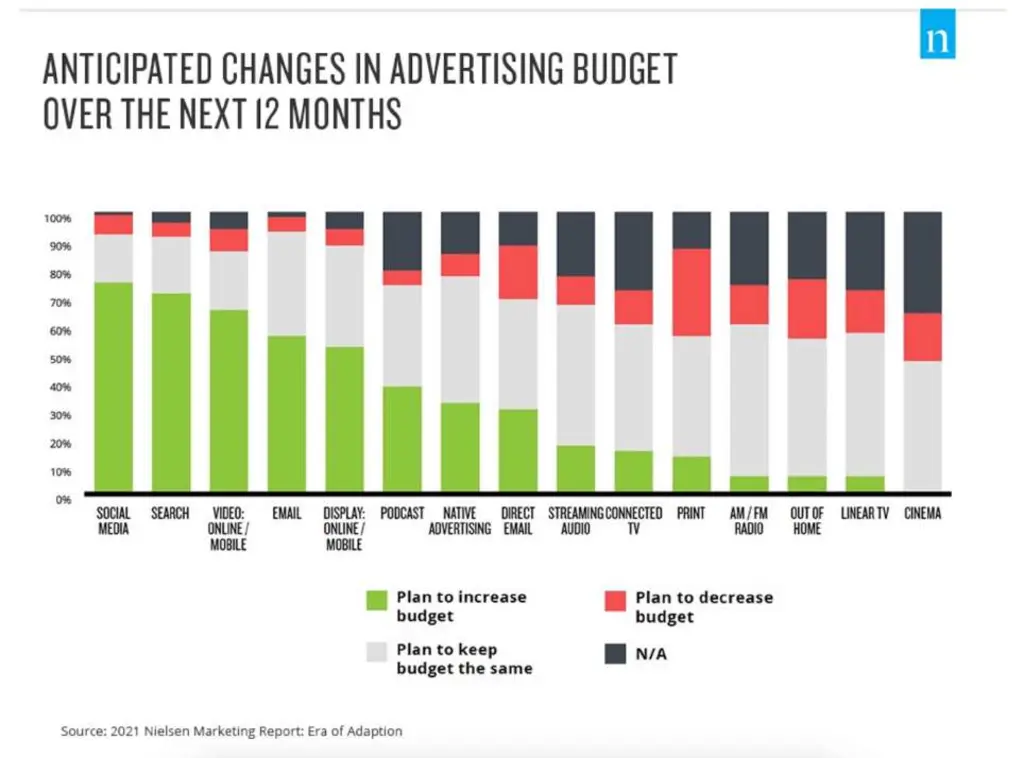
Source: 2021 Nielsen Marketing Report: Era of Adoption
The search for superior advertising channels
As money flows out of outdated buckets, which channels stand to gain? The answer lies in ad revenue trends in mature markets like the US.
While Google and Facebook remain the dominant advertising players, Amazon has cut into the duopoly’s ad revenue pie, growing its share from 7.8% to 10.3% in a single year.
How was it able to do this? That’s because the most valuable advertising channel is the one that has the most measurable touchpoints with the consumer. TV, radio, and print ads lose the consumer after the first point of contact, while websites and email ads track clicks but then lose customers once they’re off the medium.
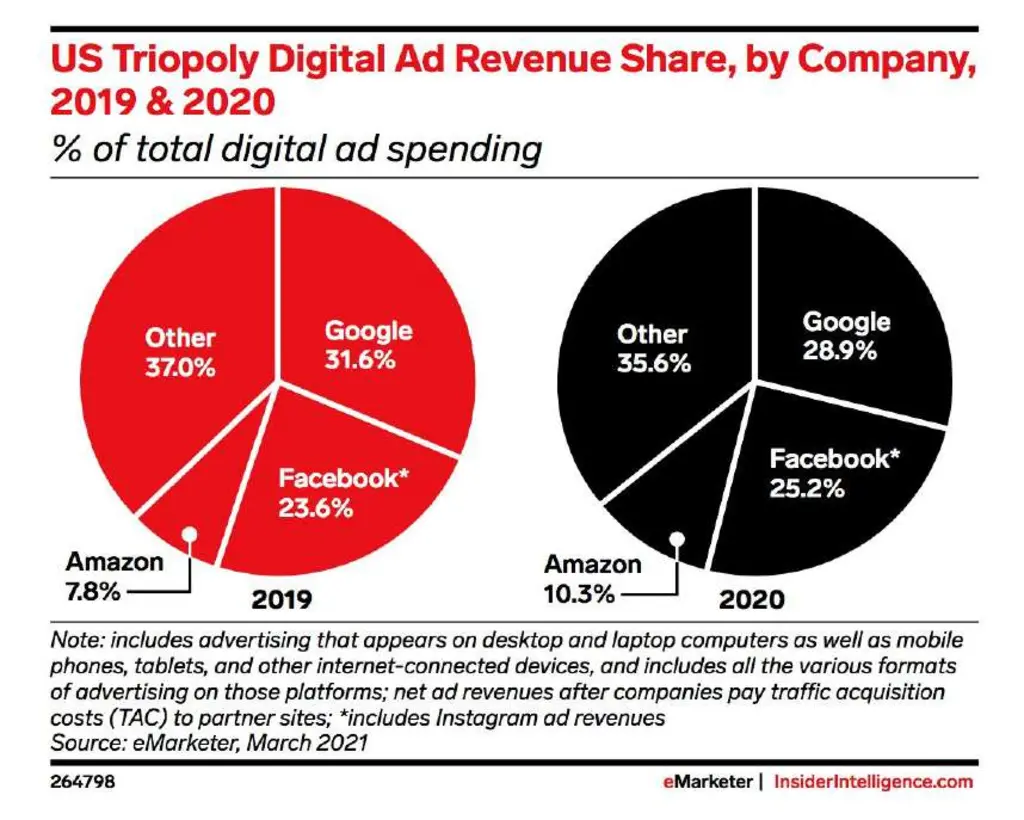
Source: eMarketer March 2021
Ad networks and social media became industry titans because they not only monitor a consumer’s interests and movements across multiple mediums, but they can retarget that consumer with various personalized ad content to chase a conversion goal.
The new advertising titan
The hurdles in striking retail gold





Stay updated on the go with our mobile app.
Get latest insights with smoother, more personalized experience through TIA mobile app.