Kylee McIntyre · · 5 min read
Corruption, language, lack of confidence hurt Asia’s digital workers: study

Photo credit: twinsterphoto / 123RF.
The digital economy’s on its way to becoming the great equalizer of the world – but it’s got some serious obstacles to get around first.
In Asia, a new report finds that government corruption, language barriers, and a lack of confidence and education about the digital economy hinder the progress of many of those trying to freelance or run online businesses. Depending on location, infrastructure may also pose a challenge.
A digital worker is someone who transacts business online – either by selling goods or performing services like marketing.
As for what makes a good cross-border digital worker, those surveyed describe a strong work ethic – hard work, a strong will, a desire to continuously learn, and self confidence – combined with a really good internet connection.
The Digital Economy in Asia report was produced by Payoneer, which processes payments in 150 currencies across 200 countries, after surveying its top users in 11 countries – Bangladesh, China, India, Indonesia, Japan, South Korea, Malaysia, Pakistan, the Philippines, Thailand, and Vietnam. That those are very different places to do business is apparent – the study’s breakdowns of each country’s economy, internet usage, and digital worker needs point that out immediately.
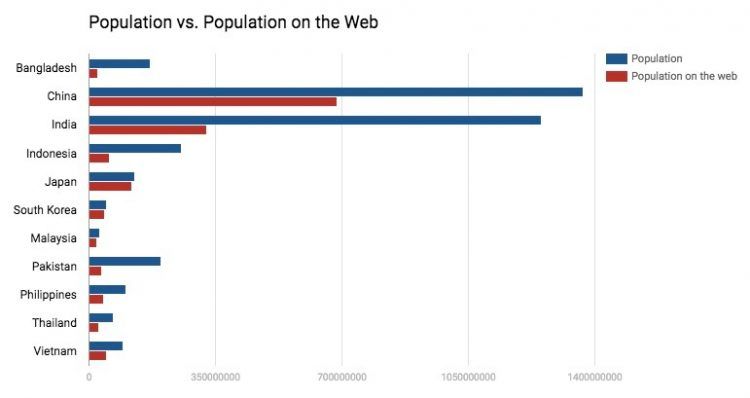
The report data shows the percentage of each country’s population online differs vastly from country to country.
Bangladesh
More than half the country’s GDP comes from the service sector, while garment exports counted for 80 percent of exports in 2015. Though Bangladesh’s economy has been growing at a rate of 6 percent since the early 2000s – 25th highest in the world – the country suffers from poor infrastructure and energy supply, political instability and corruption, and lack of efficient economic laws.
Digital workers in Bangladesh tend to be freelancers, affiliates, outsourcers, and IT service providers. The language barrier – 98.8 percent of the country speaks Bangla, 0.07 percent speak English as a second language – also acts as a stumbling block to the digital economy.
China
China ranks first in the world for internet users, and a little over half of the country’s population is online, most accessing from their phones. Its economy is growing at 6.9 percent – a dip from previous years, but still significant.
While China’s middle class is growing and has more disposable income, home prices are surging, as is inflation. That means workers need to be paid more – not an ideal situation for a small company. Meanwhile, a population that tends to save more than it consumes can be a problem for sellers, while general corruption and environmental issues like pollution add to the price of doing business.
The language barrier, a lack of good translators, and cultural differences (particularly over product quality) serve as issues for digital workers.
India
India’s economy has continued to grow for the past few years and is projected to continue because of a young population, along with healthy savings and investment rates. Low-cost internet has lowered the barrier for people to enter the digital economy and do business online. Demonetization – the country’s push to go cashless – has improved the prospects of the country’s digital economy.
Indonesia
Japan
South Korea
Malaysia
Pakistan
Philippines
Thailand
Vietnam





Stay updated on the go with our mobile app.
Get latest insights with smoother, more personalized experience through TIA mobile app.