Leighton Cosseboom · · 4 min read
Would PayPal’s presence in Indonesia speed up natural selection?
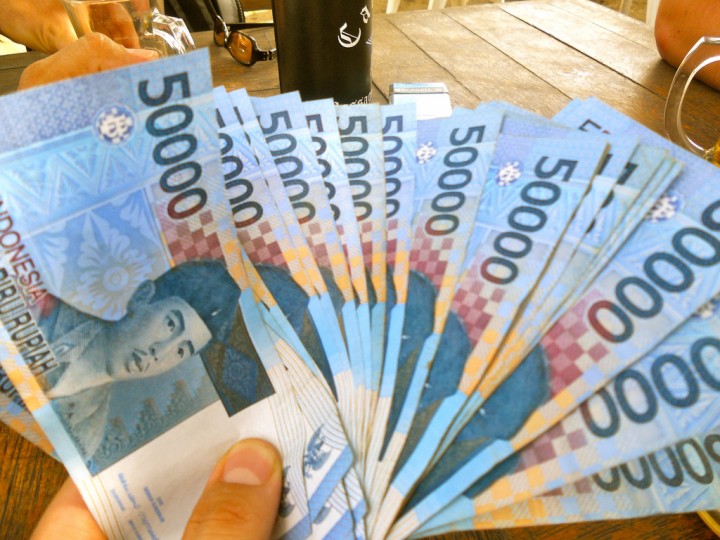
Currently, there are 17 epayment companies in Indonesia. Names like Veritrans, Coda, and 2c2p come to mind. Some people say competition is good for a tech startup scene. It forces the players in a given space to one-up each other to better serve a market. Folks like Peter Thiel may disagree, however, arguing “creative monopolies” are better. With this in mind, one question to answer is: Which school of thought can best be applied to Indonesia’s epayments space?
Earlier today, DailySocial ran a short piece about PayPal looking to hire a country manager in Indonesia. The scoop is interesting, as 80 percent of Indonesia’s population is unbanked, and less than five percent own credit cards. Epayments is one of the most complex challenges that consumers and internet businesses face in the archipelago.
As far back as 2012, PayPal was already taking an interest in the island nation, having partnered with epayments gateway Doku and fellow local player iPaymu to offer merchants cross-border transaction capabilities. Last month at Startup Asia Jakarta 2014, founder and COO of Doku Nabilah Alsagoff said the topic couldn’t be more timely, as ecommerce is set to grow significantly this year and the public is becoming increasingly comfortable spending online.
See: Epayment gateway Doku records $1.1 billion in transactions
One dominant player could mean faster universal adoption
Local ecommerce entrepreneurs may tell you that a lack of trust when shopping online is becoming less of a problem in Indonesia. But according to the Indonesian Ecommerce Association (idEA), out of the nation’s 75 million internet users, 34.5 million expect to make their first online purchase next year, and 40 percent of the nation’s non-recent eshoppers worry about the security of their financial information on the internet.

Nabilah Alsagoff, founder and COO of Doku
When PayPal became arguably the most dominant epayments company in the West, user adoption was observably viral. In the year 2000, people started talking about the brand after it reached a million users on eBay. When it gained more than 100 million active accounts in 193 markets and 26 different currencies, the company could legitimately say that it was “one of the world’s most trusted ways to pay and get paid.” Gordon Crovitz of the Wall Street Journal writes, “PayPal became a favorite way to pay online once it achieved a critical mass of buyers and sellers. ”
In Indonesia, the population of worried eshoppers and non-eshoppers could potentially be converted to avid online customers if all of their friends and relatives are constantly reassuring them that a single famous epayments brand is safe and secure.
An ethical monopoly could speed up the law-making process
Earlier this year, Indonesia’s central bank reported an average of 420,000 daily epayment transactions with a total value of Rp 7.7 billion (US$652,000). Around the same time, the Bank of Indonesia revised its regulations governing the nation’s epayment services, stating that epayments players were no longer allowed to strike exclusive partnerships.
This was likely done to spur healthy competition and provide an economic incentive to other firms looking to enter a lucrative space. Compelling cases can be made for and against this regulation, but one downside is that the rule makes it easier for more brands to enter the sector, and thus creates more cases that potentially need to be governed and regulated. This fragmentation is amplified when brands try to out-innovate each other and create fresh new territories.





Stay updated on the go with our mobile app.
Get latest insights with smoother, more personalized experience through TIA mobile app.